As an Amazon Associate, we earn from qualifying purchases. Some links on this site are affiliate links at no extra cost to you. Our recommendations are based on thorough research and editorial judgment.


Progressive Rock Drumming: Odd Meters and Complex Patterns

Progressive rock drumming stands out due to its intricate rhythms and innovative use of odd meters, like 5/4 and 7/8. These unique time signatures create challenging patterns, expanding drummers’ creativity and technical skills. Influential drummers, such as Neil Peart and Bill Bruford, showcase advanced techniques and dynamic variations that elevate the music. Practicing with key songs and targeted exercises fosters mastery of these complexities, ensuring a deeper understanding of progressive rock’s rich rhythmic landscape. Further insights await those who explore these concepts more thoroughly.
Key Takeaways
- Master odd meters like 5/4 and 7/8 for unique rhythmic structures in progressive rock drumming.
- Incorporate polyrhythms and dynamic variations to enhance drumming complexity and expression.
- Analyze songs like “Money” by Pink Floyd and “Subdivisions” by Rush to internalize intricate time signatures.
- Practice limb independence with advanced 4-way coordination exercises to master complex rhythmic patterns.
- Regularly record and evaluate your drumming to identify areas for dynamic control and improvisation improvement.
The Essence of Progressive Rock Drumming

You may be interested

10 Best Wood Tip Drum Sticks Every Musician Should Own
March 25, 2026

10 Essential Rudiments Every Drummer Should Master
March 25, 2026
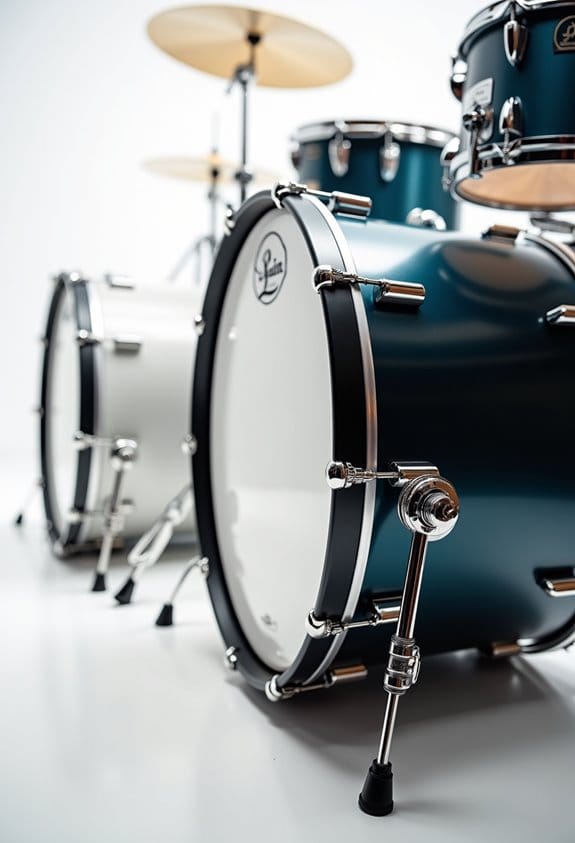
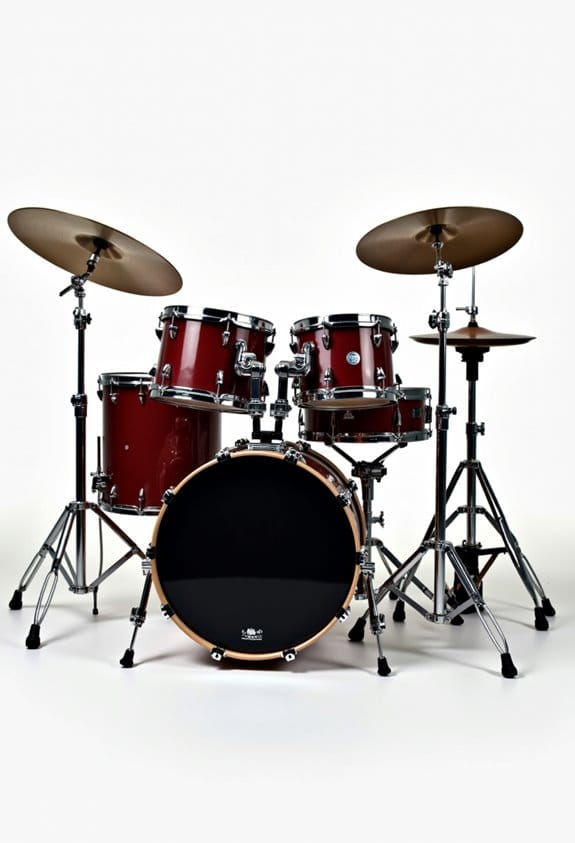
At the heart of progressive rock drumming lies an intricate web of rhythm and creativity, where drummers are more than just timekeepers; they are essential architects of sound. This genre is renowned for its use of complex time signatures and odd time signatures, such as 5/4 and 7/8, which allow drummers to construct unique rhythmic structures. Notable figures like Neil Peart and Bill Bruford have broadened these rhythmic horizons through advanced techniques, incorporating polyrhythms and dynamic variations. The exploration of diverse musical styles within progressive rock further pushes drummers to adapt their skills, creating intricate patterns that reflect the genre’s complexity. With an array of larger drum sets, drumming in this context becomes an expressive and elaborate art form, engrossing listeners. Mastering such intricate patterns often involves practicing specialized 4-way coordination exercises to develop complete limb independence and rhythmic versatility.
Understanding Odd Meters
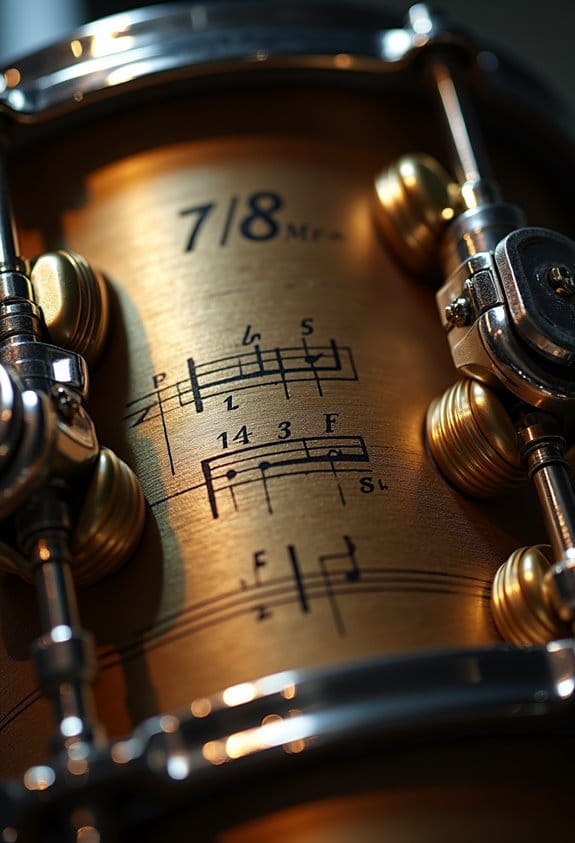
Odd meters present a fascinating aspect of progressive rock drumming, offering a rhythmic landscape that diverges from the conventional 4/4 time signature found in much of popular music. These time signatures, such as 5/4, 7/8, and even 19/16, create unique rhythmic patterns that both challenge and inspire drummers. Listening to tracks like “Seven Days” by Sting and “Keep It Greasy” by Frank Zappa can help drummers internalize these complexities, enriching their understanding of odd meters. Practicing such patterns enhances a drummer’s versatility, allowing for a broader adaptation across various music genres. Techniques like subdividing beats and utilizing visual aids are key for mastering odd meters, often making drum solos all the more impressive within the context of progressive rock and metal. Additionally, integrating diverse music styles through versatile drum patterns can further expand a drummer’s rhythmic capabilities.
Recommended Products
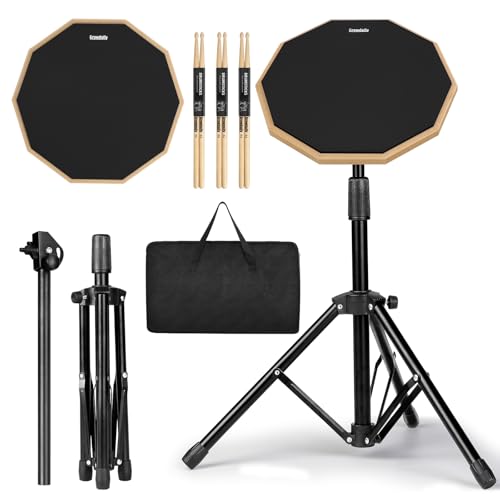
Drum Pad:GrowDaily drum practice pads are the perfect practice pad for any drummer, providing a realistic playing experience with a high resilience rubber and solid poplar base, and high-density shock absorbing cotton for a near snare drum feel.

PRACTICE ANYTIME, ANYWHERE - Evans RealFeel Drum Practice Pad provides the best practice substitute to acoustic drums, so you can practice rudiments, paradiddles or just drum along to that song on the radio – without disturbing anyone. Portable and quiet, it works on any surface including carpet, table, lap or inside a standard snare basket.

PRACTICE ANYTIME, ANYWHERE - GLEAM Drum Practice Pad provides the best practice substitute to acoustic drums, so you can practice rudiments, paradiddles or just drum along to that song on the radio – without disturbing anyone. Portable and quiet, it works on any surface including carpet, table, lap or inside a standard snare basket.
Influential Drummers and Their Techniques

While many drummers are drawn to the excitement of complex time signatures, influential drummers throughout the history of progressive rock have paved the way for others by showcasing innovative techniques that elevate the art of drumming. Bill Bruford, renowned for his work with bands like Yes and King Crimson, mastered odd meter grooves that challenged traditional drumming concepts. Vinnie Colaiuta gracefully shifted through a whimsical 5/4 in Sting’s “Seven Days,” while Jack DeJohnette brought a relaxed style to the intricate 9/4 of “Nine Over Reggae.” Additionally, Chris Frazier’s ability to superimpose a 7/8 riff over a 4/4 in Steve Vai’s “The Attitude” displayed remarkable versatility. These examples illustrate the profound impact of innovative drumming in progressive rock. Incorporating hybrid drum rudiments can further enhance rhythmic complexity and limb independence in such challenging patterns.
Recommended Products


Key Songs to Explore
Exploring the unique drumming styles in progressive rock not only highlights the innovative techniques of legendary drummers but also leads listeners to key songs that exemplify these concepts. “Subdivisions” by Rush combines 7/8 and 4/4 time, allowing intricate drum patterns to enhance the song’s dynamic sound. Similarly, Pink Floyd’s “Money,” which is set in a 7/4 time signature, showcases a distinctive rhythmic backbone that critiques capitalism through its engaging groove. Led Zeppelin’s “Four Sticks” features complex 5/4 rhythms, showcasing the band’s willingness to experiment with odd meters. Chicago’s “Aire” stands out with its 7/8 meter, adding sophistication to their progressive sound. Finally, Captain Beyond’s “Dancing Madley Backwards” begins in 5/4, emphasizing the fluidity of odd time signatures. Drummers often integrate ghost notes within these odd meters to add subtle texture and depth, enriching the overall rhythmic complexity.
Advanced Drumming Skills for Progressive Rock
Mastering advanced drumming skills for progressive rock demands a deep understanding of complex rhythms and time signatures that differ considerably from traditional rock music. Essential techniques involve proficiency in double bass playing, which adds dynamic intensity and speed, as seen in tracks like “Pull Me Under” by Dream Theater. Additionally, engaging with odd meters, such as 5/4 and 7/8, allows drummers to explore uncharted musical territories. Drummers should also practice intricate fills and improvisation within these parameters, drawing inspiration from iconic examples like Neil Peart’s “YYZ”. Exploring quintuplets and septuplets further enhances technical dexterity and creativity. Through dedication to these advanced skills, drummers can elevate their performance and contribute meaningfully to the evolving landscape of progressive rock. Utilizing high-quality chain drive pedals can enhance double bass technique by providing the necessary responsiveness and durability for complex patterns.
Recommended Products
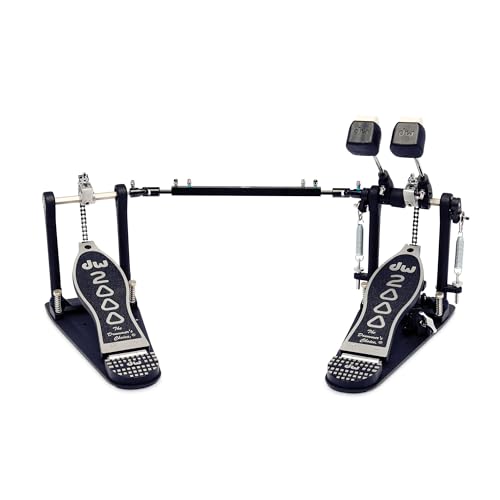
Single-Chain Accelerator Drive System

【Adjustable Bass Drum Pedals】You can adjust the spring tension and beater angle of the double pedal, to suit your playing style.2-way beaters can be used together or one on each pedal.

✅【Powerful Double Bass Drum Pedal】Our double bass drum pedal offers rhythmic capabilities that a single pedal can't match. Execute rapid double kick patterns and complex rhythms with ease, enhancing your versatility and creativity. Whether you're rocking heavy metal or exploring intricate jazz beats, this double kick pedal empowers you to elevate your skills and dynamic expression.
Equipment Essentials for Progressive Drumming
Equipment in progressive drumming serves as the cornerstone for crafting rich, intricate soundscapes that define the genre. Drummers typically utilize larger drum sets, often exceeding the standard four or five pieces, to explore a wider range of sounds. This expansion allows for the incorporation of diverse cymbal arrangements, including crash, Chinese, and splash cymbals, which enhance rhythmic complexity. Additionally, equipment essentials may include extra sound sources like glockenspiels and gongs, further diversifying the sonic palette. As drummers tailor their setups to individual preferences, some may integrate electronic components or hybrid kits to embrace modern techniques. This variety not only reflects personal style but also speaks to the evolving nature of progressive rock and its unique drumming demands. Many progressive drummers benefit from electronic drum modules with customizable drum kits that offer a range of sounds and practice features to support complex rhythmic patterns.
Recommended Products

CABLE HARNESS SNAKE LOOM: Cable harness snake loom is made of high-quality and durable materials, well designed to suit your needs for electronic drum harness. Fit for Alesis cable harness snake loom has high signal transmission efficiency. Nickel-plated plug has good resistance to friction and wear, delicate and bright appearance, and long service life.

Just attach the EAD10 sensor to your bass drum and you've created a complete hybrid system with a kick trigger and a stereo microphone

Expandable V-Drums sound module powered by the same advanced drum engine as the top-tier V71
Collaborative Learning and Community Resources
Community resources play an essential role in the development of drummers pursuing the complexities of progressive rock. Engaging with online drumming communities, especially on social media platforms, fosters collaborative learning, where drummers share insights on mastering odd meters. Resources such as Drumeo Edge provide structured lessons from seasoned professionals, emphasizing advanced techniques vital for maneuvering complex rhythm patterns. Meanwhile, community forums encourage members to exchange feedback, creating an inclusive environment that supports growth across different skill levels. Additionally, exploring free resources, like drum rudiments and video lessons, enables learners to become proficient in unusual time signatures. Participating in group challenges or collaborative playlists can further inspire drummers to experiment with odd meters and discover varied interpretations within the progressive rock genre. For optimized learning, many drummers find short video tutorials particularly effective to maintain engagement and quickly absorb complex concepts.
Next Steps for Aspiring Drummers
What steps can aspiring drummers take to further their journey in progressive rock drumming? First, they should familiarize themselves with odd meters, practicing foundational rhythms such as 5/4 and 7/8. Beginner songs like “Subdivisions” by Rush and “Money” by Pink Floyd serve as excellent starting points. Next, incorporating exercises that help shift smoothly between time signatures is essential, as many progressive compositions shift from 4/4 to odd meters frequently. Utilizing a metronome while practicing complex drum patterns enhances timing and precision. Additionally, seeking resources like play-along tracks and video tutorials offers valuable insights from established drummers. Finally, regularly recording and reviewing practice sessions allows drummers to identify areas for improvement in dynamic control and rhythmic accuracy, fostering growth in their music education journey. Integrating drum triggers into practice can also help improve sound sensitivity and layering capabilities, offering a more dynamic training experience.
Recommended Products

AKLOT Metronome II builds on the standard metronome with an added 24-hour timing mode and beat loop function. Via the dedicated companion app, you can adjust the screen brightness and vibration intensity, delivering a comfortable and precise beat vibration experience for wearers.

🎸【TPR ENVIRONMENTAL DRUM HEAD MATERIALS】: 10" Novel design drum pad; More interesting practice pad with the pad with audible metronome beating sound;
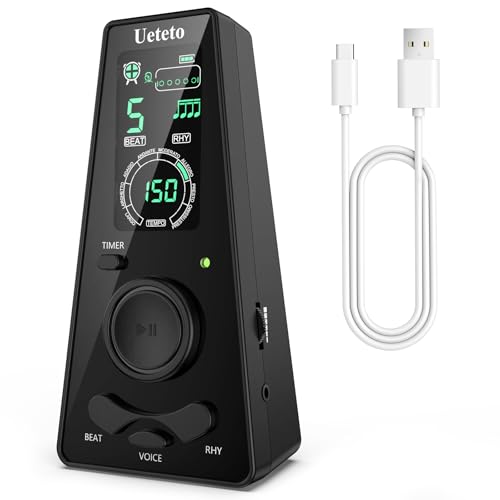
𝐃𝐢𝐠𝐢𝐭𝐚𝐥 𝐌𝐞𝐭𝐫𝐨𝐧𝐨𝐦𝐞 𝐎𝐧𝐥𝐲:This metronome for piano features a clear LCD display, flashing light, 9 rhythm patterns, 10 beats (0,1,2,3,4,5,6,7, 8,9), 40–208 BPM, volume control, and timer options for 15, 30, 45, or 60 minutes. Electronic metronome is ideal for Piano, Guitar, Drums, Ukulele, Harmonica, Saxophone, Bass, Violin, Cello, Banjo, flute, Chromatic, Trumpet, and other instruments. The screen saves power by turning off after 30 seconds and wakes instantly with any button press. (𝐍𝐨𝐭𝐞: 𝐍𝐨 𝐭𝐮𝐧𝐞𝐫 𝐟𝐮𝐧𝐜𝐭𝐢𝐨𝐧)
Frequently Asked Questions
What Are the Origins of Progressive Rock Drumming?
The origins of progressive rock drumming trace back to influential bands in the late 1960s. Their innovative drumming techniques emphasized rhythmic complexity, paving the way for future exploration in progressive rock’s signature sound and style.
How Do I Maintain Timing in Odd Meters?
To maintain timing in odd meters, one must master various time signatures through rhythmic subdivision. Regular metronome exercises can aid in developing consistent tempo awareness and adaptability, ensuring proficient execution of complex rhythmic patterns.
Can Beginner Drummers Play Progressive Rock?
Beginner drummers can certainly explore progressive rock. With essential gear, they can engage in beginner techniques and structured practice routines, gradually revealing their creative potential while traversing the intricate rhythms that define this genre.
What Is the Role of Improvisation in Progressive Rock Drumming?
Improvisation plays an essential role in progressive rock drumming, allowing for improvisational techniques that foster spontaneous creation and rhythmic freedom. Drummers explore unique time signatures, enhancing the music’s dynamic nature and deepening the emotional impact of performances.
How Can I Listen Critically to Progressive Rock Drumming?
Listening critically to progressive rock drumming involves applying techniques like analyzing drum patterns and identifying time signatures. Studies show that musicians often miss 70% of rhythmic nuances, emphasizing the importance of focused, attentive listening for deeper appreciation.