As an Amazon Associate, we earn from qualifying purchases. Some links on this site are affiliate links at no extra cost to you. Our recommendations are based on thorough research and editorial judgment.


Metal Drumming: Double Bass Techniques and Speed

Metal drumming heavily relies on advanced double bass techniques to achieve its signature aggressive rhythms. Drummers can employ various strategies, such as the heel-up, ankle motion, and swivel techniques, which enhance foot speed and agility. Mastering these methods allows for rapid execution, especially at higher tempos. Additionally, strengthening the weaker limb and diagnosing specific bottlenecks are essential for coordinated improvement. By refining skills through focused practice, drummers can reveal their full potential in this demanding genre. Discover the secrets to mastering these techniques as you continue exploring this topic.
Key Takeaways
- Utilize the heel-up technique for moderate tempos and switch to the ankle technique for faster execution at higher BPMs.
- Incorporate the swivel technique for extreme speeds over 200 BPM with a smooth, horizontal foot motion.
- Employ the L.I.C.K.S. method to isolate trouble areas and practice challenging double bass patterns effectively.
- Strengthen your weaker limb through consistent metronome practice and targeted resistance exercises to enhance overall coordination.
- Set specific goals and deadlines to create urgency, pushing your double bass speed and precision beyond comfort zones.
Foot Speed Strategies (Heel-Up, Ankle Motion, Swivel Technique & More)

You may be interested


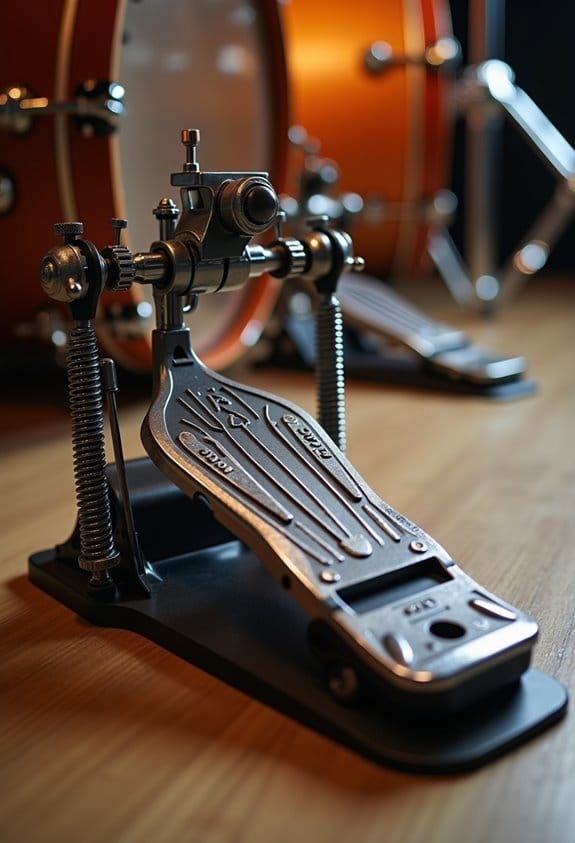
When it comes to mastering foot speed in metal drumming, various strategies can considerably enhance a drummer’s performance. The heel-up technique is effective for moderate tempos, utilizing leg power to achieve speeds between 120 and 150 BPM; however, it may struggle at higher rates. In contrast, the ankle technique, with a heel-down position, minimizes unnecessary motion, allowing for faster execution at higher BPMs, particularly useful in rapid passages. For extreme speeds over 200 BPM, drummers may employ the swivel technique, which facilitates a smooth, horizontal motion while the ball of the foot remains on the pedal. Incorporating drum rudiments into practice routines, such as the L.I.C.K.S. method, helps identify areas needing improvement, ultimately enhancing overall foot speed and control in performance. Using a chain drive pedal can further improve responsiveness and durability, supporting these advanced foot techniques effectively.
The Weak Side Myth: You’re Only as Fast as Your Worst Limb
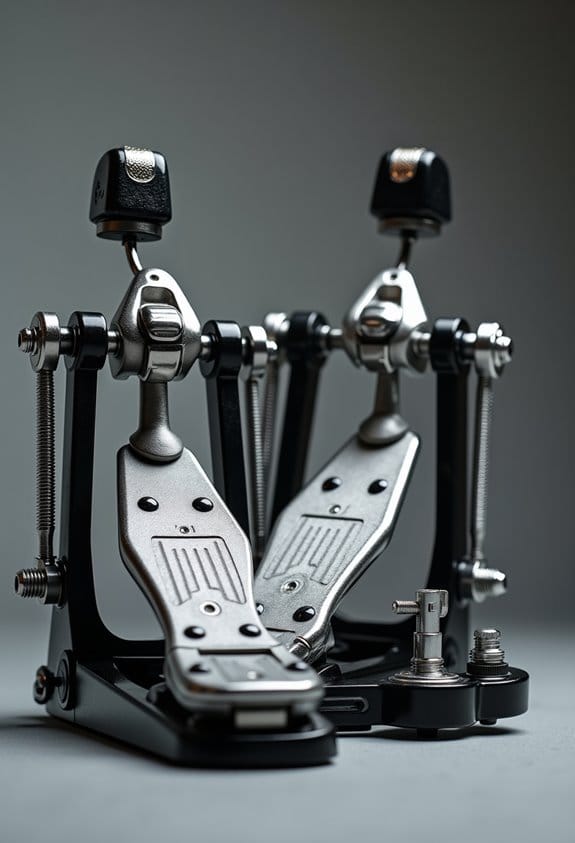
The concept of the “Weak Side Myth” in drumming highlights an important truth: every drummer’s speed and coordination can often be greatly influenced by the proficiency of their weaker limb. In double bass drumming, a drummer’s overall performance can be limited by the slower foot. To address this, practicing with a metronome can reveal timing discrepancies, allowing focused improvement on the weak side. Isolation exercises, such as single strokes, can enhance coordination and boost double bass speed. Additionally, strengthening the weaker limb through targeted resistance exercises, like varying pedal conditions, is essential. Regularly recording practice sessions provides objective assessments, marking clear differences in limb performance and reinforcing the need for dedicated practice on that neglected side. Using different drum stick weights during practice can also help improve limb strength and control, contributing to faster double bass speed.
Diagnose Your Biggest Bottleneck
How can a drummer effectively identify their most significant obstacles in mastering double bass techniques? To diagnose bottlenecks, one should first reflect on their coordination and speed. It’s beneficial to maintain a basic groove while introducing complex patterns; this will highlight areas where timing falters. Playing rolls at different volumes and tempos can also expose weaknesses in execution and timing precision. Using a metronome aids in establishing timing stability, especially during shifts. Additionally, isolating specific techniques, such as ankle motion and finger control, allows drummers to pinpoint areas ripe for improvement. Employing acoustic triggers can provide valuable feedback on timing and dynamics during practice. By diligently evaluating these aspects, drummers can enhance their double bass skills and ultimately play faster and with more finesse in their performances.
The L.I.C.K.S. Method: How to Actually Fix Problem Spots
Mastering complex drumming techniques often requires a systematic approach, and the L.I.C.K.S. Method provides just that for metal drummers. This technique emphasizes isolating trouble areas by looping specific bars of a song, allowing drummers to focus on problematic limbs individually. By breaking these challenging sections into manageable segments, drummers can gradually stitch them together for smoother execution. Practicing at “painfully slow” speeds guarantees clean technique and comfort before ramping up the tempo. Regular self-assessment is vital, as it helps identify coordination bottlenecks and precision issues. Utilizing a metronome during practice sessions not only maintains steady rhythm but also sharpens specific techniques, such as finger control and ankle motion, assuring thorough skill development. Incorporating rudimental exercises into practice routines significantly enhances hand coordination and speed, which are essential for mastering double bass techniques.
Why Stakes Make You Faster
Urgency plays a pivotal role in enhancing drumming speed and proficiency, especially for those engaged in the high-energy world of metal music. Setting specific deadlines for performances or personal goals creates a sense of urgency that accelerates practice progress in double bass drumming. Clear, tangible goals sharpen focus, leading to more effective skill development. The pressure of stakes drives drummers to push beyond their comfort zones, enabling faster improvements in technique. Small milestones encourage consistent advancement, while high-pressure practice scenarios can lead to breakthroughs in speed and precision, essential for mastering fast-paced styles. Ultimately, embracing urgency transforms practice sessions, motivating drummers to achieve new levels of control and speed in their craft. Incorporating hand percussion instruments known for their rhythm-enhancing qualities can further improve timing and coordination during practice.
For Beginner Drummers: Learning Drums Faster With Strong Fundamentals
Building a solid foundation in drumming is essential for beginners who aspire to progress swiftly and effectively. Emphasizing a proper grip, posture, and stroke techniques greatly enhances coordination across multiple limbs, allowing for a more fluid playing style. To improve, beginner drummers should engage in consistent daily practice sessions, as even short durations yield better results than infrequent longer practices. Recording these sessions enables drummers to objectively assess their kick drum technique and identify weaknesses in their performance. Additionally, isolating specific coordination issues during practice fosters targeted improvements. Understanding foot mechanics, such as heel-up and ankle movement, lays a critical groundwork for mastering advanced rhythms, particularly in metal drumming, ultimately accelerating the learning process and enhancing overall rhythm proficiency. Utilizing quiet practice kits with realistic stick rebound can significantly aid in developing technique without disturbing others.
Frequently Asked Questions
How Do Drummers Play Double Bass so Fast?
Drummers achieve impressive double bass speeds through precise foot coordination, mastering techniques like heel-up and heel-down, maintaining consistent foot contact with the pedal, and practicing with a metronome to enhance timing and control.
What Is the 80/20 Rule in Drumming?
Practice habits play a pivotal role in mastering drumming, as the 80/20 rule reveals that 80% of progress arises from focusing on 20% of effective techniques, enhancing efficiency and elevating overall performance considerably.
How to Get Faster at Double Bass?
To achieve faster double bass speeds, one must focus on technique isolation, practicing specific patterns gradually increasing the tempo. This method enhances control, timing, and efficiency, enabling smoother execution of rapid double bass beats over time.
Who Is the Best Double Bass Metal Drummer?
Derek Roddy is often regarded as the best double bass metal drummer, supported by drummer comparisons emphasizing his unparalleled speed and technical expertise. His influence shapes the genre, particularly in technical death metal and extreme rhythms.