As an Amazon Associate, we earn from qualifying purchases. Some links on this site are affiliate links at no extra cost to you. Our recommendations are based on thorough research and editorial judgment.

Hip Hop Drum Programming Vs Live Playing

In hip-hop production, the choice between live drums and programmed beats greatly influences the final sound. Live drums provide organic warmth, capturing nuances through human expression and room acoustics, while programmed beats offer precision and extensive sound libraries. Combining elements from both approaches creates engaging rhythms, enhancing the overall track. Microphone placement and ambient cues play vital roles in capturing the best sound quality from live recordings. Understanding these dynamics can help producers create richer beats, leading to exciting sonic possibilities ahead.
Key Takeaways
- Live drums provide a rich and organic sound, enhancing emotional resonance and capturing ambient spaces unique to each performance.
- Programmed drums offer precise control over timing, enabling intricately crafted rhythms and rapid experimentation tailored to various hip-hop styles.
- A hybrid approach merges live and programmed elements, allowing for dynamic textures and authenticity while adapting to evolving trends.
- Ambient cues from live recordings enhance spatial qualities, adding depth not typically achievable with purely programmed beats.
- Incorporating human-like timing and dynamics into programmed tracks can create authenticity while maintaining the structural advantages of digital production.
The Unique Qualities of Live Drums

You may be interested


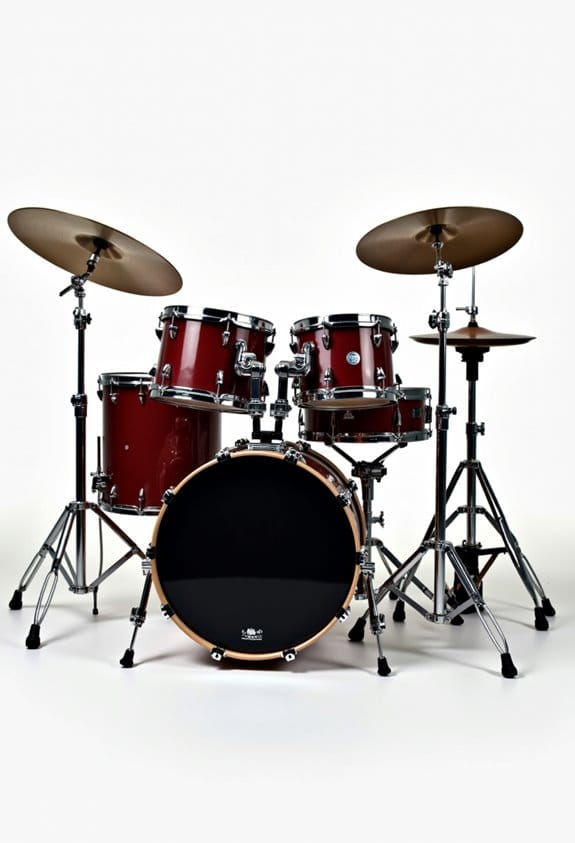
The unique qualities of live drums bring an unparalleled depth to music production, mesmerizing listeners with their rich and organic sound. Unlike programmed beats, live drums feature distinct timbral and spatial characteristics that enhance sound design. These acoustic drums capture the ambient cues from room mics, adding complexity through harmonic overtones. In addition, the human element introduces micro-timing variations and expressive nuances, like ghost notes, that create a compelling rhythmic feel. This improvisational nature allows for an organic interaction between the drummer and the music, fostering unique energy. The integration of live drums not only serves as a natural “glue” for a track but also contrasts sharply with the often sterile sounds produced by isolated samples and drum machines. For drummers looking to hone their skills and bring life to their performances, using practice pads is essential for developing perfect timing and technique.
Advantages of Drum Programming
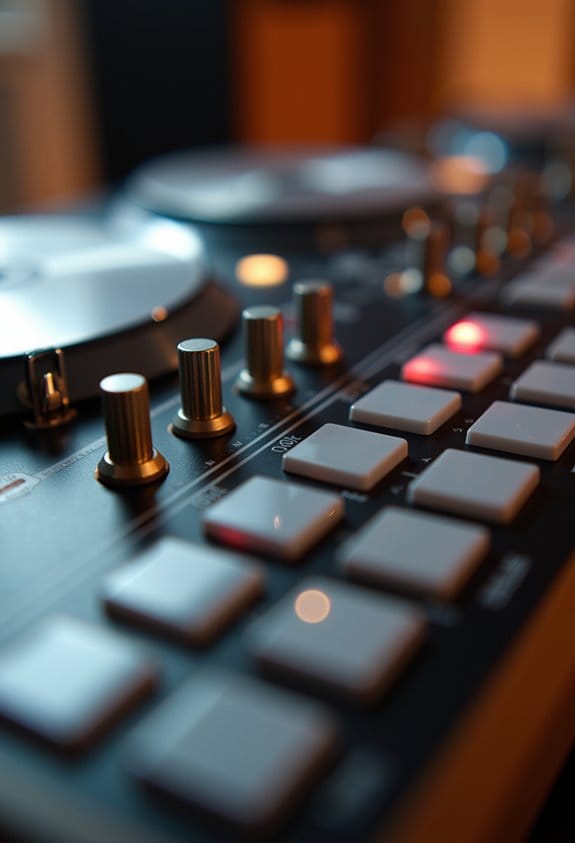
While exploring the world of music production, producers often find that drum programming offers a range of advantages that can truly elevate their creative projects. Programmed drums provide precise control over details like timing, pitch, and dynamics, making them invaluable in genres such as EDM and hip-hop that require accuracy. With an expansive library of modern drum sounds, producers can blend synthesized elements with sampled hits, customizing their beats to fit various styles effortlessly. Additionally, the swift editing capabilities of drum programming enhance workflow, allowing for rapid experimentation with patterns. Creating intricate rhythmic structures, including complex fills and syncopated patterns, becomes more manageable with programmed drums, ultimately enthralling listeners and pushing creative boundaries. Many producers rely on customizable MIDI patterns to fine-tune velocity and timing for a more natural feel in their programmed beats.
Combining Live and Programmed Elements

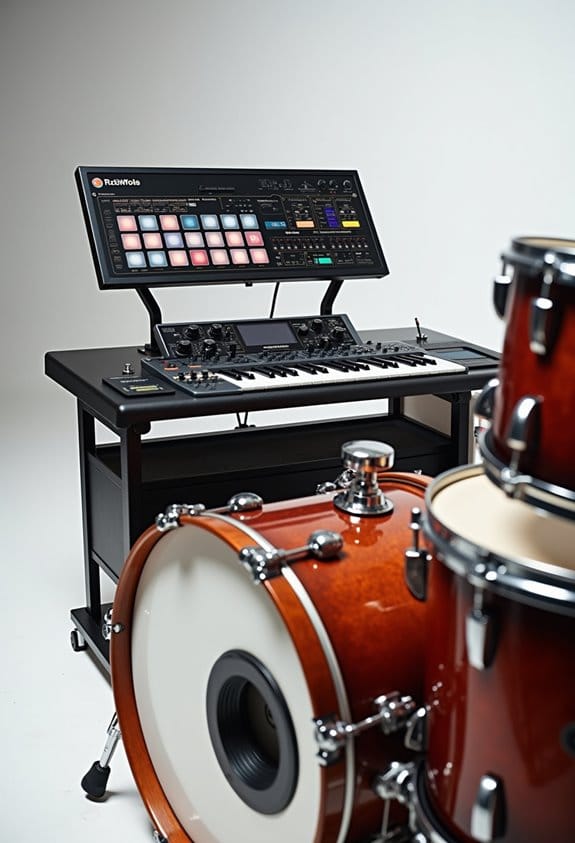
Combining live and programmed elements in hip-hop production results in a dynamic and rich sound that resonates with listeners. This hybrid approach enhances the overall texture, allowing producers to blend the warmth of live drumming with the precision of drum machines. By mixing drums recorded with unique articulations and micro-timing alongside programmed samples, a ‘glue’ effect becomes evident, adding complexity to the final mix. For those who want to make my own drums, utilizing ambient cues from room mics in live recordings can enhance spatial qualities, enriching the overall sound. Additionally, this combination enables genre fusion, allowing producers to adapt their beats to evolving trends in hip-hop, making their music more engaging and distinctive. Using effective noise isolation headphones during recording and mixing ensures clarity and minimizes distractions, ultimately improving the production quality.
The Impact of Room Acoustics on Sound
Room acoustics play a pivotal role in shaping the sound quality of recorded drums, influencing how they resonate and feel in a mix. The size and shape of a recording room can greatly affect the clarity and timbre of drum breaks, impacting their overall effectiveness. Proper room treatment, including acoustic panels and diffusers, enhances sound quality by reducing unwanted reflections. Additionally, ambient cues captured by a room mic give drum recordings a unique spatial quality, enriching the sound that often goes missing in programmed beats. The interactions between live drums and their environment result in complex harmonic overtones, creating a fuller sound. As a result, careful microphone placement can help maximize phase coherence and prevent mic bleed, achieving a cohesive drum sound. Incorporating acoustic foam panels and other soundproofing materials ensures a balance between sound absorption and blocking, optimizing the drum recording environment.
Techniques for Layering Drums
Layering drums entails a creative fusion of various percussion elements that can elevate the overall sound of a music track. Effective layering techniques involve combining programmed beats from a drum machine with live drums, creating a rich and diverse audio experience. By isolating and analyzing individual drum sounds, musicians can assess their unique timbral qualities, ensuring a cohesive blend. Influenced by historical boom-bap practices, modern approaches integrate ambient cues from room mics, enhancing depth. Careful microphone placement is essential, as it affects phase coherence and prevents a thin sound when layering. Achieving a balanced sound requires skillful management of the precise nature of programmed elements alongside the expressive nuances of live performances, ultimately leading to authentic beat production. Many drummers now utilize drum trigger modules to seamlessly blend electronic and acoustic elements in their layered tracks.
Creative Possibilities With Drum Machines
While many musicians historically relied on live instruments to create rhythm, the advent of drum machines has revolutionized the music-making process, offering a vast array of creative possibilities. Not only do these devices provide precision and consistency in timing, but they also allow producers to explore intricate details like snare pitch and hi-hat swing. By blending synthesized drum sounds with sampled hits, artists can craft unique textures that enhance their sound. Additionally, the capability for real-time triggering of samples promotes spontaneity, making it easier to experiment while making something new. Advanced techniques, like layering kicks and adding swing quantization, elevate a track’s groove, demonstrating how drum machines can expertly augment traditional drum kits, ultimately broadening the horizons of rhythm-based music. Modern drum machines often incorporate velocity-sensitive pads to capture nuanced performances and greater expressiveness.
The Role of Human Expression in Drumming
Human expression in drumming frequently introduces subtleties and nuances that elevate music beyond mere rhythm, enhancing the emotional impact of a track. The interplay of live drums with their recording environment generates complex harmonic overtones, imbuing the music with warmth and authenticity. Unique techniques, such as rim clicks and ghost notes, allow drummers to add expressive fills that create nuanced grooves. These grooves evoke a range of emotional responses from listeners, setting live performances apart from programmed beats, which may lack similar depth without meticulous manipulation. In hip-hop, the human touch and feel greatly influence the overall vibe of the piece, offering dynamic intensity that shifts from understated to thunderous, making each drum part distinctly impactful and engaging. Using high-quality drum sample libraries can further enhance programmed beats by adding dynamic playability and realistic textures that mimic live performance nuances.
Challenges in Recording Live Drums
Recording live drums presents a unique set of challenges that can greatly impact the quality of a final track. The drummer’s skill and the condition of the drum kit notably influence the overall sound, with a professional, well-maintained kit yielding better results. Additionally, room size and treatment affect acoustics, creating variations in character and richness through reflections and absorption. Microphone placement is critical; improper positioning, whether with close miking, overheads, or room mics, can lead to phase issues, compromising sound quality. Moreover, acoustic leakage from other instruments complicates isolation, making it harder to achieve clarity. Editing and comping live drum tracks demand patience and skill, as one must maintain the natural feel while addressing timing inconsistencies and seamlessly blending takes. Using shockproof clips can greatly improve microphone stability during performances, ensuring consistent sound capture.
Programming for Realism in Drum Tracks
Achieving realism in programmed drum tracks is both an art and a science, blending technical skill with creative expression. To create authentic sounds, programmers often incorporate human-like variations in timing and dynamics, reflecting the subtle imperfections of live drumming. Layering different drum samples enhances depth; careful attention to tuning and tonal quality guarantees a cohesive sound. Techniques such as swing and groove quantization replicate the feel of live performances, offering an organic quality to beats. The combination of acoustic and electronic elements introduces unique textures, permitting dynamic manipulation like a live drummer. Additionally, incorporating ambient cues from room sounds enriches tracks, adding spatial elements that help listeners connect more deeply with the music’s emotional essence. Incorporating targeted drum stick control techniques can help drummers translate this realism into live playing, further bridging the gap between programming and performance.
Exploring Hybrid Drumming Techniques
While many musicians have traditionally favored either acoustic or electronic drumming, hybrid drumming techniques offer an intriguing middle ground that embraces the strengths of both worlds. Emerging in the 1980s, this approach blends live drum sounds with electronic elements, allowing for unique sound textures that appeal widely, especially in genres like hip-hop. By layering and triggering samples in real-time, musicians can create a fuller sonic experience, enhancing their live performances. However, effective hybrid drumming requires careful phase alignment to avoid cancellation, ensuring that the combination of sounds feels cohesive and natural. This fusion not only generates dynamic rhythms but also opens the door for innovative genre blending, making hybrid drumming a popular choice among contemporary artists seeking versatility and creativity. Modern musicians often leverage electronic drum modules with advanced sampling capabilities to achieve the highest sound quality and customization in their hybrid setups.
Choosing the Right Approach for Your Music
The choice between hip hop drum programming and live playing greatly influences the final sound of a track, as each approach brings distinct qualities to the table. Live drums offer unique timbral and spatial qualities that can evoke emotional responses, introducing expressive nuances such as micro-timing variations. In contrast, programmed drums provide precision and consistency, allowing producers to meticulously craft beats suited for specific genres. Additionally, blending both elements can produce a richer sound; the ‘glue’ from live recordings enhances the tight control of programmed beats. Emerging producers may find that using programmed drums establishes structure, while live elements introduce authenticity, ultimately creating a well-rounded rhythmic foundation tailored to their music. Choices shape the overall groove and feel, inviting creativity.
Frequently Asked Questions
What Is the 80/20 Rule in Drumming?
Ironically, many drummers believe excessive practice yields the best results. However, the 80/20 rule emphasizes that just a few impactful rhythmic patterns and performance techniques can drive a track’s energy, making concise practice more effective.
How to Make Programmed Drums Sound More Real?
To make programmed drums sound more real, one should focus on groove layering, select high-quality samples, and incorporate velocity variations. These techniques simulate the nuances of live drumming, enhancing the overall authenticity and feel of the track.
What Is the Hardest Genre to Learn on Drums?
Many consider jazz, with its improvisation techniques, to be the hardest genre to learn on drums. However, metal’s demanding dynamics and Latin rhythm patterns also pose significant challenges, each requiring unique skills and mastery.
How Can You Tell the Difference Between a Drum Machine and a Live Drummer?
The difference between a drum machine and a live drummer is evident through drum machine characteristics, such as consistent hits and synthetic sounds, contrasted with live drummer nuances like rhythmic variations, dynamic fills, and rich, ambient timbres.