As an Amazon Associate, we earn from qualifying purchases. Some links on this site are affiliate links at no extra cost to you. Our recommendations are based on thorough research and editorial judgment.

Essential Jazz Drum Techniques and Ride Cymbal Patterns

Essential jazz drum techniques focus on mastering coordination and rhythm. The Push and Pull Technique enhances stroke efficiency through a loose grip, while Slow and Medium Jazz Ride Techniques target clarity in tempos ranging from 60 to 130 BPM. For faster settings, the Medium/Medium Up Technique integrates skip beats and heel-toe foot movement, improving overall rhythm execution. Understanding the evolution of ride patterns and the impact of influential drummers enriches one’s drumming style. Exploring these concepts opens up further discoveries in jazz drumming.
Key Takeaways
- Mastery of loose French grip enhances control and consistency across varied tempos for effective jazz drumming.
- The Push and Pull Technique improves efficiency in ride strokes while incorporating skip beats for dynamic rhythm.
- Coordinated independence allows seamless execution of different patterns with hands and feet, enriching musical conversations.
- Understanding the evolution of ride patterns through influential drummers provides context for modern play and style development.
- Selecting quality cymbals and appropriate drum heads is crucial for achieving desired tonal characteristics and responsiveness in jazz drumming.
Importance of Technique and Resources
You may be interested


The foundation of jazz drumming lies in the mastery of technique, which serves as the bedrock for expressive performance and effective communication among musicians. Mastering basic techniques, such as a loose French grip, proves crucial, as it allows drummers to maintain control and consistency in various tempos. Techniques like developing coordinated independence among hands and feet also enhance a drummer’s ability to navigate complex rhythms seamlessly. Additionally, embracing different rhythm techniques is essential for achieving clarity, especially in genres with varying BPMs. Resources such as instructional videos, drumming books, and practice worksheets can guide drummers in honing these essential skills. Overall, understanding and applying these techniques fosters a robust foundation for impactful jazz drumming and collaboration with fellow musicians. Incorporating interactive learning tools can significantly enhance skill acquisition by providing visual and auditory feedback tailored to jazz rhythms.
The Push and Pull Technique
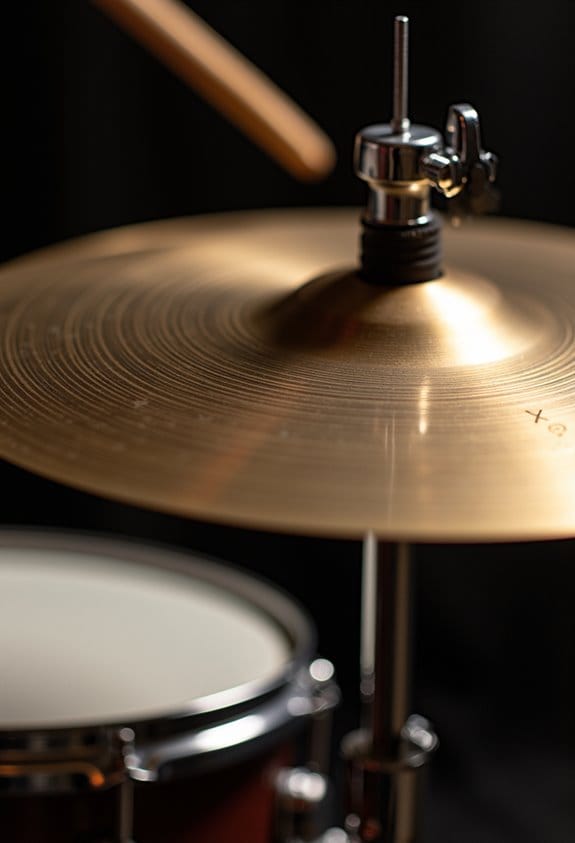
Mastering the Push and Pull technique transforms a drummer’s approach to rhythm, enabling enhanced efficiency and expression. This method involves alternating between an Open Position, where the stick is thrown, and a Close Position, where the stick is caught. By facilitating two strokes from a single motion, the Push and Pull technique proves vital in jazz drumming, increasing stroke quantity on the ride cymbal. A loose grip, particularly the French grip, guarantees better control and fluidity, allowing the stick to bounce several times before catching it. Additionally, understanding skip beats is significant for implementing this technique in advanced drumming, as it fosters intricate rhythms while maintaining tempo. Ultimately, mastery of the Push and Pull technique enhances a drummer’s rhythmic expression across various tempos. Incorporating quality cymbals into practice can further enrich the tonal character and dynamic range achievable with this technique.
Slow/Medium Jazz Ride Technique
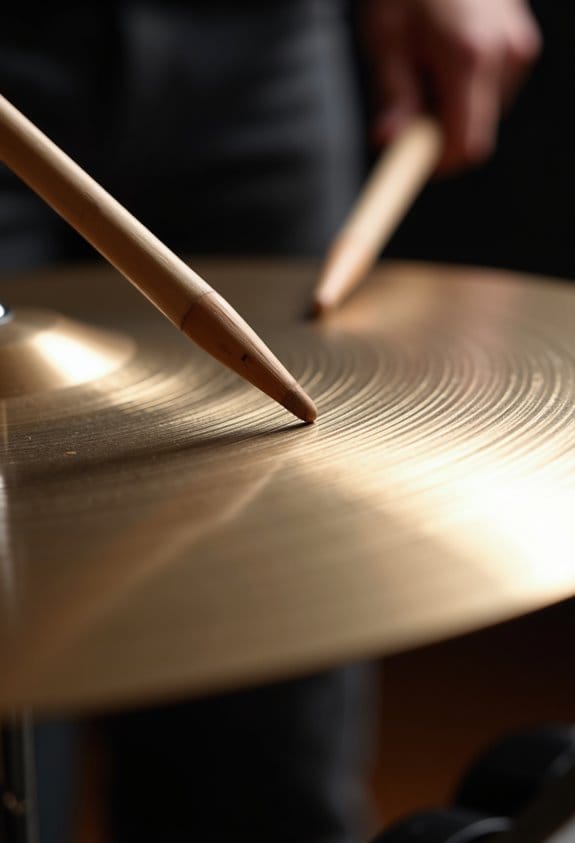
In jazz drumming, the Slow/Medium Jazz Ride Technique is vital for achieving a smooth and engaging rhythm, particularly at tempos ranging from 60bpm to 130bpm. This technique emphasizes a loose French grip, allowing for better control over the Ride Cymbal, which plays a significant role in a drummer’s overall sound. Maintaining consistent motion between strokes is imperative; irregularities can lead to weak performances that disrupt the music’s feel. Key to this technique is wrist movement, which guarantees clarity and helps maintain tempo. Drummers use a throwing motion for open strokes and a catching motion for closed strokes, utilizing the Push and Pull method for efficiency. Mastering this foundation lays the groundwork for more complex ride patterns in jazz drumming. Additionally, selecting the appropriate drumstick weight and tip, as it affects dynamics and articulation, can greatly enhance the effectiveness of this technique.
Medium/Medium Up Jazz Ride Technique
A nuanced understanding of the Medium/Medium Up Jazz Ride Technique is essential for drummers looking to thrive in fast-paced jazz settings, typically ranging from tempos of 140bpm to 220bpm. This technique emphasizes a loose French grip, allowing for maximum control. Drummers utilize an Open/Close hand motion for skip beats, following a pattern that opens on the and of 2 and closes on 3, continuing similarly for the and of 4 and 1. Achieving rhythmic clarity depends on executing three strokes effectively, which helps maintain a precise time flow during performances. At these faster tempos, 8th notes should be played straight, ensuring consistency. Mastery of this jazz ride technique enables drummers to adapt to the dynamic shifts in ensemble playing. Additionally, incorporating the heel toe technique can help drummers increase speed and complexity in their footwork, enhancing overall rhythmic performance.
Up-tempo Jazz Ride Technique
The Up-tempo Jazz Ride Technique builds on the foundation laid by the Medium/Medium Up Jazz Ride Technique, taking the principles of stick control and rhythmic clarity to even greater heights at tempos of 240bpm and above. At these fast speeds, drummers must maintain a straight 8th note pattern, ensuring a steady ride cymbal sound that underpins the ensemble’s pulse. Employing the Open/Close hand technique is essential; it allows for rapid stick movements and precise adherence to rhythmic patterns. A three-stroke pattern, effectively executed with this technique, bolsters rhythmic clarity and tempo consistency. Additionally, coordination between the ride cymbal and other percussion instruments is vital, reflecting foundational patterns established at slower tempos. Consistent practice cultivates proficiency in maneuvering intricate jazz rhythms. Choosing the appropriate bass drum depth is also crucial for achieving the desired sound projection and tonal balance in jazz performances, with shallower drums often preferred for their articulate tones.
Concept of Coordinated Independence
Coordinated independence serves as an essential skill in the domain of jazz drumming, enabling musicians to weave intricate rhythms seamlessly while maintaining the pulse of the ensemble. This concept refers to the ability to execute distinct rhythmic patterns with the snare drum and bass, allowing the drummer to create a rich texture of sound. By playing different figures against the ride cymbal and hi-hat, drummers can enhance their musical conversation within the group. Mastering this skill fosters an effective response to fellow musicians, ensuring that the time flow remains uninterrupted. Additionally, coordinated independence allows drummers to employ complex comping styles, accentuating figures behind soloists and enriching the overall performance, making it an essential element in jazz drumming. Regular practice focusing on fundamental drum rudiments is crucial to developing the necessary coordination and fluidity for mastering coordinated independence.
Practice Approach for Mastery
Mastering jazz drumming does not happen overnight; it requires a structured practice approach that focuses on building the fundamental skills of coordinated independence. Beginners should start by isolating rhythmic figures on the snare and bass drums against the ride cymbal and hi-hat. Though these initial exercises may seem challenging, persistence and consistent practice will lead to proficiency. It is essential to play each component as written for effective learning. As one progresses, attention should shift entirely to the snare and bass figures, allowing the ride cymbal and hi-hat patterns to operate independently. This dedicated practice approach for mastery will not only enhance coordinated independence but also prepare the drummer to comp behind jazz soloists and contribute meaningfully in ensemble settings. Utilizing resources that offer progressive exercises can significantly aid in developing these complex coordination skills.
Skills Development for Jazz Drumming
Although developing skills for jazz drumming might seem challenging at first, it is essential to understand that this process is both rewarding and incremental. The mastery of coordinated independence allows drummers to perform different rhythms with their hands and feet, enhancing their support for fellow musicians in jazz settings. Effective practice should involve focusing on four separate exercise parts, ensuring precision for ideal learning. Techniques like the Open/Close hand method increase clarity, making it easier to play complex patterns on the ride smoothly across various tempos. Additionally, by listening to recordings from pioneering drummers, practitioners can grasp different ride patterns, immersing themselves in the rich history and techniques essential for their skills development for jazz drumming, much like a modern drummer would. Choosing the appropriate drum heads, such as single-ply options that provide resonance and brightness, can greatly influence the tonal quality required in jazz practice (single ply heads).
Evolution of the Ride Pattern
The ride cymbal pattern, a fundamental element in jazz drumming, has undergone significant evolution since its inception in the late 1920s. Initially, it focused on producing a sustained ride cymbal sound that provided a steady pulse for musicians. Early recordings, such as Ben Pollack’s “Room 1411,” highlighted this emerging technique. Drummers like Zutty Singleton and Gene Krupa played pivotal roles in refining these patterns by merging traditional methods with modern jazz elements. By the late 1930s, Kenny Clarke’s inventive approach in “I Hear Music” showcased rhythmic variation, illustrating the change towards more intricate ride cymbal usage. This transformation mirrored broader musical influences and signify a dynamic interplay of creativity and innovation within jazz drumming. Musicians benefit from durable zippers on their cymbal bags to protect their ride cymbals during transport to gigs.
Influence of Key Drummers on Ride Cymbal Techniques
Key drummers in jazz history have greatly shaped the implementation and evolution of ride cymbal techniques, reflecting their creativity and innovation. Zutty Singleton introduced techniques like dampening with his left hand, bridging rhythmic traditions from the 1920s to the 1950s while fostering innovation. Gene Krupa’s blending of diverse influences in the late 1930s led to clarity in ride patterns within the Chicago jazz scene. Chick Webb’s unique patterns inspired future drummers, earning praise from contemporaries like Artie Shaw. Meanwhile, Kenny Clarke’s rhythmic variations showcased the intricate connection between ride cymbal patterns and vocals in recordings. Collectively, these key drummers laid a foundation for ride cymbal techniques essential to jazz, allowing musicians to adapt and evolve styles across various geographic regions. Incorporating sensitivity and response considerations when using modern drum hardware can further enhance the nuanced expression of these traditional techniques.
Frequently Asked Questions
What Are the Basic Components of a Jazz Drum Set?
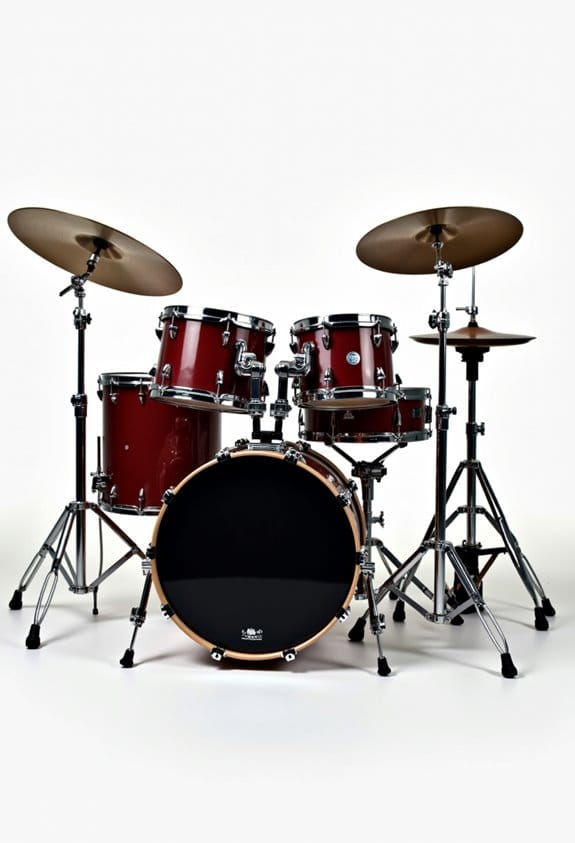
A jazz drum set boasts an impressive array, typically comprising a bass drum, snare, toms, and cymbals. Mastering drum tuning elevates each component’s resonance, ensuring rhythmic perfection that captivates audiences in vibrant, improvisational performances.
How Do I Choose the Right Ride Cymbal for Jazz?
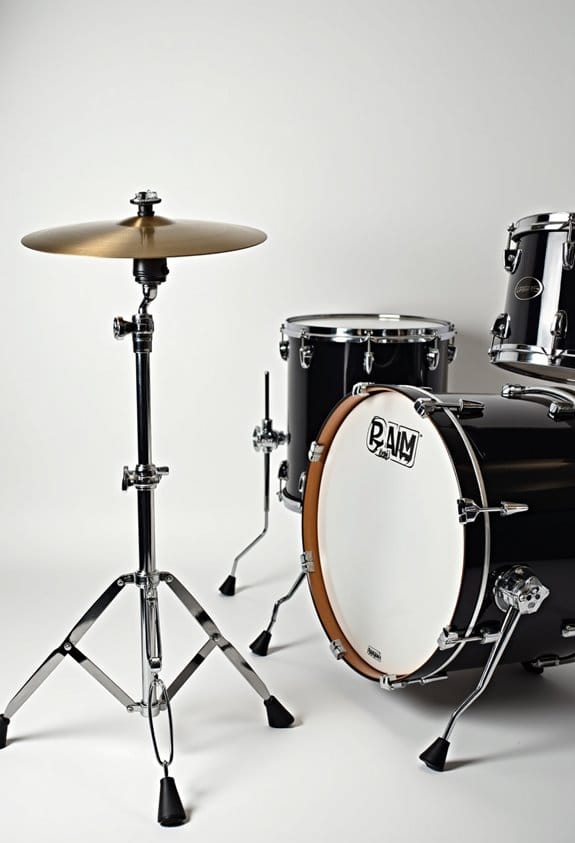
Choosing the right ride cymbal for jazz involves considering factors like size, weight, and materials. Cymbal selection should prioritize a balanced tone and responsiveness, allowing for versatile expressions that complement the improvisational nature of jazz performance.
What Is the History Behind the Evolution of Jazz Drumming?
Like a river carving valleys, jazz drumming evolved through drum innovations, merging African rhythms and European influences. This journey transformed simplicity into complexity, reflecting a rich tapestry of cultural intersections, redefining the landscape of modern music forever.
Can I Apply Jazz Drum Techniques to Other Music Genres?
Genre adaptation is possible with jazz drum techniques, as they provide unique rhythmic and dynamic elements. Many drummers effectively incorporate these principles into genres like rock, funk, and Latin, enriching their versatility and musical expression.
What Are Common Mistakes Beginners Make in Jazz Drumming?
Common mistakes beginners make in jazz drumming often stem from timing issues, leading to a lack of cohesion in ensemble playing. Many underestimate the importance of listening and adapting during performances, hindering their overall musical growth.