As an Amazon Associate, we earn from qualifying purchases. Some links on this site are affiliate links at no extra cost to you. Our recommendations are based on thorough research and editorial judgment.

Configuring Double Bass Pedals for Optimal Performance

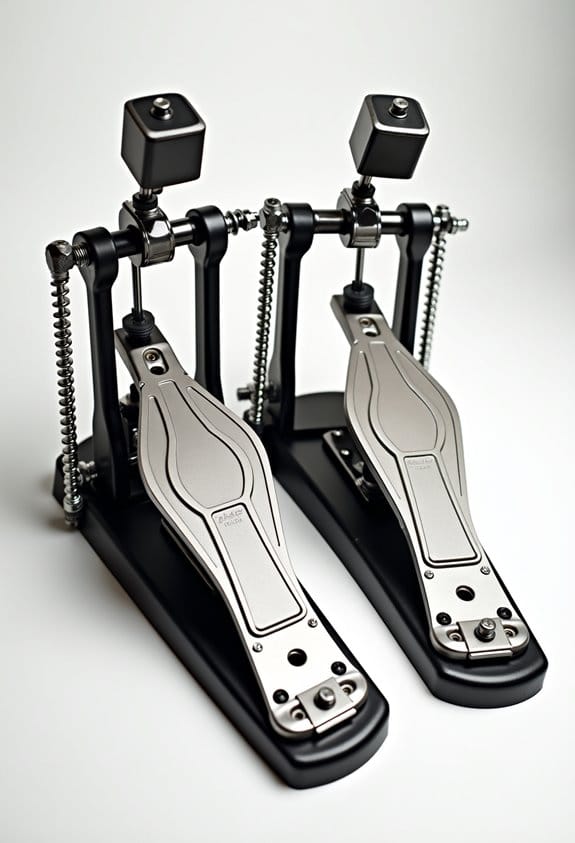
Configuring double bass pedals for peak performance requires careful attention to detail. First, connect the main and slave pedals securely, ensuring proper alignment. Next, clamp the main pedal firmly to the bass drum for stability. Adjust spring tension, with a recommended midpoint for both pedals, and set the footboard angle to about 20-25 degrees for comfort. Finally, check your seating position and pedal height to maintain an effortless playing style. Discover more techniques to enhance your drumming setup.
Key Takeaways
- Ensure accurate alignment and secure attachment of main and slave pedals for optimal transfer of energy and responsiveness.
- Adjust spring tension to achieve a balanced feel, starting at halfway tension for speed and control during play.
- Set footboard angles at 20-25 degrees to maintain comfort, prevent fatigue, and promote efficient movement.
- Experiment with pedal height and distance to find a comfortable setup that supports stamina during extended playing sessions.
- Utilize suitable pedal types, such as direct drive or longboard models, tailored to your musical style and performance needs.
Connect the Pedals Together

You may be interested


When setting up double bass pedals, connecting the pedals together is an essential step that lays the groundwork for an effective and efficient drumming experience. This connection involves linking the main and slave pedals using a drive shaft, which requires careful alignment before tightening with a drum key. It’s important to first adjust the height and angle of the slave pedal to match the main pedal, ensuring consistent playability across both. Additionally, attaching the second kick drum beater to the main pedal at a similar height as the primary beater promotes balanced striking. While the length of the drive shaft doesn’t require exact measurements at first, comfort and accessibility should remain priorities to facilitate smooth pedal settings during performance. Many double bass pedals feature adjustable beater angles that can be fine-tuned after connecting for optimal rebound and feel.
Clamp the Main Pedal to the Bass Drum

Securing the main pedal to the bass drum is essential for establishing stability during drum performance. To achieve this, a clamp should be used to attach the main pedal firmly to the bass drum hoop. Depending on the type of pedal, the clamp can be tightened using a wing bolt or a drum key, ensuring a secure fit that holds up during vigorous playing. For ideal performance, it is also advisable to position the bass drum slightly angled to the right, which allows for better foot placement and reach to the pedal. Additionally, using a hoop protector, which can be made from cardboard or purchased specifically, helps avoid marks on the bass drum, maintaining its appearance while enhancing functionality. Choosing pedals with clamp-on systems can simplify installation and avoid damage to the drum.
Recommended Products

2 x C414 XLS Sonically Matched Pair - Engineered for highest linearity and neutral sound for beautifully detailed recording of vocals and any acoustic instrument

Maple shells give Tour Custom drums their warm and bright tone with a 6-ply, 5.6 mm/45-degree bearing edge that adds tonal depth, quick response and just the right amount of sustain.
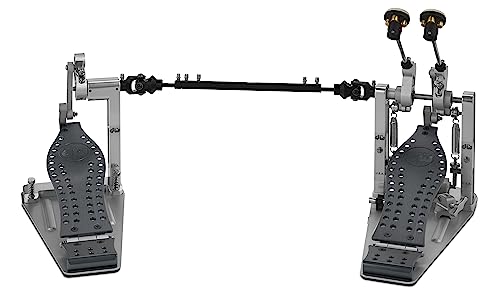
Solid Aluminum Direct Drive Cam
Adjust the Spring Tension

Adjusting the spring tension of double bass pedals is a critical step that greatly influences a drummer’s playing experience. Proper spring tension affects pedal control and responsiveness, making it essential to find the right balance based on a player’s style and skill level. Using a micro tensioner or adjusting screws can help achieve desired tightness. Ideally, the spring tension on the slave pedal should be set to about halfway, allowing for the best speed and control during performances. Beginners may benefit from looser springs for greater control, whereas advanced drummers often prefer tighter springs for faster playing and a sharper response. Ensuring equal spring tension on both pedals fosters a consistent feel, enhancing the overall performance of the double pedal setup. Selecting springs made from high-quality materials like stainless steel can improve durability and maintain tension consistency over time.
Recommended Products

Solid Aluminum Direct Drive Cam.

Premium Direct Pedal Drive with Machined Aluminum Design

Duo-Deck Longboard
Adjust the Footboard Angle if Needed
Though often overlooked, the footboard angle of double bass pedals plays an important role in a drummer’s performance. Experts recommend a footboard angle of around 20-25 degrees, as this setting promotes ideal performance by facilitating better velocity and control during play. If adjusted too steeply, drummers may experience increased tension in their legs, making it challenging to produce the desired sound. Finding a comfortable angle is vital; it guarantees that the foot remains relaxed, supporting stamina while using double kick pedals. Drummers should experiment with various footboard angles to identify one that feels natural and enhances power transfer to the bass drum. Gradual adjustments during practice allow drummers to determine how these changes may improve their overall playing technique. Additionally, selecting compatible hardware, such as the Gibraltar SC-22M bass drum hoop, can further enhance sound quality and pedal performance.
Recommended Products

A premium, professional grade single pedal you expect from Yamaha


Interchangeable Cam System (US.PAT.#6172291) Pearl's exclusive cam system provides a choice of 6 different color-coded cams (4 included and 2 more optional,) allowing you to quickly change the power and feel of the pedal to suit your individual playing needs.
Make Sure You’re Comfortable
When playing the double bass, comfort is fundamental for both performance and endurance; consequently, setting up the kit properly can make a significant difference. Musicians should verify their knees are positioned at a 90-degree angle while seated, which helps maintain comfort during prolonged sessions. It is critical to align the pedals with the feet naturally, promoting effortless movement and reducing strain on the ankles. The footboard angle should be adjusted to a comfortable 20-25 degrees, allowing ideal velocity for executing fast patterns with precision. Additionally, experimenting with pedal height and distance is essential to minimize fatigue and enhance power. Regularly checking tension settings between pedals also promotes a balanced feel, ultimately contributing to a more comfortable playing experience. Using a pedal with adjustable spring tension can further tailor resistance to match personal comfort and playing style.
Double Bass Pedal Settings
Double bass pedal settings play an essential role in a drummer’s performance, as they directly influence speed, power, and overall sound quality. Achieving the right spring tension on both double pedals is vital; beginners often benefit from looser settings for better control, while advanced drummers might prefer tighter tension to maximize speed. The footboard angle should be set between 20-25 degrees, optimizing the velocity of bass drum strikes and ensuring the beater hits near the center of the kick drum for superior sound. Adjusting the height and position of the beaters for consistent striking enhances volume and power. Ensuring equal tension and response across both pedals allows for effective coordination, especially when employing techniques like the heel-toe technique for dynamic playing. Incorporating direct drive technology in double bass pedals can greatly enhance responsiveness and precision, enabling faster footwork and improved performance.
How to Set up a Double Bass Drum Kit With Two Single Pedals
Setting up a double bass drum kit with two single pedals can be an exciting yet intricate task, requiring careful attention to detail for peak performance. First, place the bass drums slightly outward from the body, angling them for ergonomic foot placement. Employ a hi-hat stand with rotatable legs to position the slave pedal to the left of the hi-hat pedal, avoiding any obstruction. Adjust the spring tension on both pedals to be equal, with the slave pedal’s tension set midway for balanced control. Footboard angles should be set at a comfortable 20-25 degrees to enhance velocity and striking accuracy. Finally, manually test both pedals to verify they respond similarly, which is essential for executing fast double bass patterns effectively. Additionally, incorporating double chain drive pedals can significantly improve pedal response and stability during high-speed performance.
Recommended Products

Solid Aluminum Direct Drive Cam

Adjustable, Sprocket-Less Cam with Gear Shift-Style Lever

Solid Aluminum Direct Drive Cam
Single Pedal Settings
Achieving ideal single pedal settings is vital for drummers looking to enhance their performance and skill on the bass drum. To begin, properly connect the drive shaft to the pedals using a drum key, guaranteeing the slave pedal mirrors the main pedal’s height and angle. This consistent feel helps the drummer play fast with ease. Adjusting spring tension is important; looser settings offer better control while tighter settings support faster tempos. Additionally, position the foot in the pedal’s center to maximize rebound and stroke dynamics. Experimenting with footboard angle can also enhance performance, ideally setting it at 20-25 degrees for peak sound. Regularly checking tension settings through tactile feedback guarantees that both pedals respond evenly, promoting seamless coordination.
Other Double Bass Options
When exploring options for enhancing bass drum performance, drummers often discover a variety of double bass pedal configurations that can elevate their playing experience. One popular choice is the direct drive pedal system, renowned for its immediate responsiveness and reduced slack, making it ideal for faster tempos. The Tama Iron Cobra, a notable dual chain drive pedal, offers durability and performance versatility across different musical styles. In addition, longboard pedals, such as the Axis Percussion AL 2, provide extended foot travel, allowing for more powerful and fluid strokes. Moreover, adjusting pedal placements can enhance symmetry and comfort during play, particularly for the right foot, which aids in achieving ideal leg angles and reducing fatigue over extended sessions. Each drummer’s preferences ultimately dictate the best options for their specific drum set. Integrating double bass pedal practice with limb independence techniques can significantly improve coordination and rhythmic complexity.
Recommended Products

ULTRA-LIGHT WEIGHT CHAIN:The Power Chain features low-friction rollers for speed and double chain construction for power and dependability

EZ Infinite Adjustable Cam

Direct-drive Double Bass Drum Pedal with Dyna Beater
Frequently Asked Questions
How to Setup a Double Bass Drum Pedal?
To set up a double bass drum pedal, perform a hardware compatibility check, guarantee correct foot placement techniques, and conduct pedal tension adjustment for both pedals, achieving even response and ideal playing comfort during performances.
What Order Should I Put My Bass Pedals In?
To effectively arrange bass pedals, one should prioritize pedal placement strategies, aligning the primary pedal centrally with the slave pedal nearby. Assess bass drum settings and account for accessory considerations, ensuring ergonomic comfort and accessibility during play.
How to Balance a Double Bass Pedal?
Like a finely tuned instrument, balancing a double bass pedal requires careful attention to foot position, pedal tension, and consistent practice routines. Ensuring symmetry across all elements enhances control and performance during intense musical passages.
How to Get Faster at Double Bass?
To increase double bass speed, one should employ drumming speed techniques, practice endurance exercises, and optimize foot positioning strategies. This combination fosters muscle memory and control, essential for achieving faster, more precise performance over time.


