As an Amazon Associate, we earn from qualifying purchases. Some links on this site are affiliate links at no extra cost to you. Our recommendations are based on thorough research and editorial judgment.


Creating an Ergonomic Drum Setup to Prevent Injury

Creating an ergonomic drum setup is essential for preventing injuries and enhancing comfort. Start by adjusting the throne height so that the knees rest slightly below the hips. Position the snare centrally at a height that keeps shoulders relaxed. Arrange the rack toms and cymbals within easy reach, ensuring minimal shoulder strain. Regularly assess and readjust the setup based on personal playing mechanics. Following these guidelines not only improves posture but also allows for a more enjoyable drumming experience. Further insights can enrich your understanding.
Key Takeaways
- Adjust your throne height so your knees are slightly below your hips for optimal posture and comfort.
- Position the snare drum centrally at a height that allows your shoulders to remain relaxed.
- Arrange rack toms within reach to minimize strain on your arms during play.
- Set cymbals at comfortable heights to facilitate smooth arm movement and reduce shoulder tension.
- Regularly evaluate and adjust your setup based on your body mechanics to ensure ongoing ergonomic comfort.
Understanding the Importance of Ergonomics in Drumming

You may be interested

Adjusting Your Drum Throne for Maximum Comfort
February 17, 2026
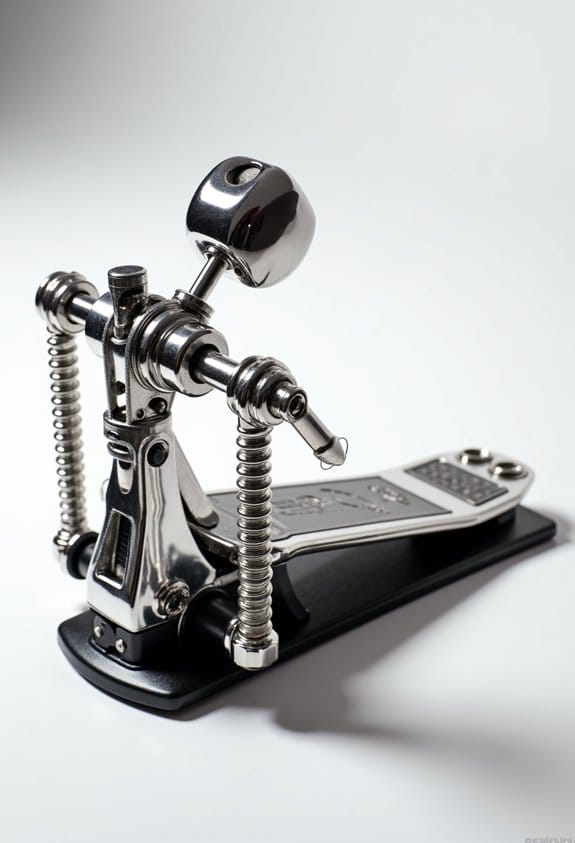
Bass Drum Pedal Positioning and Angle Adjustment
February 17, 2026
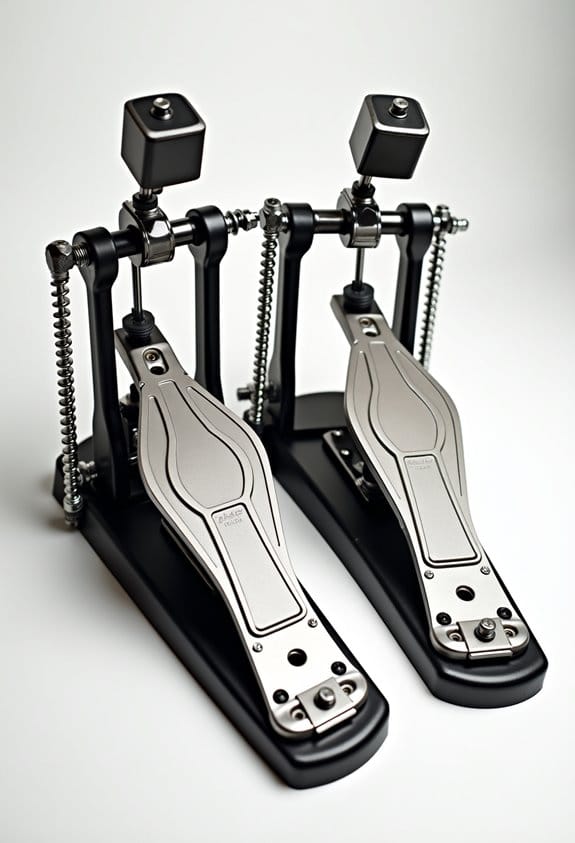
Configuring Double Bass Pedals for Optimal Performance
February 17, 2026
While drumming may seem like a straightforward activity, the importance of ergonomics in this art form cannot be overstated. An ideal drum kit setup is essential for injury prevention, helping drummers maintain proper posture and comfort during practice or performance. When the equipment is arranged correctly, with considerations such as natural reach and cymbal height, drummers can maximize their ranges of motion. This not only minimizes physical strain but also allows them to play longer without discomfort. Historically, many setups have prioritized aesthetics over ergonomic principles, which can exacerbate tension and lead to chronic pain. Regular evaluation and adjustments based on ergonomic guidelines help guarantee that each drummer can achieve their best performance while safeguarding their health. An often overlooked factor is the use of a proper adjustable drum throne, which can significantly enhance comfort and reduce the risk of strain during long playing sessions.
Recommended Products
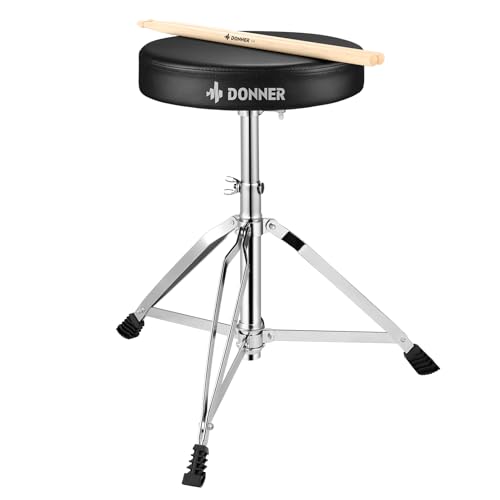
[High-density sponges] Donner's research and development team has continuously improved the high-density sponge, providing ultimate comfort and preventing the drum stool from deforming after prolonged use

【Ergonomic Seat】This stylish saddle seat is designed with ergonomics in mind, offering superior comfort with its cushion-inspired design.

MOTORCYCLE-STYLE VINYL TOP: The ergonomic, motorcycle-style seat with thigh cutouts offers enhanced comfort and freedom of movement, allowing you to sit naturally and stay agile during those intense drumming sessions.
Key Components of an Ergonomic Drum Setup

An ergonomic drum setup consists of several key components that work together to enhance both comfort and performance while minimizing the risk of injury. The throne height should be adjusted so that the knees are slightly below the hips, promoting relaxation for better kick drum leverage. Centrally positioning the snare drum at a comfortable height minimizes spinal twisting and allows for easy access. Rack toms must be arranged within natural stick reach to avoid extreme angles, thereby maintaining fluidity in movement. Additionally, cymbals should be placed to permit comfortable arm movement without excessive elbow raises, preventing shoulder strain. Regularly evaluating and adjusting the entire setup based on personal body mechanics is essential for sustaining ergonomic health and preventing injuries over time. Selecting a drum throne with adjustable height features ensures optimal comfort and support during long playing sessions.
Recommended Products

High-Quality Materials: The EASTROCK drum throne uses 7 cm high-density sponge and 30 cm diameter stool surface, which will not deform after long-term use, and is durable and reliable

Drum Stool: Our innovative stabilizer securely locks the tripod base to the support column, creating a rock-solid foundation for maximum stability during play.

Drum throne with thickened high-quality sponge cushion; Wrapped in soft, high-quality faux leather, breathable, and will not deform over time; Perfect for long-term use
Common Mistakes to Avoid During Setup

Setting up a drum kit can often lead to common mistakes that may hinder a drummer’s performance and comfort. One prevalent issue is the height of the snare and toms; positioning them too high can strain shoulders, while they should be easily reachable. Additionally, neglecting the correct angles of the arms and wrists during setup can lead to tension injuries, adding to discomfort over time. The distance between components matters too; if the throne height does not align with the pedals, it may cause poor posture and exacerbate lower back pain. Moreover, overcrowding with too many cymbals can restrict movement, leading to unnecessary tension, making accessibility and ergonomics essential for a proper drum kit setup to enhance comfort and efficiency while playing. Considering the importance of tuning flexibility in tuning drum heads can also contribute to a more comfortable playing experience.
Recommended Products

✅【Ergonomic Saddle Seat Design】: Enjoy all-day comfort with our ergonomic saddle drum throne stool, featuring a split motorcycle-style design and an extra-thick 4" plush high-density foam padding. Wrapped in premium, breathable faux leather, it reduces pressure points for enhanced support and reduced fatigue during your longest practice sessions or gigs.

Drum Stool: We’ve enhanced stability by incorporating stabilizers between the tripod and support bar, ensuring a tighter fit and a more secure drum stool.

SUPER COMFY MEMORY FOAM SEAT: The round memory foam seat is specially designed to provide exceptional comfort, ensuring you stay relaxed even during the longest gigs or practice sessions. It molds to your body for a custom fit, so you can focus on drumming without feeling fatigued.
Professional Insights for Optimal Drum Configuration
Enhancing a drum kit’s configuration not only improves a drummer’s performance but also promotes long-term health and comfort. Notable drummers offer insights to achieve an ideal set-up, emphasizing the importance of aligning pedal positions with the legs to reduce lateral torque, thereby fostering better control. Proper hi-hat heights are vital to avoid right-hand interference, aiding an ergonomic snare position that accommodates various grips. Maintaining appropriate throne height is fundamental, as it aligns legs and arms, greatly preventing injuries. Drummers are also encouraged to centralize their position on the throne when adjusting their setup, minimizing back strain. Regular self-evaluation, even in front of a mirror, guarantees that drummers can play comfortably and efficiently while maintaining an ergonomic approach throughout their practice. Using a digital drum tuner can further enhance your setup by ensuring each drum is precisely tuned, contributing to both optimal sound and ergonomic playing conditions.
Recommended Products

Stable And Reliable: UPELLA 6 support bars, 3 enlarged non-slip stool feet, provide stability and protect your floor. The bottom of the drum stool seat surface adopts the hydraulic base fixing structure, which ensures stability and flexibility at the same time.

Ergonomic Design: Ergonomic saddle shape is made to fit the body and provide comfortable seating for long sessions,3.5-inch memory foam padding with vinyl covering makes your encore a joy.

ERGONOMIC SADDLE SEAT FOR MAXIMUM COMFORT: Designed for drummers who need all-day support, the motorcycle-style saddle seat features thigh cutouts and thick memory foam padding, reducing pressure points and providing superior comfort during long rehearsals, performances, or recording sessions.
Tips for Maintaining an Ergonomic Position While Playing
In order to maintain an ergonomic position while playing, drummers must pay close attention to their body mechanics and the layout of their drum kit. A proper setup begins with adjusting the throne height so the knees are slightly below the hips, promoting a comfortable posture that alleviates strain on the lower back. The Hi-Hat Pedal should be positioned to create a natural V shape with the legs, providing optimal control for fluid movement. In addition, the snare drum should be at a height that allows for proper hand hitting while keeping shoulders relaxed. It’s essential to assess the distances and angles of all components, making sure they are evenly spaced and easily reachable, which minimizes twisting and enhances performance efficiency. Regular adjustments will guarantee continued comfort. Choosing a drum throne with adjustable height can significantly improve comfort and ergonomics during long playing sessions.
Recommended Products
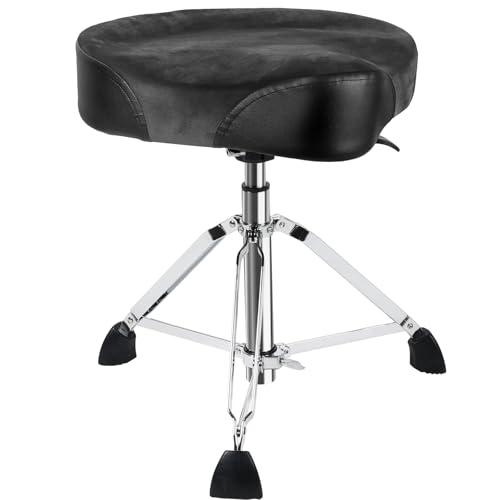
Suede Saddle Drum Throne: The combination of plush surface + high-quality black PU leather increases comfort while providing beautiful support and durability, and the...
Frequently Asked Questions
How Do I Determine the Right Throne Height for My Drum Setup?
Determining throne height involves adjusting position for ideal seat comfort and posture alignment. Practitioners should consider foot placement, preferred angle, and balance technique, ensuring compatibility with equipment while respecting individual body mechanics for effective drum ergonomics.
Can I Use a Regular Chair Instead of a Drum Throne?
A regular chair serves as a trap, limiting mobility and comfort during drumming. Drum thrones, designed for height adjustment and back support, enhance seating posture and performance, ensuring ergonomics that positively impact long-term health and joy in playing.
What Materials Should My Drum Throne Be Made From?
An ideal drum throne should feature durable materials, foam padding for comfort, breathable fabric, and adjustable height. Ergonomic design with seat contouring, stability features, and shock absorption enhances weight distribution and support cushion effectiveness.
How Often Should I Adjust My Drum Setup?
Regular adjustments, like fine-tuning a musical instrument, are essential. Drum height, stick grip, seat comfort, kit positioning, arm angle, foot placement, and back support require frequent checks to guarantee peak performance and equipment maintenance amidst rhythm breaks.
Are There Specific Exercises to Improve My Drumming Posture?
Specific posture exercises include core strengthening, flexibility routines, shoulder stretches, wrist mobility drills, and lower back exercises. Neck alignment and breathing techniques enhance balance training. Incorporating warm-up drills pre-drumming can further improve overall posture and performance.


