As an Amazon Associate, we earn from qualifying purchases. Some links on this site are affiliate links at no extra cost to you. Our recommendations are based on thorough research and editorial judgment.


Proper Drum Throne Height and Sitting Position

Proper drum throne height is essential for a drummer’s comfort and performance. Ideally, the throne should be set at about 29% of the drummer’s height, ensuring the hipbone sits above the knees. This position maintains a natural leg angle of around 145 degrees, reducing strain. Players often adjust throne heights based on their techniques, such as heel-up or heel-down styles. Exploring adjustments and variations can greatly enhance playing effectiveness, leading to better overall enjoyment of the craft.
Key Takeaways
- Set your throne height to approximately 29% of your height for optimal comfort and performance.
- Ensure your hipbone sits above knee level, allowing for reduced strain and improved posture.
- Position your snare drum 1-2 inches above your knees for the best playing experience.
- Maintain a natural leg angle of around 145 degrees to minimize fatigue and maximize ergonomics.
- Regularly adjust your throne and evaluate your body positioning to maintain comfort and prevent discomfort.
The Significance of Throne Height in Drumming

You may be interested


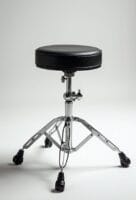
When considering the fundamentals of drumming, the importance of throne height cannot be overstated, as it greatly influences both comfort and performance. The ideal throne height is approximately 29% of a drummer’s height; for someone just under 64 inches, this would be around 22 inches. Proper throne height allows the hipbone to sit just above the knee, creating a natural leg angle of about 145 degrees, thereby minimizing strain. Aligning the throne height with the kneecaps guarantees that the snare drum is positioned 1-2 inches above the knees, promoting effective playing. A high throne position benefits heel-up techniques, while a lower throne accommodates heel-down styles, directly impacting overall drumming mechanics and the musician’s ease of movement. Many drummers prefer thrones with adjustable height features to customize their setup for maximum comfort during long sessions.
Finding Your Ideal Throne Height

How can drummers determine the perfect throne height to enhance their playing experience? A reliable method is to start with the throne set to about 29% of their height; for instance, a person just under 64 inches tall should set their throne around 18.5 inches. This height positions the hipbone above the knee, allowing a leg angle of about 145 degrees, which minimizes muscle strain. Additionally, the throne should be adjusted so the snare drum sits 1-2 inches above the player’s knee, ensuring both comfort and accessibility. It is also essential for players to take into account their technique; heel-up players may sit closer to the kick drum, while heel-down players often need more space to play effectively. Proper throne height contributes significantly to ergonomics and user comfort, reducing fatigue during extended drumming sessions.
Recommended Products

TD-07 module with 25 preset kits, 25 user kits, and 143 instruments. V-Edit, EQ, ambience, and 30 multi-effects offer deep editing tools to create your perfect drum kit sounds

Unlock Pro Mode: These Rock Band 4 drums with cymbals let you experience RB4's most challenging setting - pro mode
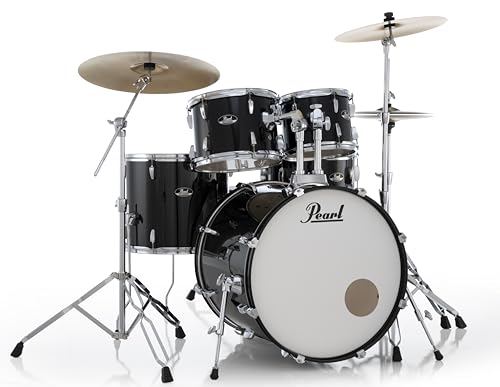
Complete Drum Set -The Pearl Roadshow drum kit comes complete with everything you need to start drumming right out of the box. This set comes with drums, hardware, cymbals, and drum throne. We even throw in sticks and a stick bag to complete the set THis model comes with an extra cymbal stand and upgraded BRD cymbals. 2 pair of maple drum sticks, stickbag and a Pearl Drum poster .
The Role of Personal Comfort in Throne Adjustment

Although many drummers might not realize it, personal comfort plays an important role in determining the best height of a drum throne, which can greatly affect their overall playing experience. Individual anatomy differs, meaning no single throne height suits every player. To find optimum comfort, drummers should experiment with various throne heights, aiming for a position where their hips are slightly above their knees. This adjustment helps maintain a neutral leg angle, reducing muscle tension during play. Regularly evaluating body positioning while on the throne is essential for long-term health, as improper posture can lead to discomfort or injury. By tailoring the height of drum thrones to personal preferences, drummers can notably enhance both their practice sessions and performance quality. Additionally, thrones with adjustable height mechanisms allow for easy customization to achieve the ideal sitting position.
How Throne Height Affects Your Playing Technique
Finding the right drum throne height not only enhances personal comfort but also considerably impacts playing technique. Ideally, the throne height should keep the hipbones above knee level, promoting a natural leg angle of approximately 145 degrees. This positioning reduces muscle strain and enhances playability. For heel-up players, a higher throne height allows closer proximity to the kick drum while maintaining proper posture. Conversely, a lower throne can facilitate quicker left-hand movements, essential for rimshots and certain styles. However, sitting too low can lead to cramped positions, increasing fatigue and restricting effective foot technique. Consequently, personal adjustments are important, as no single throne height suits every drummer’s unique body mechanics and playing preferences. Many drummers find that using a throne with a comfortable padded seat helps maintain correct posture and reduces fatigue during extended playing sessions.
Recommended Sitting Angles for Comfort
Adjusting the sitting angle is essential for drummers aiming for both comfort and ideal performance, as incorrect positioning can lead to discomfort and reduced effectiveness. A recommended angle between the upper and lower leg sits around 145 degrees, promoting a neutral position that minimizes muscle strain. While many drummers may default to approximately a 100-degree angle for efficient pedal use, it often sacrifices posture and comfort. The throne height should be adjusted just above the kneecap, ensuring proper leg movement. Maintaining an angle greater than 90 degrees between the upper and lower leg is vital, especially for heel-down players to avoid cramping. Ultimately, sitting on the “sit bones” enhances body alignment, promoting a more relaxed posture for effective drumming. Choosing a stool with ergonomic designs such as saddle seats or memory foam cushions can significantly improve comfort during long drumming sessions.
Adjusting Your Drum Throne for Optimal Performance
An ideal drum throne height is vital for enhancing a drummer’s overall performance and comfort. To optimize seat height, the throne should be adjusted so that its top rests just above the kneecaps when standing, promoting a natural leg angle of approximately 145 degrees. This configuration minimizes muscle strain and enhances playability. Additionally, it’s important that the hipbone sits above knee level, which helps align the body, reducing the risk of back pain and fatigue. Drummers can use sliding tube and spindle adjustments to tailor their throne’s height. Ideally, the snare drum should hover 1-2 inches above the knees while seated. Frequent evaluations of seat height are necessary, prioritizing personal comfort to account for varying body mechanics. For extended sessions, selecting an ergonomic throne with lumbar support can significantly improve comfort and reduce back strain.
Recommended Products

Double-braced Super Stabilizer Design

Dual foam tractor seat top
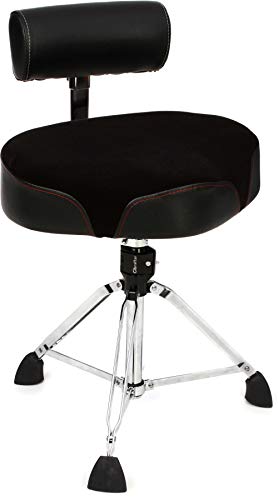
OVERSIZED SADDLE SEAT FOR MAXIMUM COMFORT: The generously padded 18” Cordura-covered saddle seat offers superior durability and support, providing the perfect balance of comfort and stability for long playing sessions.
The Importance of Proper Sitting Position
Proper sitting position on a drum throne plays an important role in a drummer’s overall performance and well-being. When drummers adopt a correct posture, they can greatly reduce the risk of lower back pain and leg fatigue by promoting ideal alignment. Ideally, the angle between the upper and lower leg should be around 145 degrees, as this minimizes muscle strain while playing. Additionally, sitting directly on the “sit bones” enhances posture and guarantees better weight distribution, vital for extended sessions. Maintaining an appropriate throne height aligns the hipbone just above knee level, promoting smooth leg movement. Regularly evaluating and adjusting this position not only leads to improved playability but also enhances sound quality and overall comfort during drumming. Using instruments made from quality durable materials can further contribute to a better musical experience and longevity of gear.
Ensuring Stability in Height Adjustment Mechanisms
While guaranteeing stability in height adjustment mechanisms may seem like a technical detail, it plays a crucial role in a drummer’s overall performance and comfort. Drum thrones equipped with sliding tube and spindle adjustments provide versatile height modifications while maintaining stability during use. It is imperative to select thrones with memory locks in their sliding tube mechanisms, as these locks guarantee that the desired height remains consistent throughout the performance. Conversely, thrones featuring nut and bolt locks can limit height options and complicate adjustments. Additionally, choosing a throne with a sturdy and well-constructed height adjustment mechanism minimizes wobbling, enhancing comfort and posture. Regularly inspecting these features can prevent instability, ensuring that drummers remain focused on their music rather than their seating. Considering a throne’s double-braced legs can also contribute significantly to stability during intense playing sessions.
Common Throne Design Considerations
Drum throne design embodies a range of features that greatly influence a drummer’s comfort and performance. Importantly, the shape and tilt of the throne play critical roles; for example, Tama thrones usually have a slight forward tilt that can relieve lower back pressure but may compromise proper posture. In contrast, Roc n Soc thrones provide a dynamic front-to-back tilt, offering flexibility for movement and stretching, which is essential during longer sessions. Additionally, the mechanisms for height adjustment can differ greatly; sliding tube and spindle adjustments are typically favored for their versatility, whereas nut and bolt locks are less efficient. Ultimately, investing in a quality drum throne tailored to one’s needs can remarkably enhance both comfort and playing effectiveness. Choosing support accessories with ergonomic design considerations can further improve performance during long practices and performances.
Recommended Products

Dual foam classic round seat top.

Designed to Fit 20" x 18" Bass Drums and Features Exterior Sizing Badges for Quick Identification

GABR Height Adjustable Back Rest 2-1/4-inch variable height adjustment capability
Exploring Variations in Throne Height Among Drummers
How does throne height influence a drummer’s overall experience and performance? Variations in throne height are evident among drummers, each aligning with individual preferences and genre styles. For instance, notable drummers like Tommy Aldridge prefer sitting higher, allowing them to engage more dynamically with their drum kit. Conversely, Lorna Shore’s drummer demonstrates that comfort can still be achieved even at a slightly uncomfortable throne height, highlighting the personal nature of these adjustments. Different genres influence how drummers adjust their setup, as it directly impacts their playing techniques. Participation in online forums, such as Metal Drummer Nerdz, offers insights and shared experiences, fostering a community where drummers can optimize their throne heights to guarantee they remain able to play effectively and comfortably. Additionally, paying attention to ergonomic adjustments like beater angle and pedal tension can significantly enhance comfort and performance while seated.
Recommended Products

Complete Drum Set -The Pearl Roadshow drum kit comes complete with everything you need to start drumming right out of the box. This set comes with drums, hardware, cymbals, and drum throne. We even throw in sticks and a stick bag so there is no delay

MESH DRUM HEADS: The TD-02KV has a mesh snare drum head and mesh tom heads, which provide a more realistic and responsive playing experience compared to rubber drum heads. The TD-02KV comes with a sound module that includes 184 drum sounds and 20 kits, including acoustic and electronic kits.

Complete Percussion Experience - Professional 8-piece electronic drum set with ultra-quiet Alesis mesh heads, revolutionary Drum Module with Bluetooth & built-in industry-leading BFD drum sounds
Techniques for Maintaining Good Posture While Playing
A proper posture can greatly enhance a drummer’s performance and overall enjoyment of playing. To maintain good posture, drummers should focus on achieving a 145-degree angle between their upper and lower legs, which minimizes muscle strain during play. It’s crucial to verify the hipbone is positioned above knee level, promoting a relaxed and effective posture, particularly when engaging with the bass drum. Positioning the throne just above the kneecaps allows for maximum leg movement, reducing the chances of cramped conditions. Drummers are encouraged to sit on their “sit bones,” which aids in better alignment and decreases excess tension in the body. Regularly evaluating one’s posture can help correct slouching, ultimately enhancing comfort and long-term health while drumming.
Engaging With the Drumming Community on Throne Adjustments
Engaging with the drumming community can importantly enhance a drummer’s understanding of throne adjustments and their impact on playing comfort and technique. Participating in online forums like Metal Drummer Nerdz allows musicians to exchange personal experiences regarding the ideal throne height to support both the upper leg and lower body. The dialogue often reveals how diverse genres influence preferences, underscoring individual variability among drummers. Feedback from peers can effectively address specific challenges, enhancing overall posture and performance. Additionally, discussions encourage experimentation with throne heights, ultimately yielding more personalized strategies for effective playing. By fostering a collaborative environment focused on healthy habits, drummers can greatly improve their comfort behind the kit, leading to better musical expression and longevity in their craft.
Frequently Asked Questions
How High Should You Sit on Your Drum Throne?
The ideal throne adjustment for drummers hovers just above their kneecaps, creating an almost magical synergy between comfort and technique. This height allows for enchanting rhythm and fluid movement, transforming every performance into a fascinating spectacle.
What Is the 80/20 Rule in Drumming?
The 80/20 rule in drumming emphasizes drumming efficiency, suggesting that focusing on the most impactful 20% of skills can lead to 80% of improvement. Targeting fundamental techniques maximizes practice results and accelerates overall development.
Where to Sit on Drum Throne?
To sit on the drum throne, one should guarantee stability by positioning themselves over their sit bones. This enhances balance, enables ideal limb positioning, and facilitates efficient movements essential for effective drumming performance.
What Is the Proper Seating Position for Drums?
The proper seating position for drums demands attention to detail; achieving seating comfort is essential. Aligning the hips above the knees, with a natural leg angle, can transform playability and reduce the risk of discomfort.


