As an Amazon Associate, we earn from qualifying purchases. Some links on this site are affiliate links at no extra cost to you. Our recommendations are based on thorough research and editorial judgment.


Tom Placement: Finding Your Ideal Configuration

Tom placement is vital for optimal drum performance. Toms come in various sizes, such as 10″, 12″, and 14″, affecting sound and accessibility. Personal comfort is key; the ideal height should match the snare drum, allowing for smooth play. Different playing styles, like rock or jazz, benefit from unique configurations that cater to their needs. Adjusting angles and heights is essential for reducing strain and enhancing sound quality. There are many tips and tricks available to help refine personal setups effectively.
Key Takeaways
- Adjust rack tom heights to match or be slightly lower than the snare drum for optimal striking comfort and control.
- Angle rack toms slightly towards the player for improved accessibility and to facilitate smoother stick movement.
- Experiment with various tom depths to achieve a balance between tonal quality and playability suited to your personal style.
- Utilize independent stands for personalized tom placement, allowing for better ergonomics and reducing fatigue during long practice sessions.
- Engage in a trial-and-error process to refine your setup, catering to individual playing styles and comfort preferences.
Understanding Tom Types and Sizes

You may be interested


When exploring the world of drums, understanding tom types and sizes is essential for any aspiring drummer. Toms come in various configurations, primarily categorized into rack toms and floor toms. Common rack tom sizes include 10″, 12″, and 13″, while floor toms typically measure 14″, 16″, or 18″. The depth of these toms greatly affects their sound; deeper toms resonate with a lower pitch, while shallower toms provide a sharper attack. Additionally, the positioning of toms can vary, with angled setups often allowing for easier access during fills. Drummers should consider the difference between power toms, which require higher positioning, and standard toms, as experimenting with sizes and configurations can enhance overall playability and sound, uniquely fitting each drummer’s style. Choosing the right tom drum heads with Level 360 Technology can also improve tuning ease and optimize sound quality.
Recommended Products

TD-07 module with 25 preset kits, 25 user kits, and 143 instruments. V-Edit, EQ, ambience, and 30 multi-effects offer deep editing tools to create your perfect drum kit sounds

4-piece Acrylic Shell Pack with 10" 12" Rack Toms

Includes 5x14" Snare, 8x12" Rack Tom, 11x14" Floor Tom, and 12x20" Bass drum
Importance of Personal Comfort in Tom Placement

Personal comfort in tom placement greatly impacts a drummer’s performance and overall experience behind the kit. When drummers prioritize personal comfort, they can enhance playability, effectively reducing strain and discomfort. The ideal tom placement should consider the height and angle, allowing for smooth stick movement and optimum sound production. Drummers often adjust the legs of their tom mounts to align with the snare height, promoting a balanced ergonomic setup that facilitates easy changes between different drums. Additionally, experimentation with various tom angles and depths is encouraged, as individual playing positions considerably affect comfort levels. By maintaining proper body alignment, drummers can prevent injuries, leading to longer and more productive practice sessions. Personal comfort is key to maximizing effectiveness while drumming. Using equipment such as die-cast hoops can also contribute to maintaining drum tuning stability and enhancing overall performance comfort.
Configurations for Different Playing Styles
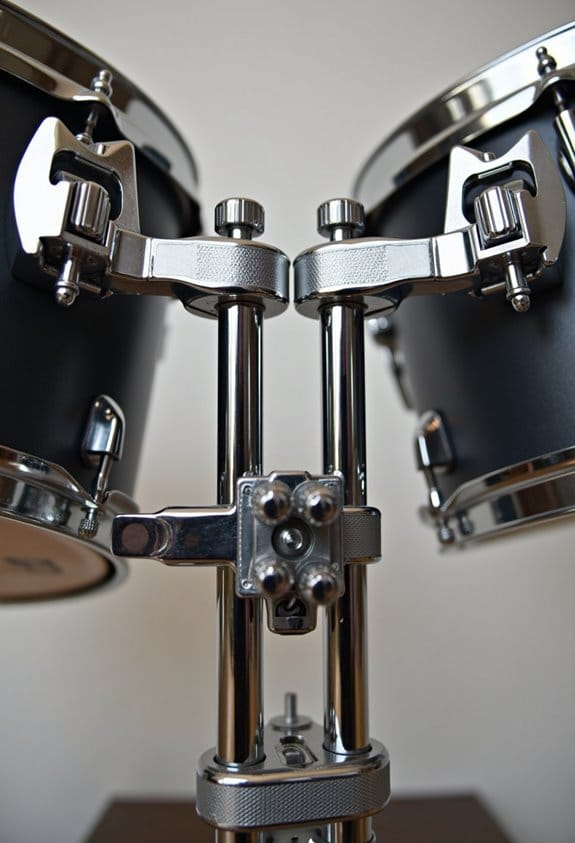
Configurations for different playing styles vary widely, as drummers tailor their setups to enhance their techniques and musical expression. For instance, rock drummers often prefer a 2 up 2 down setup, as this arrangement guarantees ideal accessibility and sound projection. In contrast, jazz drummers typically favor angled tom placements, which facilitate smoother changes during performances, allowing them to dynamically express their creativity. Additionally, drummers who utilize extensive footwork may choose lower tom positions to improve kick pedal access without sacrificing comfort. By experimenting with different tom depths and angles, drummers can customize their setups, considerably impacting stick bounce and response, thereby refining their overall sound and playability according to their unique playing styles and preferences. Using sound-absorbing materials like mute pads on toms can also help reduce volume during practice without compromising the natural feel.
Recommended Products

6-channel percussion synthesizer

Complete Percussion Experience - Professional 8-piece electronic drum set with ultra-quiet Alesis mesh heads, revolutionary Drum Module with Bluetooth & built-in industry-leading BFD drum sounds
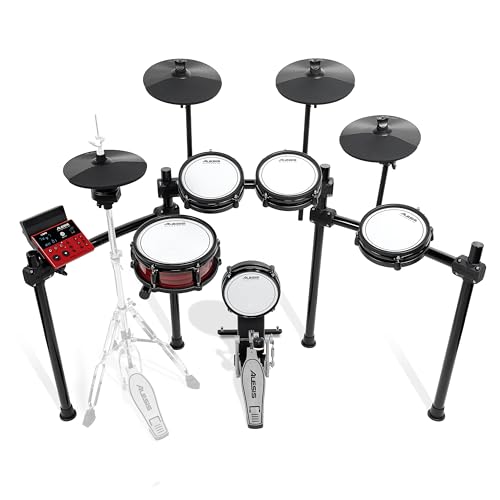
Complete Percussion Experience - Stand-mounted 10" hi-hat controller, 3x dual-zone 10" cymbals with choke, ultra-quiet Alesis mesh heads, upgraded Drum Module with Bluetooth and BFD drum sounds
Tips for Adjusting Tom Angles and Heights
To achieve an ideal playing experience, drummers should pay close attention to the angles and heights of their toms, as these adjustments greatly influence comfort and control during performances. It is important to adjust tom height to match or be slightly lower than the snare drum, ensuring a comfortable and efficient striking angle. Rack toms should be positioned at a slight angle towards the player, facilitating easier access and improved stick rebound. When setting up mounted toms, secure them firmly while allowing for height and angle adjustments based on personal preferences. Additionally, exploring different depths of toms enables drummers to find the perfect balance between tonal quality and playability, enhancing their overall technique on various playing surfaces. Choosing brackets made from durable zinc alloy can also improve the stability and longevity of the tom mounting system, contributing to a consistent and reliable setup.
Recommended Products

Premium 12” x 8” dual-zone tom pad with wood shell construction

10” x 4” dual-zone tom pad with wood shell construction

12“ x 4“ dual-zone tom pad with wood shell construction
Utilizing Accessories for Optimal Setup
While many drummers focus primarily on their drum kit’s core components, utilizing accessories can greatly enhance the overall setup and playing experience. For improved positioning and accessibility, adjustable arms for mounting toms allow for a personalized configuration that suits individual preferences. Additionally, incorporating a rack system, such as those from Gibraltar, can create an organized, stable layout for toms and minimize clutter on the kit. Positioning toms on separate stands rather than directly off the kick drum enhances playability, enabling better angling and placement. Accessorizing with mounts for percussion instruments, like cowbells and tambourines, provides further setup versatility. Experimenting with various tom sizes can help achieve an ideal reach while balancing sound, accommodating different playing styles. Choosing clamps made from durable zinc alloy materials ensures long-lasting stability in your setup.
Recommended Products

Carbon Steel Brightness That Acrylic Cannot Match Carbon steel shells produce a naturally brighter, more cutting tone with far greater projection than acrylic octobons. Every stroke punches through dense guitar walls and complex arrangements — no getting buried in the mix on stage or in the studio.

Double Tom Holder

LOW RISE DESIGN FOR SPACE-EFFICIENT SETUPS: Engineered with a 15-inch tripod base, this stand provides a compact footprint while delivering rock-solid support for toms and cymbals in tight stage or studio spaces.
Common Challenges With Tom Positioning
Many drummers encounter significant challenges when positioning their toms, as finding an ideal setup is essential for both comfort and performance. One major issue is tom height; higher toms can lead to discomfort and strain, forcing drummers to seek different drum kit configurations. Angling toms too steeply is another challenge, as it may cause unwanted rim shots that disrupt sound quality. Additionally, players often grapple with balancing aesthetic appeal and ergonomic accessibility, which is crucial while performing. To alleviate these challenges, using individual stands allows for personalized placement of toms, fostering a more comfortable setup. By carefully considering tom height and angling, drummers can cultivate a configuration that enhances both playability and enjoyment in their craft. Choosing mounts with adjustable features can significantly improve positioning flexibility and overall comfort.
Recommended Products

Double Bass Pedal - Unleash Your Full Footwork Potential: Unlock next-level drumming with double bass drum pedal. The responsive bass drum pad delivers authentic rebound and dynamic tracking, perfect for developing fast doubles, heel-toe techniques, and complex metal patterns. Experience acoustic-like response with adjustable sensitivity - every kick cuts through with punchy attack while maintaining perfect trigger accuracy. The tension-tunable mesh head ensures quick rebounds for blazing speeds, helping you build endurance and precision. Whether you're laying down thunderous grooves or technical rhythms, this setup transforms your footwork into studio-quality sound.

Complete Drum Set -The Pearl Roadshow drum kit comes complete with everything you need to start drumming right out of the box. This set comes with drums, hardware, cymbals, and drum throne. We even throw in sticks and a stick bag so there is no delay

Powerful Sound Module - Equipped with 450 drum sounds, 31 drum kits (30 preset + 1 user), and 50 demo songs, Donner DED-200 Pro electric drum set delivers versatile tones for practice, performance, and music creation.
Community Insights and Solutions
How can drummers enhance their tom configurations to improve both playability and sound quality? Community discussions highlight the crucial balance between tom angles and player comfort, suggesting that adjusting tom heights to align with the snare drum promotes an accessible layout, preventing rim shots. Many drummers express that personal preferences, whether opting for flatter or more angled setups, should be tailored to individual playing styles for the best ergonomics and performance. Moreover, using individual stands for toms allows drummers to position each tom independently, achieving ideal playing angles. Feedback from fellow drummers underscores the importance of experimenting with various tom depths and angles, as this exploration leads to discovering configurations that perfectly suit their unique needs and enhance their overall playing experience. Additionally, selecting the proper tom depth can significantly affect the sound clarity and projection essential for an optimal drum kit setup.
Experimentation for Finding Your Ideal Setup
Finding the right tom configuration encourages drummers to explore various setups, creating an environment where experimentation becomes a key element in optimizing playability and sound quality. Experimenting with tom placement by adjusting height and angle can enhance comfortable access and produce better sound. Players must consider their individual playing styles, as different setups impact stick bounce and technique. Engaging in trial-and-error setups, such as comparing flatter versus angled tom placements, reveals personal preferences while improving comfort. Utilizing independent stands supports customized adjustments that cater to specific ergonomic needs, reducing fatigue during extended play. Regularly reassessing tom positions based on personal performance experiences enables drummers to establish an adaptable setup that evolves alongside their changing habits and styles. Additionally, considering adjustability features allows drummers to fine-tune their tom placement for optimal ergonomic support and performance.
Frequently Asked Questions
What Is the 80/20 Rule in Drumming?
The 80/20 rule in drumming states that mastering essential rhythm patterns, stick techniques, and dynamic control, alongside prioritizing fill variations and sound muffling, greatly impacts a drummer’s skill, leading to creative grooves and efficient practice.
Where to Place Toms?
Toms should be placed using various mounting options and angle adjustments, considering playability factors like spacing techniques and drum hardware. Research indicates that 70% of drummers favor ergonomically designed setups for ideal sound preferences and comfort.
What Compressor Setting for Toms?
Effective compressor settings for toms include a 4:1 to 6:1 ratio, medium attack adjustment, and a release time of 100-200 ms, enhancing sustain control and maintaining dynamic range during tom layering in the mixing process.
What Frequency Should I Tune My Toms To?
Tuning toms is like tuning a fine instrument. Ideal frequencies hinge on shell material and genre, with 10″ at 100-120 Hz, 12″ at 80-100 Hz, and 14″ around 70-80 Hz, ensuring tonal balance and resonance.


