As an Amazon Associate, we earn from qualifying purchases. Some links on this site are affiliate links at no extra cost to you. Our recommendations are based on thorough research and editorial judgment.


Troubleshooting Common Hardware Pack Issues

Troubleshooting common hardware pack issues involves a systematic approach to identify the underlying problems affecting performance and connectivity. For instance, frequent Wi-Fi disconnections could stem from outdated drivers or power management settings disabling the network adapter. Likewise, keyboard issues may arise from debris accumulation, while a PC that won’t power on may indicate connectivity problems or faulty components. Understanding these issues can lead to effective solutions, and the next steps will explore each topic more thoroughly.
Key Takeaways
- Ensure all hardware connections are secure and cables are properly connected to prevent communication issues within the hardware pack.
- Check for overheating by ensuring proper airflow and cleaning dust buildup, as it can impact hardware performance.
- Update the drivers of all hardware components to maintain optimal functionality and compatibility with your system.
- Conduct routine checks and maintenance to identify potential issues early, enhancing the longevity of hardware packs.
- Listen for unusual sounds from hardware components, indicating potential malfunctions that may require immediate attention or replacement.
PC Keeps Disconnecting From Wi-Fi

You may be interested


Have you ever experienced the frustration of your PC unexpectedly disconnecting from Wi-Fi? This issue often stems from outdated network drivers, so regularly checking for updates is essential. Another factor could be power management settings that allow the computer to turn off the network adapter to save energy; disabling this feature can prevent unwanted disconnections. Physical barriers, like walls and furniture, may weaken the Wi-Fi signal, further complicating connectivity. Additionally, security software and firewalls can mistakenly block network access, making troubleshooting necessary. If problems persist, evaluating the network adapter for faults or considering a hardware upgrade may offer a more stable connection. Understanding these factors can greatly improve the PC’s Wi-Fi performance and reliability. Just as proper compatibility considerations optimize drum setups, ensuring your network hardware and settings align correctly is key to stable connectivity.
Keyboard Issues
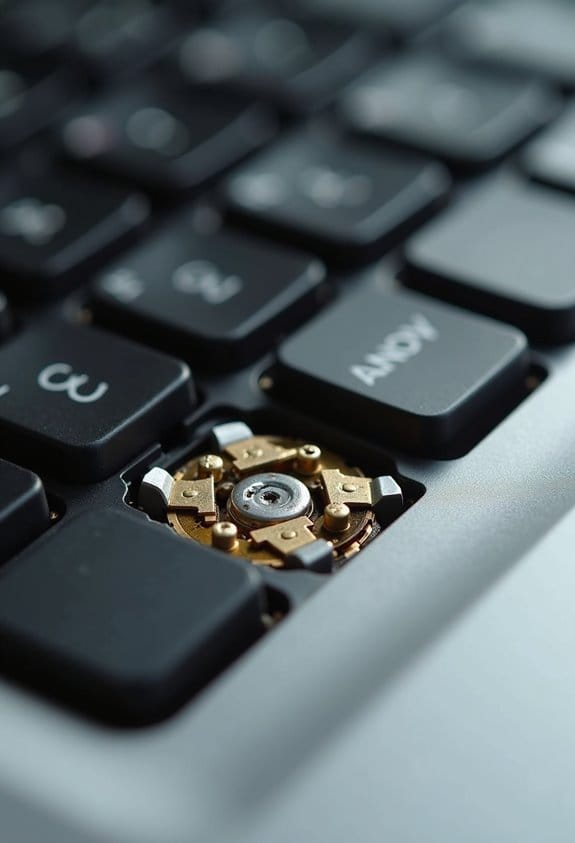
When keyboard issues arise, they can considerably hinder a person’s ability to effectively use a computer. Common problems include unresponsiveness, often caused by debris accumulation under the keys. To remedy this, using compressed air to gently clean the keyboard is advisable. Additionally, ensuring that the keyboard driver is updated is essential, as outdated driver versions can lead to malfunctioning keys and reduced typing responsiveness. For persistent issues, physical damage may necessitate a replacement of the keyboard. Adjusting the repeat rate and delay settings in Windows can also enhance typing accuracy. In laptop scenarios, disabling the touchpad while typing is a practical solution to prevent accidental cursor jumps, especially if touchpad sensitivity settings prove to be problematic. Regular maintenance and cleaning using a damp cloth can extend the life of your keyboard and maintain optimal performance.
PC Isn’t Powering On

In cases where a PC refuses to power on, several troubleshooting steps can be critical for identifying and resolving the issue. First, users should verify that all power cables are securely connected, particularly the main cable to the motherboard and any secondary connectors for components like the CPU and GPU. Holding down the power button for at least one minute can reset the motherboard and help diagnose the problem. For laptops, removing the battery and connecting to AC power may also assist. Next, it’s important to check for external connections by disconnecting all peripherals, as faulty devices might prevent booting. Additionally, listening for beeping sounds during startup can provide error codes that indicate specific hardware issues needing attention. Ensuring proper compatibility considerations with connected hardware can also help prevent startup failures.
Search Field Missing From Start Menu
The absence of a search field in the Start Menu can create frustration, particularly for users accustomed to quickly locating applications and files. To address this issue, one should first explore the Control Panel, where program settings can be adjusted. By exploring the “Programs” section and selecting “Turn Windows features on or off,” users can check the “Windows Search” box to reactivate the search function. After making these adjustments, it’s essential to click “OK” to apply settings. In some cases, performing a restart computer may also be necessary. Additionally, software conflicts or pending system updates can contribute to the disappearance of the search box, so keeping the operating system updated remains crucial for seamless functionality. Regular maintenance, similar to the cleaning and maintenance routines recommended for musical instruments, can help prevent operational issues over time.
File Doesn’t Open Up in Default Program
Encountering a situation where a file does not open in its designated default program can be both perplexing and inconvenient for users. To address this issue, one should first right-click the file, select “Open With,” and choose “Choose Another App.” Be sure to check the “Always use this app” box to set it as the default handler. If the file still fails to open in the selected program, it’s important to verify that the program is correctly installed and updated for that file format. Additionally, checking for file corruption or attempting to open the file on a different computer can help rule out specific operating system issues. Persistent problems across various file types may necessitate resetting the operating system’s association settings through the Control Panel. For hardware-related troubleshooting, ensuring the use of high-quality materials can significantly reduce compatibility and performance issues.
Slow Performance
Slow performance in a computer can be frustrating, particularly when tasks that once seemed simple start taking much longer to complete. Common causes include insufficient RAM; modern software often requires at least 8GB for smooth functioning. Additionally, fragmented hard drives can hinder system speed, making regular defragmentation essential for reorganizing files and improving access times. Users can utilize Task Manager to identify background processes that consume excessive memory and CPU resources, allowing them to close resource-hogging applications. Moreover, malware infections can drastically affect performance. Regular scans with antivirus software help maintain peak system speed. Finally, upgrading from a traditional Hard Disk Drive (HDD) to a Solid State Drive (SSD) can yield significant performance enhancements, offering faster read/write speeds and reduced load times. Ensuring proper compatibility and types of hardware components is equally important to optimize overall system performance.
Loud Noises From Computer
Loud noises emanating from a computer can be alarming, often signaling potential hardware issues that require immediate attention. These sounds, such as grinding or clicking, typically indicate hardware failure, particularly with cooling fans or hard drives. Regular cleaning of fans and heat sinks is essential, as dust accumulation can lead to overheating and unusual noises. Using compressed air to remove debris is an effective preventive maintenance strategy to reduce noise and enhance performance. If the noise persists post-cleaning, users may need to invest in replacement components to prevent further damage. Additionally, monitoring CPU temperatures with software tools can help identify overheating issues linked to increased fan noise, which may also contribute to system instability if left unresolved. Just as drummers benefit from vibrating metronomes to improve timing and consistency, consistent maintenance routines can help keep hardware running smoothly and quietly.
Computer Constantly Freezes
When a computer freezes constantly, it can disrupt productivity and lead to frustration, especially during important tasks. This issue may stem from insufficient memory, commonly indicated by performance issues and registry errors. Running a memory diagnostic tool, such as Windows Memory Diagnostic or MemTest86, can help identify failing RAM. Regularly cleaning excess files and closing unused applications through Task Manager can alleviate system resource strain and enhance stability. Additionally, malware infections can cause these freezes; as a result, utilizing reliable antivirus software is essential for detecting and removing harmful programs. Overheating, often resulting from inadequate cooling, can lead to performance throttling. Ensuring proper airflow and cleaning dust buildup can mitigate this significant problem, ensuring a smoother computing experience. Incorporating noise reduction accessories in your hardware setup can also minimize disruptions caused by hardware sounds during operation.
Frequently Asked Questions
How to Troubleshoot Common Hardware Issues?
Like a detective solving a mystery, one should systematically employ hardware diagnostics tools, verify cable connections, update device drivers, check power supplies, inspect motherboards, and implement overheating prevention techniques for effective troubleshooting of common hardware issues.
What Are the Top 10 Common Problems of Computer Hardware?
The top ten common computer hardware problems include overheating issues, power supply failures, failed RAM, hard drive malfunctions, graphics card errors, overclocking problems, incompatible components, loose connections, motherboard failure, and peripheral device issues.
What Are the Two Most Common Causes of Hardware Failure?
Overheating components and electrical surges are two predominant causes of hardware failure. These issues result from insufficient cooling, damaged circuitry, faulty connections, and outdated firmware, exacerbated by environmental factors and physical wear during usage.
What Are the 7 Basic Computer Troubleshooting Guides?
The seven basic computer troubleshooting guides encompass initial checks, system monitoring, drive and memory testing, system health repair, graphics troubleshooting, community support, and virus prevention, enhancing user knowledge on maintenance, optimization, and error prevention.


