As an Amazon Associate, we earn from qualifying purchases. Some links on this site are affiliate links at no extra cost to you. Our recommendations are based on thorough research and editorial judgment.

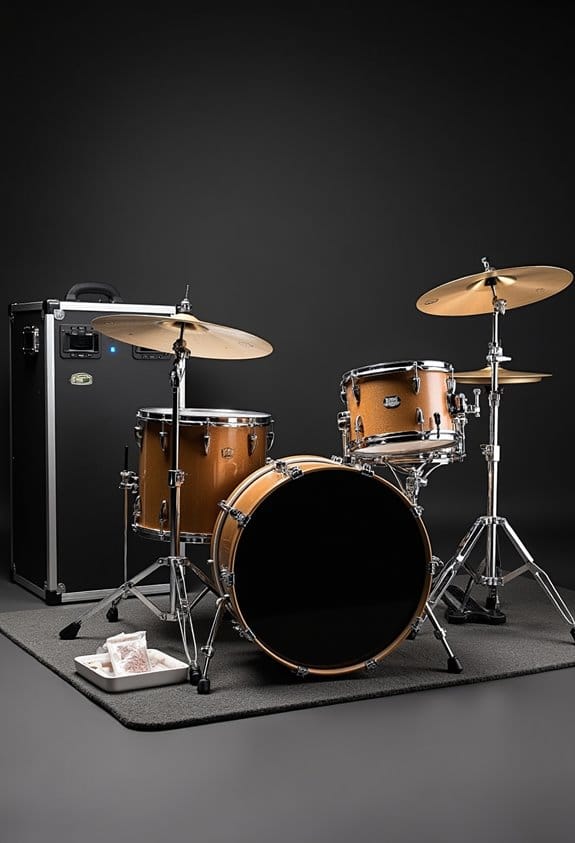
How to Store Drums in Humid Climates

Storing drums in humid climates requires careful attention to humidity control and protective strategies. High moisture can cause wooden shells to expand, leading to warping and damage. It’s crucial to store drums in climate-controlled environments, maintaining humidity levels between 40%-60%. Using dehumidifiers helps regulate moisture, preventing mold. Wrapping drums in protective materials and ensuring cymbals are stored separately can further safeguard against humidity. Regular maintenance, such as inspecting for damage, will keep drums in top shape. Learn more about effective storage techniques and protection strategies.
Key Takeaways
- Use a dehumidifier to maintain humidity levels between 30%-50% and prevent wood expansion and moisture damage.
- Store drums in climate-controlled environments with consistent temperatures (65-75°F) to enhance longevity and prevent shell warping.
- Wrap drums in protective material, sealing them with tape to create an airtight barrier against moisture.
- Regularly inspect drums for signs of damage, such as warping or cracks, and perform routine maintenance to keep them in prime condition.
- Use moisture-absorbing packets inside storage cases to combat excess humidity and protect drum components.
Understanding the Impact of Humidity on Drums

You may be interested


Humidity poses a significant challenge for drummers, as its effects can drastically alter the performance and longevity of drums. High moisture levels lead to wood expansion, which negatively impacts the structural integrity of drum shells. In addition, excess humidity can cause drum heads to loosen, resulting in poor tonal quality and an unsatisfactory sound experience for both players and audiences. Shell warping presents a serious concern, as it can lead to permanent damage if not addressed promptly. Furthermore, lacquered drums may suffer finishing issues, such as cracking and peeling, due to prolonged exposure to moisture. Consequently, effective drum care practices, including monitoring humidity levels, are essential for preserving both the aesthetics and functionality of a drummer’s kit, ensuring its longevity and peak performance. Using tools like drum rudiment posters can also help drummers maintain consistent practice habits despite environmental challenges.
Importance of Climate-Controlled Environments
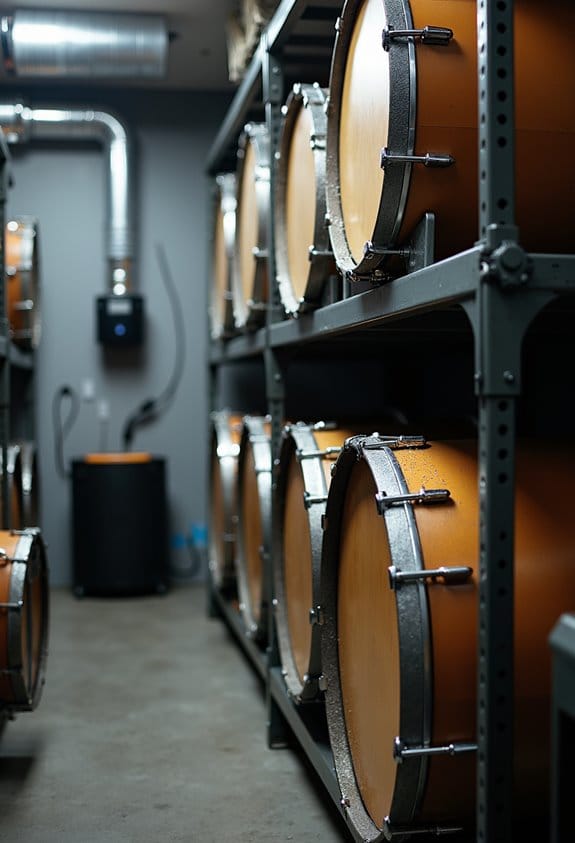
For drummers endeavoring to maintain their instruments in ideal condition, climate-controlled environments serve as an integral solution to the challenges posed by high humidity. These controlled spaces help prevent wood swelling and shell warping, which can severely impact drum performance. By maintaining humidity levels between 40-60%, drummers can protect the integrity of their instruments. Additionally, climate-controlled environments mitigate finishing issues, such as cracking and peeling, which often occur due to fluctuating moisture. Consistent temperature ranges, ideally between 65-75°F, not only enhance the longevity of the drum components but also preserve their tonal quality. Overall, utilizing climate-controlled environments is essential for safeguarding valuable drums against the damaging effects of excessive humidity over time. Complementing climate control with proper soundproofing materials further protects the drums by minimizing external noise and vibration damage.
Utilizing Dehumidifiers for Drum Care
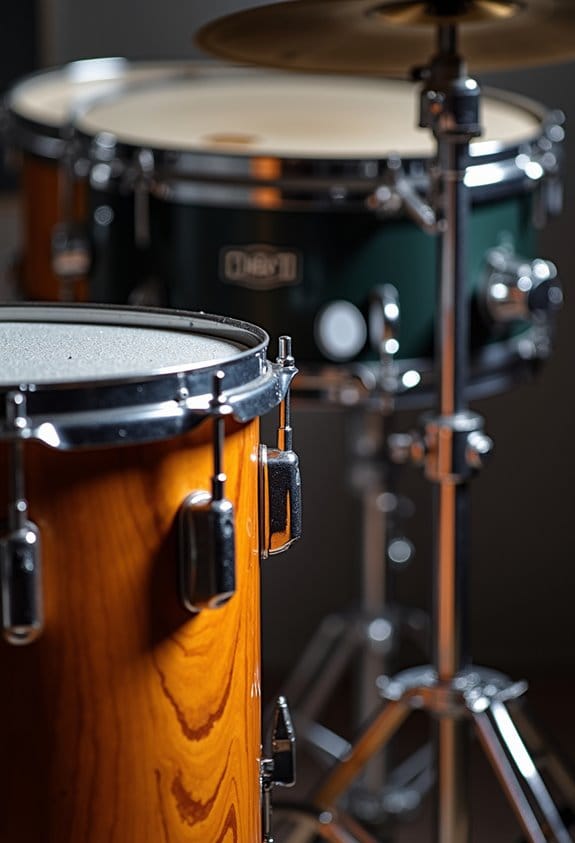
A well-functioning dehumidifier plays an essential role in maintaining the health of drums stored in humid environments. In these areas, dehumidifiers are important for regulating humidity levels, particularly when they exceed 50-60%. Continuous operation prevents harmful moisture accumulation, which can lead to issues like shell warping and loosened drum heads. By regularly using a dehumidifier, drum owners create a stable atmosphere, ultimately enhancing the longevity and sound quality of both acoustic and electronic kits. Furthermore, investing in a high-quality dehumidifier is critical, as prolonged exposure to high humidity not only affects performance but also compromises the aesthetic appeal of drum materials. Therefore, utilizing dehumidifiers is a proactive measure to guarantee the preservation of valued drum collections. Proper drum microphone positioning can also be affected by humidity since moisture may impact microphone mounts and sound clarity.
Proper Packing Techniques for Long Term Storage
Protecting drums during long-term storage is essential for preserving their quality and functionality. To store your drums effectively, wrapping each drum in protective material, like paper or bubble wrap, mitigates moisture damage that can occur in humid environments. Securing the wrapping with packing tape creates an airtight seal, further guarding against humidity exposure. Cymbals should be placed in individual bags to guarantee they remain safe and separate from the drums, preventing potential scratches or impacts. It’s vital to pack drums in specialized boxes or gig bags that allow air circulation while insulating against moisture. Additionally, storing drums in a climate-controlled area helps maintain consistent temperature and humidity levels, ultimately prolonging the lifespan of these valuable musical instruments. Choosing drum heads made with durable materials, such as those with Level 360 Technology, can also help maintain sound quality despite environmental challenges.
Storing Acoustic Drums Effectively
Storing acoustic drums effectively requires careful consideration, especially in humid climates where moisture can wreak havoc on their construction and sound quality. To protect drum heads from deterioration, it is vital to keep drums in a climate-controlled environment, preventing issues like shell warping. Wrapping each drum in protective material, such as bubble wrap or packing paper, further safeguards them from humidity and physical impacts. Regularly monitoring humidity levels is essential; excessive moisture can loosen drum heads, affecting tonal quality. Utilizing dehumidifiers can help maintain ideal conditions, particularly during summer months. Additionally, inspecting drums for signs of moisture damage and keeping them away from direct sunlight or extreme temperature fluctuations will guarantee their longevity and preserve their sound. Using high-density acoustic foam or similar bass drum muffling pillows inside the drum can also protect against moisture and help maintain sound quality.
Storing E-Drums: Best Practices
Proper care for E-drums involves specific strategies that differ from those used for acoustic drums, especially when faced with the challenges of humid climates. To store these drums effectively, it is essential to unplug all electronic components and pack them separately to prevent moisture damage. Using gig bags, each drum should be wrapped in protective material that allows for some ventilation yet safeguards against humidity. Sensitive components like drum triggers are best stored in their original boxes or individually wrapped to reduce excess moisture exposure. Additionally, employing a dehumidifier in the storage area helps maintain suitable humidity levels, and keeping E-drums in a climate-controlled environment protects against harmful temperature fluctuations, ensuring longevity and performance. It is also beneficial to use high-quality cables and connectors to prevent interference and maintain signal integrity during storage and transport.
Regular Inspection and Maintenance Tips
Regular inspection and maintenance of drum sets, particularly in humid climates, is vital for preserving their sound quality and overall integrity. Musicians should routinely check drum heads for dents, tears, or signs of wear, as humidity can compromise their tension. Additionally, examining the drum kit’s shells for visual indications of warping or cracks in the finish is significant, as excess moisture can lead to substantial damage. Monitoring the humidity levels in the storage area, possibly with a dehumidifier, helps maintain ideal conditions. Routine maintenance should include inspecting hardware conditions and lubricating components to prevent corrosion caused by moisture. Finally, scheduling regular tuning and cleaning guarantees that the drum kit always remains in prime condition for future performances. Using durable materials for hardware components like wing nuts can greatly improve longevity and resistance to humid conditions.
Additional Protection Measures for Drums
While the natural humidity of the environment may pose challenges to drum longevity, implementing additional protection measures can greatly enhance their resilience. To protect your drum effectively, keeping a dehumidifier in the storage area is essential, as it helps maintain ideal moisture levels, thereby preventing damage to the shell and drum heads. Protective cases, specifically designed for each drum, offer necessary shielding against humidity changes during storage. In addition, inserting moisture-absorbing packets inside these cases can further combat excess humidity. Regularly checking and adjusting humidity levels is important; they should be kept between 30% and 50%. Finally, wrapping drum hardware and sensitive electronic components in protective coverings safeguards them from humidity-related deterioration, ensuring your instruments remain in top condition. Using high-density materials under your drum setup can also help reduce vibration damage and improve overall drum kit stability in humid conditions.
Frequently Asked Questions
How to Protect Drums From Humidity?
Maintaining humidity control is essential for protecting drums. Utilizing a dehumidifier, storing in climate-controlled environments, and utilizing quality cases can help mitigate moisture damage, ensuring ideal conditions and preserving the integrity of the instruments.
What Humidity Is Bad for Drums?
Ironically, a humidity level above 50% proves detrimental for drum maintenance; it invites shell warping, loose heads, and compromised finishes, ultimately transforming instruments into mere shadows of their former resonant selves, underscoring the importance of vigilance.
Is It Bad to Leave Drums in a Hot Car?
Leaving drums in a hot car is detrimental, as the heat causes moisture damage. Extreme temperatures lead to cracking, loss of tension, and warping, compromising the drums’ integrity and aesthetic appeal over time.
What Is the 80/20 Rule in Drumming?
The 80/20 rule in drumming posits that 80% of a drummer’s progress derives from 20% of their practice efforts. Focusing on essential drumming techniques enhances skill development, efficiency, and overall musical expression.


