As an Amazon Associate, we earn from qualifying purchases. Some links on this site are affiliate links at no extra cost to you. Our recommendations are based on thorough research and editorial judgment.


How to Arrange Hardware for Easy Reach and Flow

Arranging hardware for easy reach and flow involves organizing tools based on usage frequency. Tools used most often should be within arm’s reach, ideally stored on pegboards or in labeled bins. Creating specific zones for different types of tools reduces search time during projects. Using clear storage containers allows for quick identification of small items, while modular organizers offer adjustable layouts. Regularly revisiting and decluttering your space guarantees peak efficiency, enabling smoother workflow and enhancing productivity. Explore more strategies for efficient organization.
Key Takeaways
- Designate specific zones for frequently used tools, ensuring easy access within arm’s reach for optimal workflow.
- Implement modular drawer organizers and pegboards for customizable and visible tool storage, enhancing retrieval efficiency.
- Keep similar items grouped in labeled bins or jars to minimize search time and improve organization.
- Regularly assess your workspace to maintain an efficient layout and remove any items that are not frequently used.
- Utilize clear storage containers for quick identification and easy access to small hardware items, improving flow during projects.
Identifying Your Workflow Needs

You may be interested


Identifying workflow needs serves as the foundation for effective hardware arrangement. Understanding which tools and frequently used items are essential can dramatically improve productivity. It is advisable to store tools that are utilized at least 80% of the time within arm’s reach, ensuring easy access during projects. By focusing on organizing one area at a time, individuals can evaluate their workflow, leading to better tool organization and overall efficiency. Embracing a “less is best” mindset through decluttering helps keep only necessary items, which minimizes distractions and enhances concentration. Tailored storage solutions that reflect specific task needs further maximize accessibility and effectiveness, facilitating an organized workspace that supports seamless workflow. This structured approach can make all the difference in achieving project goals smoothly. Additionally, considering size and weight considerations when selecting hardware can ensure both stability and ease of access in your workspace.
Designating Specific Zones for Tools

Organizing a workspace effectively is an essential part of enhancing productivity, and designating specific zones for tools plays a pivotal role in achieving this goal. By keeping frequently used tools within easy reach, workers can minimize search time, thereby streamlining their workflow. Each zone should be well-defined with appropriate storage solutions, such as pegboards or drawer organizers, which enhance physical clarity and enable quick identification of tools. Additionally, evaluating the workflow sequence in projects allows for strategic tool arrangement that aligns with task progression. Regularly reviewing and refining these designated zones guarantees adaptability to changing project needs, ultimately resulting in an efficient workspace where tools are organized and accessible, fostering productivity and reducing unnecessary movement. Choosing hardware with features like double-braced legs can further improve the stability and ease of access in tool organization setups.
Choosing Effective Storage Solutions
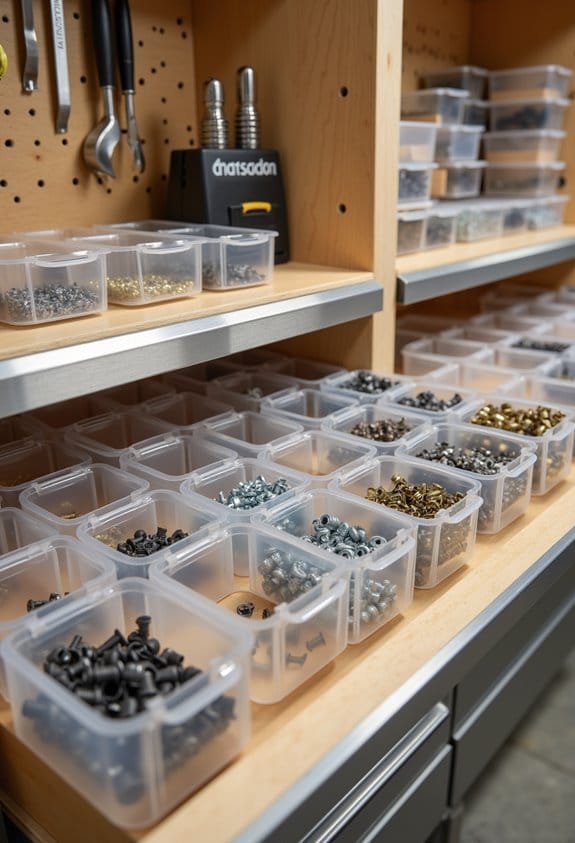
Choosing the right storage solutions can greatly impact the organization and efficiency of a workspace. Effective options include pegboards and modular drawer organizers, which promote easy visibility and access, thereby enhancing workflow. For tools and hardware used frequently, utilizing labeled bins keeps them organized and within arm’s reach, greatly minimizing search time. Clear storage containers provide a smart option for small items, allowing users to quickly identify necessary tools while reducing clutter. Additionally, grouping similar hardware, such as screws or nails, in labeled jars or tackle boxes streamlines hardware organization. Investing in affordable organizers, like those from Harbor Freight, maximizes vertical space and accommodates small items effectively, ultimately improving productivity and workspace harmony. Considering portable devices and their need for organized accessibility can further optimize your setup and workflow efficiency.
Ensuring Easy Accessibility
Streamlining accessibility in a workspace is crucial for maximizing efficiency and minimizing wasted effort. To guarantee easy access to tools, it is essential to organize your tools so that items used 80% of the time are within arm’s reach. Utilizing modular drawer organizers allows for adjustable layouts based on changing needs, making small hardware easy to see and access. Implementing pegboard wall systems transforms vertical storage areas, enhancing workshop organization by allowing quick access to frequently used tools on customized hooks and bins. Additionally, designating specific zones for different tasks helps keep everything grouped, further reducing search time. Labeling all storage containers clearly enables immediate identification, confirming that workers can quickly find what they need and maintain an efficiently organized space. Incorporating percussion techniques when setting up rhythmic patterns in workflow can improve coordination and flow within the workspace.
Implementing a Decluttering Strategy
Decluttering a workspace can considerably enhance both focus and efficiency, setting the stage for an organized and productive environment. To implement a decluttering strategy, first remove items that haven’t been touched in the last ten sessions. By doing so, one can keep only essential tools, which reduces the time spent searching for what you’re looking for. Aim for the ‘less is best’ principle to maintain easy reach to necessary tools. Set aside 20 minutes daily to tackle small parts of the decluttering process using specific organizers. This consistent approach allows for gradual improvements. Finally, regularly evaluate and adjust your storage system to verify that it meets evolving needs, maintaining a functional and efficient workspace. Consider incorporating portable design tools to further optimize workflow and ease of access.
Organizing With Labels and Categories
An effective organization system for hardware can transform a cluttered workspace into a streamlined area, making tasks considerably easier. By using clear labels to organize tools and categorize items like screws and small tools, individuals can store their hardware in a way that promotes quick identification and efficient retrieval. Color-coded labels can help visualize different categories at a glance, making it simpler to find supplies. Clearly labeled bins allow frequently used items to remain within easy reach, improving workflow. Additionally, a hierarchical labeling system that details size, type, and quantity minimizes confusion between similar products. Reviewing and updating these labels regularly further optimizes tool storage and helps manage time effectively, ensuring all materials are well-organized and easily accessible. Including considerations such as material durability when choosing protective gear ensures longevity and effectiveness in hardware use.
Maintaining Your Organized Workspace
Maintaining an organized workspace is essential for enhancing productivity and efficiency in any hands-on environment. To achieve this, it’s important to assess the workspace regularly, ensuring that every item and used tool frequently accessed remains within arm’s reach. This practice minimizes the time spent searching. Implementing a decluttering strategy can help, focusing on removing items not touched in the last ten sessions. Labeling every storage bin and modular drawer organizer clearly promotes easy identification of hardware, improving workflow. Additionally, scheduling consistent cleaning sessions with manageable tasks is crucial for maintaining organization. By following these strategies, anyone can effectively organize their garage and create a functional workspace, adapting to changing needs while promoting a clean and efficient environment. Integrating structured practice sessions into your routine can similarly enhance skill development and overall effectiveness.
Frequently Asked Questions
How to Arrange a Hardware Store?
To arrange a hardware store effectively, consider shelf layouts, product placement, and section grouping. Utilize signage strategies, guarantee checkout accessibility, manage inventory, and employ lighting considerations alongside promotional displays and seasonal adjustments to enhance customer flow.
What Is the Golden Rule of Organizing?
The golden rule of organizing emphasizes clutter reduction and efficiency factors. Effective organizing principles promote accessibility considerations, spatial planning, and functional layouts, enhancing flow optimization and user experience while requiring continuous maintenance strategies for lasting organization.
How to Organize Tools by Category?
To organize tools by category, one must utilize effective storage solutions and labeling systems, ensuring accessibility based on frequency use. This includes drawer organization, toolbox selection, vertical storage, and establishing maintenance routines within the workspace layout.
How to Organize Your Workbench?
To organize a workbench effectively, focus on layout that enhances tool accessibility. Implement storage solutions like drawer categorization, vertical storage ideas, and magnetic tool holders, while ensuring clutter reduction for improved workflow efficiency, especially for frequently used tools.


