As an Amazon Associate, we earn from qualifying purchases. Some links on this site are affiliate links at no extra cost to you. Our recommendations are based on thorough research and editorial judgment.


How to Analyze Song Structure as a Drummer

To analyze song structure as a drummer, one must recognize key components like the intro, verses, choruses, and bridges. Understanding how these sections interact allows drummers to enhance musicality. Active listening enhances awareness of dynamics and energy shifts. By playing tightly during verses and using more aggressive fills in choruses, drummers can elevate the song’s intensity. Mapping out song sections helps internalize shifts, providing a foundation for effective collaboration. Exploring these techniques further reveals additional strategies for creating impactful performances.
Key Takeaways
- Map out the song’s structure by identifying sections like intro, verse, chorus, bridge, and outro to guide your playing.
- Actively listen to the track to recognize dynamics and transitions, enhancing interaction with fellow musicians.
- Analyze rhythm and phrasing by breaking down beats into subdivisions to understand rhythmic patterns and accentuation.
- Adjust your playing dynamics strategically, using minimal playing in verses and engaging fills to accentuate structural shifts.
- Transcribe drum grooves to capture specific rhythmic patterns and utilize shorthand notations for easier recall during performance.
Understanding Song Structure

You may be interested

How Drummers Read Lead Sheets and Charts
January 17, 2026

How to Count Odd Time Signatures Like 5/4 and 7/8
January 17, 2026

How to Read Drum Notation for Complete Beginners
January 17, 2026
Understanding song structure is essential for any drummer aiming to enhance their musical contributions. The key components—intro, verse, chorus, bridge, and outro—form the foundation of a song’s overall flow and energy. Drummers need to know how these parts relate to one another, as this knowledge allows for purposeful playing that complements the music. For instance, playing tightly during verses, while introducing bigger crashes in choruses, can elevate the song’s dynamics and intensity. Additionally, mapping out song sections on paper helps internalize shifts, making performance smoother and more impactful. Recognizing the relationships between melody, harmony, rhythm, and meter within the form of the song equips drummers to support musical arrangements effectively, ultimately enriching their collaborative efforts with other musicians. Using drum backing tracks with clear sections can assist drummers in practicing and internalizing these song structures more effectively.
Recommended Products


The Importance of Listening

How can a drummer truly elevate their performance and contribute meaningfully to a song? Listening is paramount. Drummers need to engage fully with the entire composition to grasp its song structure and dynamics. This heightened awareness allows them to interact better with fellow musicians, fostering a collaborative atmosphere. By tuning into subtle shifts in energy, drummers can adapt their playing, enhancing the overall musical experience. Strong listening skills enable drummers to appreciate their bandmates’ contributions, promoting a cohesive sound. During live performances, this adaptability becomes essential, as it helps maintain the groove. Ultimately, embracing musicality over pure technique during practice encourages an emotional connection with the song, resonating more profoundly with the audience and enriching the entire performance. Incorporating play-along tracks during practice sessions can further develop a drummer’s ability to stay attuned to the song’s structure and dynamics.
Recommended Products

Format: Book & Online Audio/Software/PDF


Format: Book & Online Audio/Software
Dynamic Playing Strategies

Dynamic playing strategies are essential for drummers seeking to enhance their contributions to a song’s overall impact. By adjusting dynamics, drummers can create a nuanced performance that complements the song’s structure. In verses, for example, tight and minimal playing allows the vocals to shine, whereas in choruses, employing big crashes and groovier patterns enhances energy and musical impact. Additionally, utilizing strategic fills during shifts between instrumental sections can elevate the performance, making it feel intentional. Recognizing moments to play less is also vital, as it leads to more meaningful musical expressions. By being attuned to dynamic shifts, the drummer playing can effectively connect with both musicians and the audience, reinforcing the song’s emotional arc while enhancing the overall experience. Choosing appropriate condenser microphones with suitable polar patterns can further capture these dynamic nuances in recording settings.
Recommended Products

STEREO PAIR SMALL DIAPHRAGM CONDENSER MICROPHONES: The LyxPro SDPC-2 includes two matched-style XLR pencil condenser microphones designed for detailed stereo instrument recording, making them ideal for acoustic guitar, drum overheads, cymbals, hi-hat, piano, strings, brass, woodwinds, choir, orchestra, percussion, room ambience, live performances, and home studio recording.

WIDE RANGE OF CLARITY: Featuring a wide frequency range, this overhead condenser microphone delivers crisp high-frequency detail and a smooth, balanced response—perfect for capturing the full sound of your hi-hat, percussion, and string instruments

High quality instrument microphone. This 5-piece drum microphone set features a sturdy metal housing and an elegant design. Reinforced wire mesh head to prevent abrasion and damage for longer life.
Analyzing Rhythm and Phrasing
An essential aspect of effective drumming involves the careful analysis of rhythm and phrasing within a song. Analyzing rhythm requires an understanding of how to subdivide beats, such as into eighths or triplets. This knowledge is vital for crafting grooves that maintain the song’s integrity. Phrasing, on the other hand, pertains to musical sections defined by dynamic changes and pauses. By recognizing these musical phrases—often labeled A, B, or C—drummers can navigate shifts more effectively, aligning their playing with the overall flow. Additionally, effective rhythmic analysis enables drummers to accentuate downbeats during changes, enhancing the song’s movement. Finally, incorporating dynamic variations while practicing helps drummers develop musicality, emphasizing feel over mere technical execution. Using practice pads with varied surface textures can improve a drummer’s ability to control dynamics and develop nuanced phrasing.
Recommended Products
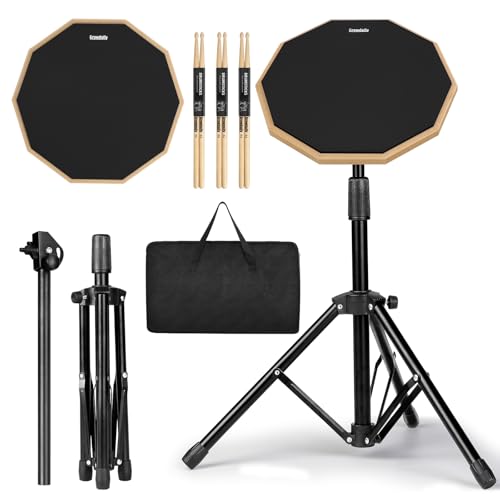
Drum Pad:GrowDaily drum practice pads are the perfect practice pad for any drummer, providing a realistic playing experience with a high resilience rubber and solid poplar base, and high-density shock absorbing cotton for a near snare drum feel.

PRACTICE ANYTIME, ANYWHERE - GLEAM Drum Practice Pad provides the best practice substitute to acoustic drums, so you can practice rudiments, paradiddles or just drum along to that song on the radio – without disturbing anyone. Portable and quiet, it works on any surface including carpet, table, lap or inside a standard snare basket.

Drum Pad:GrowDaily drum practice pads are the perfect practice pad for any drummer, providing a realistic playing experience with a high resilience rubber and solid poplar base, and high-density shock absorbing cotton for a near snare drum feel.
Practical Application: Mapping and Transcribing
Mapping out a song’s structure and transcribing its elements are not only practical skills; they are fundamental techniques that help drummers better understand and perform music. By breaking down sections like the intro, verse, chorus, and bridge while noting the number of bars for each, drummers gain insight into the song’s overall flow. Transcribing drum grooves involves identifying specific rhythmic patterns, which enhances a drummer’s ability to recreate those styles during performances. Utilizing shorthand notations simplifies complex rhythms, making it easier to remember essential characteristics. Regularly listening to the song while documenting its structure fosters a deeper awareness of rhythmic details, ultimately aiding in playing along with the music and ensuring that drummers can respond effectively during live performances. Incorporating progressive lessons from recommended drum books can help systematically improve these analytical and technical skills.
Recommended Products


Serving the Song Through Drumming
Serving the song through drumming requires a keen understanding of the music’s emotional landscape and structural components. Drummers enhance their performances by knowing when to accentuate or lay back, essential for effectively serving the overall musical composition. During verses, employing minimal fills and tight rhythms can highlight the vocals, while larger, groovier patterns in the chorus elevate energy. The judicious use of dynamic changes throughout a song captivates listeners, showcasing the drummer’s ability to engage thoughtfully with the music. Recognizing shifts between song sections, such as pre-choruses and bridges, allows drummers to provide seamless links that support the song’s flow. Additionally, stepping back at key moments, using intentional silence or minimalism, serves to emphasize the song’s narrative arc, enhancing the listening experience. Developing limb independence through targeted exercises further empowers drummers to execute these dynamic and stylistic shifts with precision and creativity.
Frequently Asked Questions
What Is the 80/20 Rule in Drumming?
The 80/20 rule in drumming asserts that 80% of improvement stems from 20% of focused practice, emphasizing drumming efficiency. Drummers should prioritize rhythm fundamentals and practice priorities to enhance performance and musical versatility effectively.
How to Analyse the Structure of a Song?
To analyze a song’s structure, one must identify song sections, observe rhythm variation, and note dynamic changes. This understanding facilitates deeper appreciation and enhances performance, as players can anticipate shifts and emphasize key moments effectively.
How to Read Music Notes for Drumming?
To read music notes for drumming, one must grasp drum notation basics, focus on rhythm pattern recognition, and understand time signature essentials. Mastery of these elements enables effective communication and performance of complex drum scores.
How to Identify Song Structure?
To reveal the blueprint of a melody, one must embrace chorus identification, explore verse variation, and master bridge recognition. These elements form a tapestry, guiding listeners through the intricate dance of a song’s structure.


