As an Amazon Associate, we earn from qualifying purchases. Some links on this site are affiliate links at no extra cost to you. Our recommendations are based on thorough research and editorial judgment.


How to Count Odd Time Signatures Like 5/4 and 7/8

Counting odd time signatures like 5/4 and 7/8 requires understanding their unique structures. In 5/4, try grouping the beats as 3+2 or 2+3 and count with a pattern like “1-2-3-1-2,” emphasizing the strong beat. For 7/8, use a grouping of 2+2+3, which feels asymmetrical. Practicing these rhythms through tapping and listening to examples, such as “Take Five,” can improve mastery and make these complexities easier to handle. Learning more about these techniques enhances rhythmic skills overall.
Key Takeaways
- Count 5/4 time as “1-2-3-1-2” to emphasize the strong beat and groupings of 3+2 or 2+3.
- For 7/8, group the beats as 2+2+3 to create a clearer rhythmic structure during counting.
- Use a metronome to maintain a steady pulse when practicing odd time signatures, adjusting speed as you progress.
- Engage in physical activities like tapping or walking to internalize the asymmetrical rhythms of 5/4 and 7/8.
- Listen to tracks like Dave Brubeck’s “Take Five” and Tigran Hamasyan’s music to familiarize yourself with odd time signatures.
Understanding Odd Time Signatures

You may be interested


Odd time signatures represent a fascinating and essential aspect of music that challenges traditional rhythmic expectations. These signatures, such as 5/4 and 7/8, feature an irregular number of beats per measure. In 5/4, the five beats can be counted in combinations like 3+2 or 2+3, facilitating easier understanding. Similarly, the 7/8 time signature is distinguished by its unique subdivisions, often grouped as 2-2-3, which create intriguing rhythms that demand focused counting. Mastering these odd time signatures not only enhances a musician’s versatility but also introduces them to complex rhythmic patterns found across diverse musical genres. Furthermore, familiarity with the cultural contexts of these time signatures, particularly in Balkan and Middle Eastern music, enriches performance and composition practices. Utilizing play-along tracks with adjustable tempo features can further develop a musician’s skill in mastering odd time signatures.
Counting Techniques for 5/4

Mastering counting techniques for a 5/4 time signature can greatly enhance a musician’s ability to navigate rhythmic challenges. In 5/4, each measure consists of five beats, often grouped as 3+2 or 2+3 to visualize the rhythm more easily. A widely-used method involves counting “1-2-3-1-2,” where the first “1” marks the strong beat, instilling a sense of forward motion. Utilizing a metronome at a comfortable speed helps keep a steady pulse while practicing these rhythms. Additionally, tapping or clapping emphasizes strong beats and their groupings, helping solidify the feel of 5/4. Listening to pieces like Dave Brubeck’s “Take Five” provides a practical example, illustrating how these techniques come together in musical context. Using tools that aid in sound isolation effectiveness can also enhance a musician’s ability to hear and internalize these rhythms clearly during practice and performance.
Recommended Products

Package Dimensions: 23.4 cm (L) X 13.0 cm (W) X 13.8 cm (H)
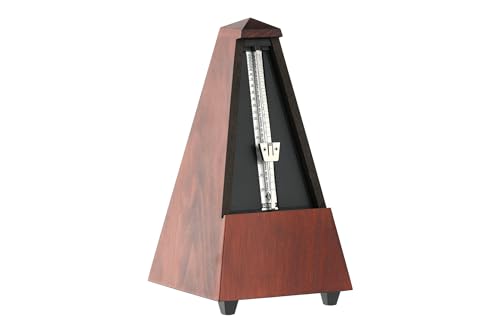
WITTNER Metronome System Maelzel

WITTNER Metronome System Maelzel
Exploring 7/8 Time Signature

The 7/8 time signature stands out in music for its unique rhythm and character, comprising seven eighth notes in each measure. Musicians often experience this odd time feeling as asymmetrical, especially when it groups beats as 2-2-3. Practicing 7/8 helps students master the rhythm by engaging in physical activities like walking or tapping, fostering a deeper understanding of its flow. Traditional songs found in cultures such as Balkan and Middle Eastern music showcase the vibrant use of 7/8, delivering rich, dynamic movements. For those learning, listening to artists like Tigran Hamasyan can enhance familiarity with the complexities of this time signature, making the experience of playing odd time feel both rewarding and enjoyable. Integrating progressive practice routines can significantly improve mastering such complex rhythms.
Recommended Products
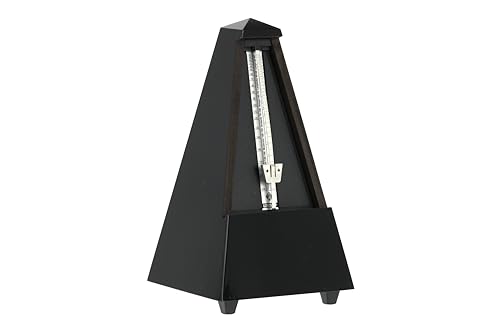
The Package Length of the Product is 23.4 centimeters

WITTNER Metronome System Maelzel

- PULSE — Finally a metronome you'll love using. Designed for all musicians.
Grouping Beats for Clarity
Grouping beats in unconventional time signatures is essential for musicians aiming to achieve clarity and precision in their performances. In time signatures like 5/4, musical phrases can be organized as 3+2 or 2+3, creating a clear framework for counting that emphasizes unique rhythmic feels. Similarly, 7/8 can often be grouped as 2+2+3, aiding in maintaining a consistent counting method. By subdividing beats into smaller rhythmic groupings, such as pairs and triplets, musicians simplify the complex rhythms, making them easier to manage. Utilizing a metronome set to these odd time signatures can further support accurate counting and help internalize these rhythmic groupings. Visual aids like rhythmic maps also enhance comprehension, clarifying how these subdivisions work in practice. Incorporating progressive exercises from reputable drum groove libraries can significantly improve a musician’s ability to navigate and master these complex time signatures.
Recommended Products

Excellent craftsmanship and the highest grade hardwoods are coupled to produce these wood case models

Demo Talking Metronome w/Tap

Auspicious "Arrow Feather Pattern" Compact size using arrow feather material. The subdued design creates a peaceful time with a light tone
Practical Applications in Rhythm
While exploring practical applications in rhythm, musicians often find that actively engaging with odd time signatures can considerably enhance their overall musicality. To develop a strong foundation, it is essential to focus on counting along using established groupings, such as 2+3 for 5/4 or 2-2-3 for 7/8. Incorporating physical movements, like tapping or walking, can help internalize these unique rhythms and strengthen the connection to the music. Additionally, practicing playing along with tracks designed in odd time signatures fosters familiarity and aids in improving rhythmic accuracy. As musicians gain confidence, they should gradually increase the tempo of their practice with a metronome, allowing them to master the complexities of rhythm inherent in these unconventional time signatures. Utilizing tools with broad frequency response can further enhance the auditory precision when analyzing rhythmic patterns.
Recommended Products

Dynamic metronome with 30-252 tempo range, 19 beat patterns, 3 PCM sounds, and Tap Tempo control Korg's original cylindrical resonator provides powerful sound and improved...
Listening Examples for Practice
When exploring odd time signatures, listening examples serve as a valuable resource for practicing rhythmic patterns and enhancing understanding. For instance, “Take Five” by Dave Brubeck exemplifies 5/4 time, showcasing a repeatable 2-3 grouping that simplifies counting and playing. Similarly, Pink Floyd’s “Money” in 7/4 time emphasizes recognizing the ‘one’ within each measure, vital for maintaining a steady groove. In folk music, Karine Polwart’s “Terminal Star” offers insights with 7/8, enriching the experience through vocal complexities. Additionally, engaging with Balkan music allows for practical applications of rhythms such as 7/8 and 9/8, which rely on unique grouping methods. Consequently, playing along to songs using odd time signatures enhances both rhythm comprehension and performance skills. For drummers looking to refine these skills further, exploring high-quality transcriptions can provide detailed notation and practice guidance tailored to odd time signatures.
Tips for Mastering Odd Time Signatures
Mastering odd time signatures requires a structured approach, as these unusual rhythms can initially seem intimidating to musicians. One effective tip is to break down odd time signatures, like 5/4 and 7/8, into smaller groupings of 2s and 3s, simplifying the counting process. Using a metronome set to a slow tempo will help develop a consistent internal rhythm before gradually increasing speed. Engaging in physical movements such as tapping or walking can reinforce these irregular rhythms, making them easier to play. Familiar songs using odd time signatures, like “Take Five” by Dave Brubeck and Pink Floyd’s “Money,” are perfect for listening practice. Finally, experimenting with simple melodies within these unique time frameworks enhances fluency and aids in improvisation. Understanding the importance of odd time signatures allows drummers to expand their rhythmic vocabulary and create more engaging beats.
Frequently Asked Questions
How to Count Odd Time Signatures?
In the forest of sound, odd rhythms dance freely. Employing counting techniques, rhythmic division unfolds, embracing metrical variations. Through practice strategies and the essence of improvisational skills, musicians cultivate their musical creativity and master the polyrhythm basics.
How to Count a 5 4 Polyrhythm?
To count a 5/4 polyrhythm, employ rhythmic patterns like 3+2 or 2+3, use a metronome for timing techniques, engage in polyrhythm exercises, and explore creative applications within ensemble coordination and improvisational strategies.
How to Count in a 5’4″ Time Signature?
To count in a 5/4 rhythm, utilize accent patterns to emphasize beats, employ counting techniques like “One, two, three, four, five,” and practice exercises with metronomes to enhance groove awareness and musical phrasing for effective performance.
How Do You Count 7/8 Time Signatures?
To count 7/8 rhythms, practitioners can use counting techniques such as 2-2-3 accent patterns. Incorporating practice exercises with drum patterns and analyzing song examples helps avoid common mistakes and enhances understanding of musical phrases.


