As an Amazon Associate, we earn from qualifying purchases. Some links on this site are affiliate links at no extra cost to you. Our recommendations are based on thorough research and editorial judgment.


Creating a Practice Space for Acoustic Vs Electronic Drums

Creating a practice space for acoustic drums requires significant soundproofing due to their loud volume, reaching up to 120 decibels, which can disturb others. These kits need around 6 to 8 feet of space for setup. In contrast, electronic drums operate quietly, between 60 to 75 decibels, and are more compact, making them suitable for smaller areas. Additionally, practice tools like metronomes and built-in coaching on electronic kits enhance learning, providing valuable feedback to players. Discover more tips for optimizing your drumming space.
Key Takeaways
- Acoustic drums require significant soundproofing due to their high decibel levels, while electronic drums can be used without disturbing others when utilizing headphones.
- Allocate approximately 6 to 8 feet in width and depth for acoustic drum setups, which can be restrictive in smaller spaces.
- Electronic drum kits are more space-efficient, often folding to fit into compact areas or corners, making them optimal for limited spaces.
- Incorporate anti-vibration drum mats for acoustic drums to protect floors and enhance sound quality.
- Consider personal preferences; acoustic drums offer dynamics and tonal variation, while electronic kits provide versatility and built-in learning tools.
Sound Levels and Noise Considerations

You may be interested


When considering the design of a practice space for drums, understanding sound levels and noise considerations is essential, especially since the choice of drum type can considerably impact both the environment and those within it. Acoustic drums can reach sound levels between 90 and 120 decibels, resembling the roar of a motorcycle engine, making them unsuitable for noise-sensitive environments without effective soundproofing. In contrast, electronic drums typically produce quieter sounds, measuring between 60 and 75 decibels, similar to an office atmosphere, allowing for quiet practice sessions. Additionally, electronic kits offer the advantage of using headphones, enabling musicians to play without disturbing others. Compact kits add to their versatility, requiring less space while still delivering an enjoyable drumming experience. Using drum silencer pads can further reduce the noise from acoustic drums, making practice feasible in noise-sensitive settings.
Recommended Products

FLAGSHIP SOUND ENGINE: Powered by the V51 module, the Roland 5-Series V-Drum delivers the same advanced drum engine as the top-tier V71 for rich tone, dynamic response, and deep sound customization

Re-Imagining Electronic Drums - Advanced 10-piece kit with dual-zone all-mesh heads, Active Magnetic hi-hat technology, state-of-the-art touchscreen drum module running BFD sound engine with 75 kits

FLAGSHIP SOUND ENGINE: Powered by the V31 module, the Roland 3-Series V-Drum delivers the same advanced sound technology as the top-tier V71, offering dynamic tone, expressive detail, and professional-grade performance
Space Requirements for Drumming
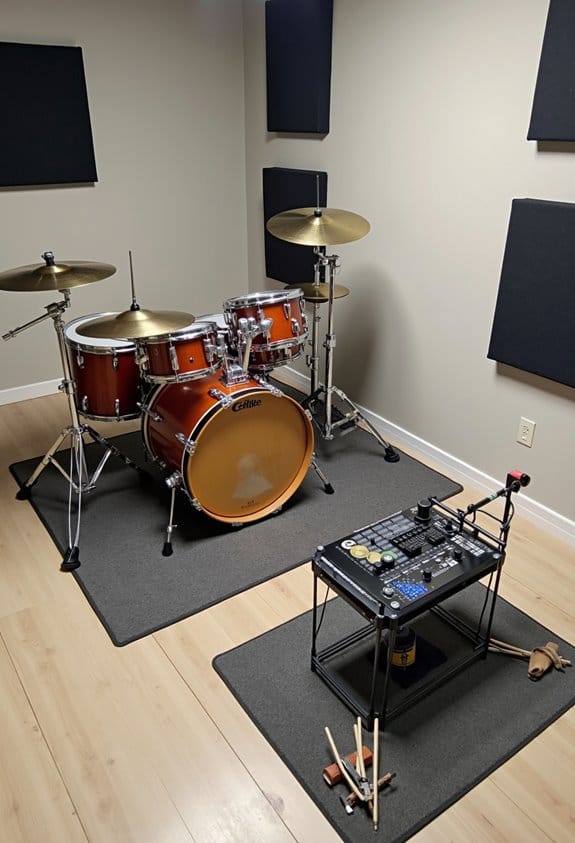
Creating an effective practice space for drumming involves careful consideration of the physical dimensions required for different types of drum kits. Acoustic drums typically demand considerably greater space, needing approximately 6 to 8 feet in width and depth for comfortable playing and movement. This larger setup accommodates additional gear such as cymbals and stands. In contrast, electronic drum kits are more space-efficient, often folding onto a single rack, making them ideal for smaller rooms or shared living spaces. With a quieter operation range of 60 to 75 decibels, electronic kits facilitate quiet practice, while acoustic drums can exceed 90 decibels. For beginners, the reduced setup time of electronic kits further enhances their appeal for establishing a practice space. To protect floors and improve sound quality, using an anti-vibration drum mat is a smart addition to any practice area.
Recommended Products

15kg (33LBS) Large Capacity & Multi-Scene Application --- 220V 1-phase commercial washer integrates washing and spinning functions, designed for high-capacity laundry demands. 33LBS (15kg) dry clothes capacity with a 700×430mm (27.5×16.9inch) drum handles bulk clothes—ideal for automotive seat covers, industrial uniforms, hotel bedding, and catering workwear.

𝐂𝐨𝐦𝐩𝐥𝐞𝐭𝐞 𝐃𝐫𝐮𝐦 𝐒𝐞𝐭 𝐄𝐱𝐩𝐞𝐫𝐢𝐞𝐧𝐜𝐞 - Immerse yourself in a full drum set experience with 9 dual-zone, velocity-sensitive pads replicating snare, toms, bass, hi-hat, and cymbals. Enjoy up to 592 preset percussion sounds and 30 drum kits for unparalleled versatility

Provide sonic isolation between your drums and whatever they're resting on
Equipment and Setup Needs

An effective drumming practice space requires specific equipment and thoughtful setup to maximize both functionality and comfort. Acoustic drum kits necessitate a larger space setup, often needing around 5-10 feet in diameter for movement, while electronic kits are more compact, easily fitting into small corners. Soundproofing is vital for acoustic setups, where noise levels can soar to 90-120 decibels. To improve resonance, high-quality drumheads and isolation pads are recommended. For electronic kits, accessibility to power outlets and a stable surface for the drum module is essential. Additionally, incorporating practice aids like mesh heads can enhance the dynamic range, catering to personal preference and ensuring a quality practice experience suited for various environments. Many drummers find that using silent drum practice pads significantly reduces noise during practice sessions while improving stick technique.
Recommended Products

TRAIN WITH REALISTIC RESPONSE: Redesigned practice pad delivers the feel and feedback marching percussionists need for daily practice, warm-ups, and rehearsals

4/5/6 Tenor Practice Pad Set with White S-hoops - Black

AUTHENTIC TENOR RESPONSE: Developed with Bill Bachman and Chris Romanowski, the Heavy Hitter Quadropad recreates the feel and spacing of marching tenors, helping practice sessions translate naturally to rehearsal and on-field performance
Practice Techniques and Tools
Mastering drumming techniques requires structured practice approaches and the right tools to foster progress. For acoustic drums, effective practice focuses on developing muscle memory through exercises that emphasize dynamics, ghost notes, and rimshots. In contrast, electronic drums offer built-in coaching features like metronomes and play-along tracks, enhancing timing and technique, particularly for beginners. Recording sessions on these kits provide invaluable feedback, enabling drummers to critique their performance and identify areas for improvement. Additionally, hybrid setups, which blend acoustic shells with electronic triggers, allow players to enjoy the tactile experience of acoustic drumming while utilizing the advantages of electronic tools. With access to various sound presets, drummers can explore different genres, enriching their practice experience and developing unique styles. Choosing a practice kit with adjustable stands can significantly improve comfort and technique during practice sessions.
Recommended Products

Xylophone Ed Kit - Includes Xylophone, drum practice pad, adjustable height stands, stick bag, sticks, mallets, and rolling cart/case.

Complete Percussion Experience - Professional 8-piece electronic drum set with ultra-quiet Alesis mesh heads, revolutionary Drum Module with Bluetooth & built-in industry-leading BFD drum sounds

Complete Percussion Experience - Stand-mounted 10" hi-hat controller, 3x dual-zone 10" cymbals with choke, ultra-quiet Alesis mesh heads, upgraded Drum Module with Bluetooth and BFD drum sounds
Personal Preferences and Style of Play
Drummers often find themselves aligning with specific preferences when it comes to their choice between acoustic and electronic drums, which can dramatically impact their approach to playing. Individual playing styles greatly influence this choice; acoustic drums appeal to those who value dynamic range and authentic tonal variation. Conversely, electronic kits attract drummers seeking the ability to experiment with diverse sounds, leveraging sound libraries while practicing quietly through headphones. The tactile feedback from acoustic sets helps develop muscle memory, while electronic kits offer a more accessible experience for beginners. For those who frequently collaborate or perform live, acoustic drums provide a traditional sonic presence. Additionally, the adaptability of electronic kits makes them ideal for smaller practice spaces, enhancing overall comfort. Moreover, many electronic drum sets include built-in learning tools that support skill development and timing practice.
Frequently Asked Questions
What Is the 80/20 Rule in Drumming?
The 80/20 rule in drumming emphasizes that 20% of focused practice on core techniques, such as sticking patterns and groove creation, yields 80% of improved rhythmic consistency, dynamics, speed training, and overall practice efficiency.
Are Electric Drums Good for Practicing?
Electric drums are a kaleidoscope of practice benefits, offering impressive sound quality and digital versatility. With volume control, recording options, and portability advantages, they cater to various playing styles, accommodating user preferences and affordability factors, easing the learning curve.
How Much Space Do I Need for Electronic Drums?
For electronic drums, 4 to 6 square feet is ideal, considering room layout, furniture arrangement, and accessibility features. Portability options enhance storage solutions, while sound isolation and cable management guarantee effective acoustic treatment and lighting considerations.
How to Build a Sound Proof Room for Drums?
To build a soundproof room for drums, one must carefully consider room dimensions, utilizing soundproof materials like acoustic insulation, wall treatments, and noise reduction techniques. Ideal drum placement and proper ventilation options enhance sound absorption and overall effectiveness.


