As an Amazon Associate, we earn from qualifying purchases. Some links on this site are affiliate links at no extra cost to you. Our recommendations are based on thorough research and editorial judgment.


How to Clean and Maintain Acoustic Drum Shells

To clean and maintain acoustic drum shells, start by using a damp microfiber cloth to wipe away dust and fingerprints. For deeper cleaning, mix a small amount of mild dish soap with water. Inspect the drum shells regularly, particularly the bearing edges, to remove any buildup. Store the drums in a temperature-controlled area, avoiding direct sunlight. Applying a specialized drum polish can enhance the finish. These practices will help preserve both the aesthetics and sound quality of the drums, leading to long-lasting enjoyment. More tips await!
Key Takeaways
- Regularly wipe drum shells with a damp microfiber cloth to remove dust and fingerprints, maintaining cleanliness and preventing scratches.
- Use mild dish soap with water for deeper cleaning, avoiding harsh chemicals that can damage the finish.
- Inspect bearing edges during head changes to address buildup and ensure proper sound quality and seating.
- Store drums in a temperature and humidity-controlled area, protecting them from warping, sunlight, and heat sources.
- Apply specialized drum polishes sparingly to restore shine and protect lacquered finishes as needed.
Cleaning Techniques for Drum Shells

You may be interested

Cleaning Cymbals Without Damaging the Finish
March 24, 2026
How Often Should You Replace Snare Drum Wires
March 24, 2026
Cleaning drum shells requires a thoughtful approach to maintain their integrity and appearance. To effectively clean drum shells, one should start by using a damp microfiber cloth, as it gently wipes away dust and fingerprints without scratching. For deeper cleaning, adding a small amount of mild dish soap to the cloth can help remove stubborn grime, but care must be taken to avoid excessive moisture, which may damage the finish. Regularly inspecting the shells, particularly at the bearing edges, guarantees any buildup is addressed, especially during routine maintenance or when changing drum heads. Harsh chemicals and abrasive materials should remain off-limits, as they can damage the drum shells’ finish. Using drum-specific polishes can aid in restoring shine when necessary. Additionally, maintaining effective humidity control is crucial for prolonging the shell’s durability and preserving sound quality.
Recommended Products

100 percent pure flannel, non-treated Cloth is safe on all guitar, drum, bass, and instrument surfaces

12-inch x 12-inch untreated premium microfiber suede cloth
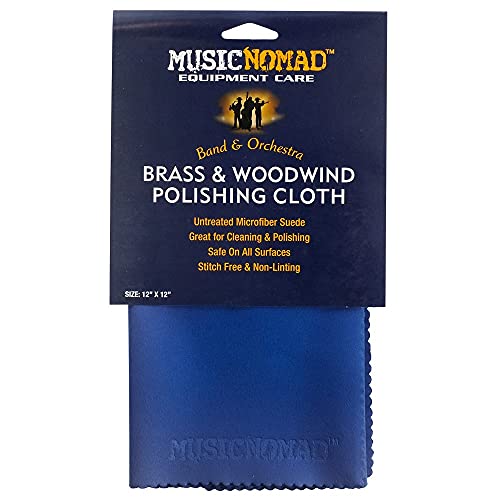
Untreated premium suede microfiber for brass and woodwind instruments
Maintaining the Finish and Aesthetic Appeal
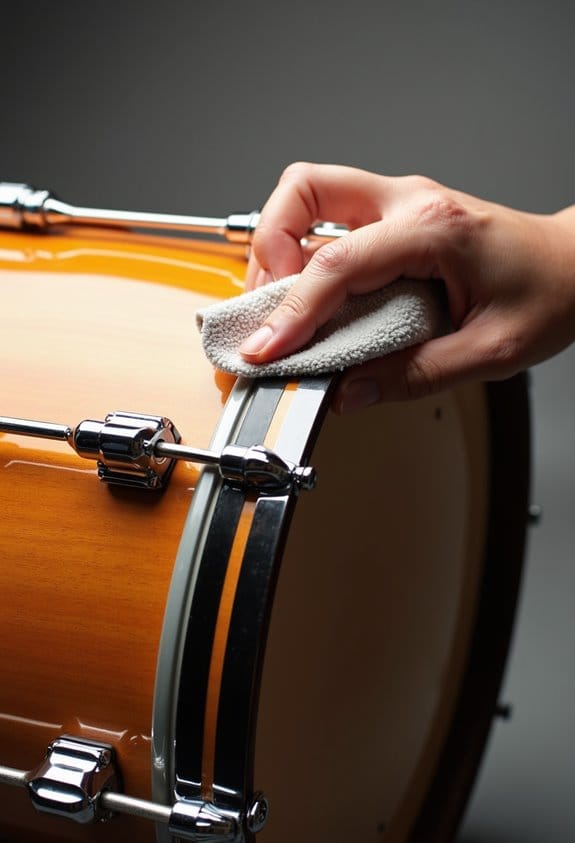
To preserve the stunning appearance and finish of acoustic drum shells, musicians and enthusiasts must adopt a proactive maintenance routine. Regularly wiping down drum shells with a microfiber cloth helps prevent scratches, maintaining their finish effectively. It’s also essential to apply a specialized drum polish sparingly, enhancing gloss while protecting lacquered finishes from dullness. Additionally, avoiding extreme temperatures and humidity changes is fundamental; these conditions can warp and damage the shell finish. Storing drum shells away from direct sunlight will further preserve their finish, ensuring vibrant colors and materials last longer. Finally, when changing drum heads, cleaning the bearing edges helps eliminate dust and debris, maintaining both appearance and sound quality, which is indispensable for peak performance. Using water-based finishes can also simplify cleanup and reduce environmental impact during maintenance.
Recommended Products

Cleans, shines, and protects while removing fingerprints, dust, and spots

Our drummer's version of Formula 65 is perfect for common drum wood finishes and bright metal trim
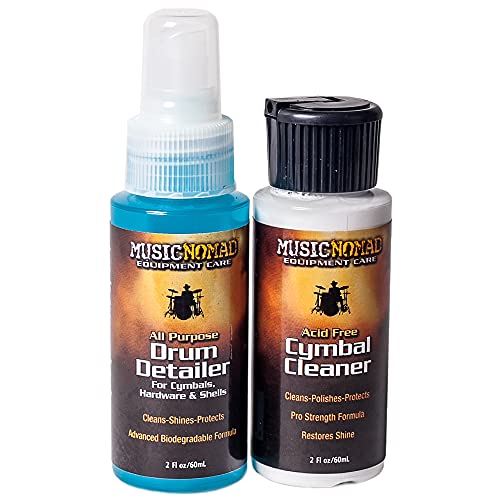
Acid-free cymbal cleaner works to clean, polish, and protect for brilliant finish cymbals
Regular Inspections and Care
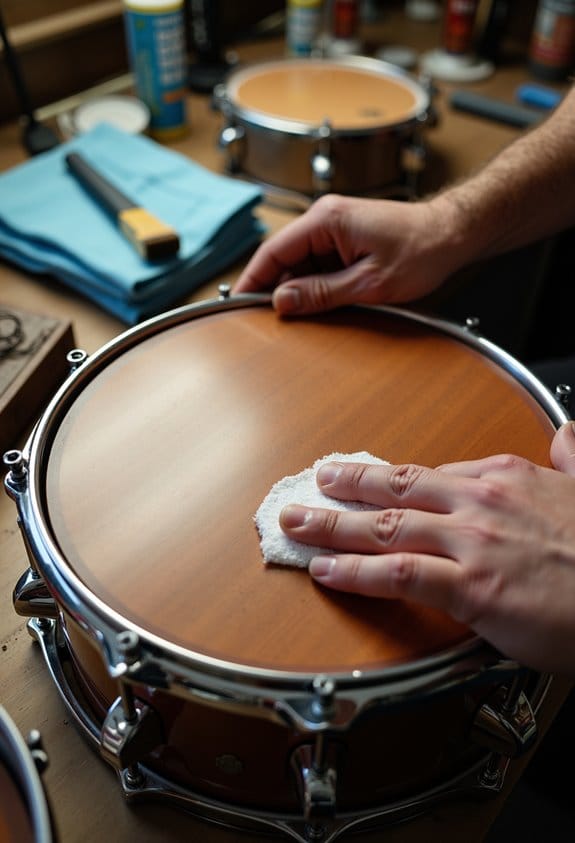
While regular inspections and care may seem tedious, they are vital for guaranteeing the longevity and performance of acoustic drum shells. Drummers should routinely inspect drum shells for scratches, dents, or signs of finish deterioration, as these flaws can negatively affect both aesthetics and sound quality. After each use, wiping down the exterior with a microfiber cloth is critical for maintaining cleanliness. When changing heads, checking bearing edges for defects guarantees superior sound by allowing heads to seat properly. Additionally, storing drums in controlled temperature and humidity environments prevents warping or cracking. To further enhance longevity, applying a specialized conditioner on bearing edges may improve head seating, ultimately enhancing sound and maintaining the overall quality of the drum shells. Choosing shells with durable construction also ensures lasting performance, especially when frequently used in varied environmental conditions.
Recommended Products
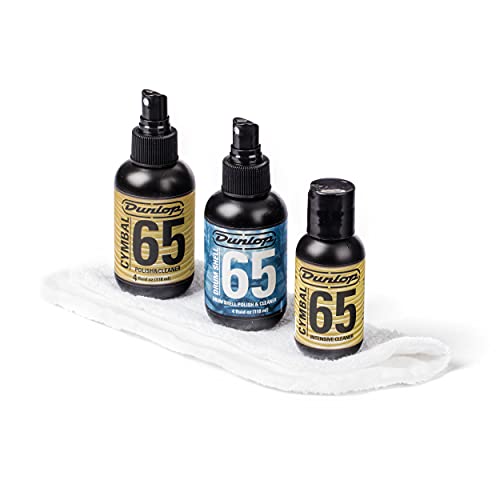
Includes Drum Shell 65 Polish & Cleaner to help restore your finished drum shell to a rich luster and keep it in a pristine, like-new condition
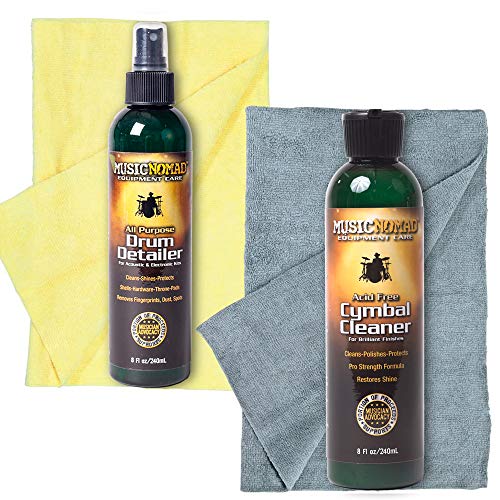
Acid-Free Cymbal Cleaner is fast at cutting through layers of oxides and restoring an eye-glaring shine to cymbals

Proper Storage and Protection
Proper storage and protection of acoustic drum shells are essential for ensuring their durability and performance over the years. To prevent warping and cracking, it is imperative to keep drum shells in a temperature and humidity-controlled environment. When transporting drum shells, using padded drum bags helps protect the drums from scratches and dings, which can damage the finish. It is also important to avoid placing drum shells near heat sources or in damp areas to prolong their lifespan. Maintaining a clean storage area minimizes the risk of accidental damage from surrounding items. Finally, limiting prolonged exposure to direct sunlight is essential, as this can lead to deterioration and discoloration of the drum’s finish over time, compromising its aesthetic appeal. Additionally, regular inspection and cleaning routines similar to those used for musical instruments like samba whistles can help maintain acoustic drum shells’ optimal condition.
Recommended Products

Ample Storage Space: with the package including 6 clear hard zipper cases, you'll have plenty of room to store and organize multi items, keeping your belongings neat and easily accessible

Package Includes: 10"x8" Tom Drum Bag

Zipper Closure Design: This sea shell collecting bag comes with a reliable zipper closure to firmly lock in all collected seashells and small beach treasures. It effectively prevents items from slipping out during beach play and outdoor activities, bringing a fun beach experience
Recommended Cleaning Products and Tools
When it comes to keeping acoustic drum shells looking and performing their best, selecting the right cleaning products and tools is essential. Drum sets benefit greatly from products like MusicNomad cleaners, which effectively clean without damaging finishes. For general upkeep, Simple Green, when mixed with water, serves as an excellent all-purpose cleaner. A mild soap solution, such as diluted dish soap, is effective in removing stubborn dirt, but care should be taken to avoid excessive moisture. Soft microfiber cloths are ideal, as they minimize scratching on the shell’s surface. Finally, for lacquered finishes, utilizing a specialized drum polish restores shine and enhances the aesthetic quality of the shells, ensuring they remain visually appealing and fully functional. Additionally, maintaining the appropriate drum head material type can significantly enhance the longevity and sound quality of your drum set.
Recommended Products

SPECS: 3.3L capacity is smaller and more compact allowing for the cleaning of up to 300 cases of .223 brass at a time, 110V model


Product 1: One quick and easy application
Frequently Asked Questions
What Should I Clean My Drum Shells With?
For effective drum shell cleaning, utilize mild soap solutions or natural cleaning alternatives. Recommended cleaning products include damp microfiber cloths, focusing on eco-friendly options to prevent damage. Adhering to maintenance best practices guarantees longevity and aesthetic appeal.
Can You Use Windex on Drum Heads?
Using Windex on drum heads is ill-advised due to potential damage to drum head materials, negatively affecting sound. Instead, alternative products like damp cloths or mild soap solutions serve as effective DIY cleaning methods for proper drum care.
How to Clean the Inside of a Drum Shell?
To clean a drum shell, regularly inspect interior dusting using microfiber cloths, ensuring moisture control. Utilize mild soap for stubborn dirt, safeguarding the shell materials. This meticulous maintenance enhances acoustic performance and prolongs drum life.
How Often Should I Change Drum Skins?
How does one gauge the heartbeat of their drum? Skin replacement frequency varies considerably, influenced by player style, environmental factors, and budget considerations; typically, every 6 to 12 months guarantees drum head longevity and peak sound quality.


