As an Amazon Associate, we earn from qualifying purchases. Some links on this site are affiliate links at no extra cost to you. Our recommendations are based on thorough research and editorial judgment.


How to Position Snare Drums for Different Playing Styles

Positioning snare drums correctly is essential for each playing style. For concert settings, the snare should be elevated to match natural hand height. Jazz drummers benefit from angling the snare slightly for quick accents, while marching bands require elevated systems for movement. An aggressive rock style places the drum just above waist level for power. Height adjustments should allow for relaxed strokes, with two fingers’ distance between the stick and rim. Learning how to optimize your setup can enhance technique and performance.
Key Takeaways
- For concert settings, elevate the snare drum to match natural hand height for optimal access during performances.
- Jazz drummers should angle the snare slightly toward them for quick accents and comfortable playing with a traditional grip.
- Position the snare just above the waist for aggressive rock styles, ensuring easy access for rim shots and powerful backbeats.
- Maintain a height of five fingers below the belly button for standing players, and align the snare top with the knees for seated players.
- Regularly assess and adjust snare positioning to support ergonomic posture and prevent strain during extended play sessions.
Understanding Different Playing Styles
You may be interested


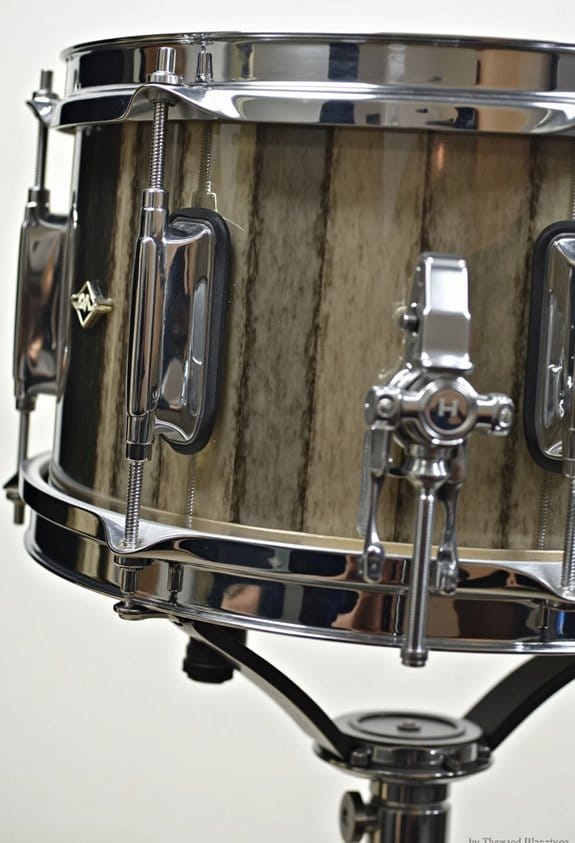
Understanding different playing styles is essential for drummers seeking to optimize their snare drum positioning. Each style, whether concert, jazz, or marching, requires distinct setups that enhance both performance and comfort. In concert settings, for instance, the snare drums are often elevated to match the player’s natural hand height, allowing for smoother movements and minimizing fatigue. Conversely, jazz drummers typically angle their snare slightly; this adjustment facilitates quick accents and rim shots, essential for jazz rhythms. For marching bands, snare drums are mounted on elevated carrier systems, promoting dynamic movement while maintaining proper posture. Ultimately, the distance between the player and snare should support natural stick movement, ensuring an ergonomic approach tailored to each specific style. Choosing the right snare drum, such as one with a maple shell or high-tensile synthetic head, can significantly influence the tonal quality and projection suited to each playing context.
Height and Angle Adjustments
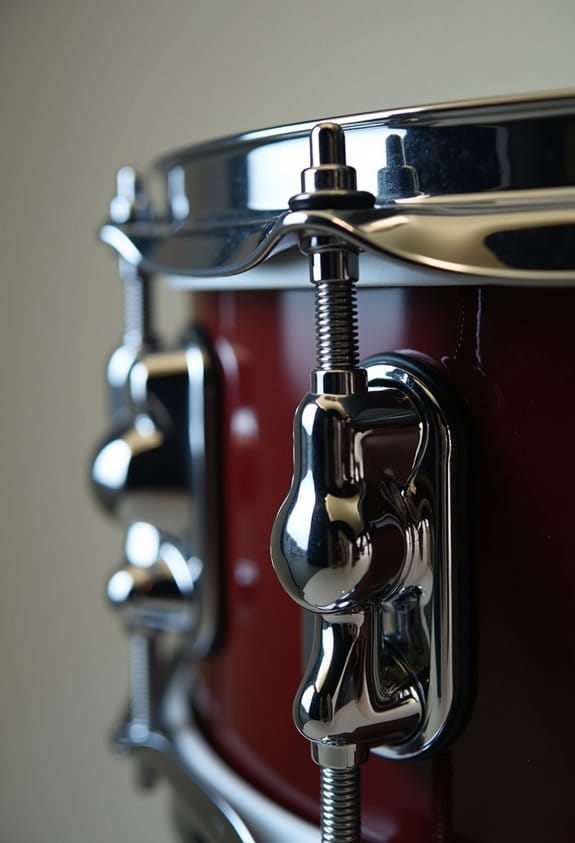
Finding the ideal height and angle for a snare drum is essential for maximizing both comfort and performance. The snare drum should be set approximately five fingers below the belly button, ensuring ideal playing height. For players in a seated position, the top of the drum should align with the knees, promoting a natural arm position that encourages good posture. Additionally, angling the snare slightly towards the player can enhance accessibility, improving stroke accuracy during play. It’s vital to adjust the drum’s height based on the player’s grip and technique, allowing for relaxed and slightly bent elbows. Regular reevaluation of the snare’s positioning is necessary to accommodate any changes in playing style and prevent strain during extended practice sessions. Ensuring consistent tuning is also important, which can be achieved by using a snare drum strainer to maintain precise tension control.
Recommended Products

𝗖𝗼𝗺𝗽𝗹𝗲𝘁𝗲 𝗗𝗿𝘂𝗺 𝗠𝗶𝗰 𝗦𝗼𝗹𝘂𝘁𝗶𝗼𝗻 – The V Pack Arena is our top-of-the-line drum microphone set, delivering effortlessly amazing sound. Ideal for 5-piece drum kits & expandable with additional V BEATs, V KICKs & other mics for larger configurations, all housed in a rugged flight case for easy transport & storage

Pearl Roadshow Drum Set 5-Piece Complete Kit with Cymbals and Stands, Bronze Metallic (RS525SC/C707)
Complete Drum Set -The Pearl Roadshow drum kit comes complete with everything you need to start drumming right out of the box. This set comes with drums, hardware, cymbals, and drum throne. We even throw in sticks and a stick bag to complete the set

Powerful Performance Capabilities: This professional 9-piece electronic drum set includes 12" two-piece independent hi-hat, 8" kick tower, 12" triple-zone ride cymbal, 10" dual-zone snare, three 8" dual-zone toms, and 11" dual-zone crash cymbals with choke function. The responsive mesh heads offer natural rebound and an expansive dynamic range, while the two-piece hi-hat and triple-zone ride cymbal provide expressive sound and precise control. A reinforced H-frame rack ensures rock-solid stability, letting you focus solely on your performance.
Traditional Playing Position
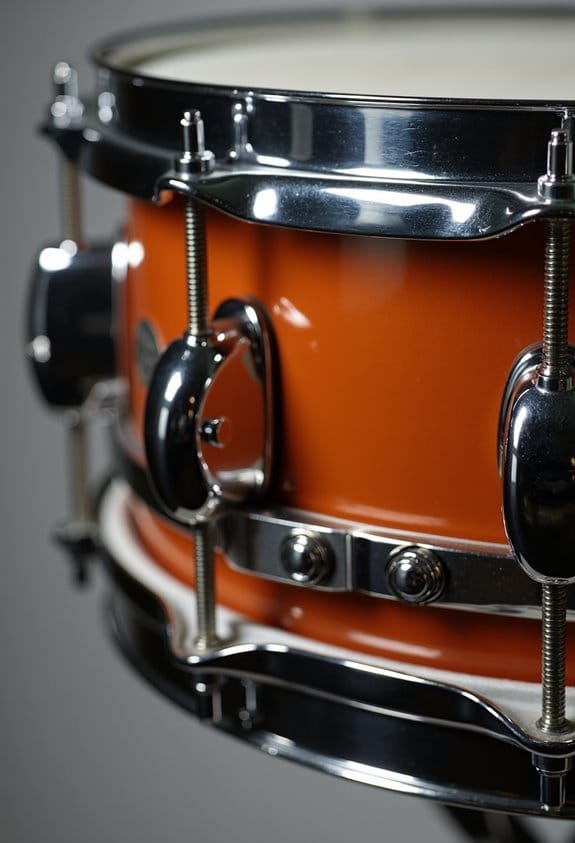
When players position their snare drums in the traditional playing position, they create a setup that enhances both ergonomics and performance. In this arrangement, the snare drum should align with the center of the player’s body, sitting slightly lower than the waist. Ideally, the rim of the drum should rest about five fingers below the belly button, allowing for a comfortable hand position. Players should keep their elbows close to their body and maintain a natural wrist angle to avoid strain. Furthermore, the snare drum must be centered between the feet to support balance and accessibility. This careful positioning promotes a straight back and a relaxed upper body, greatly improving overall playing efficiency and comfort during performances. Adjusting snare stand height with features like memory locks can help maintain this optimal setup consistently.
Recommended Products
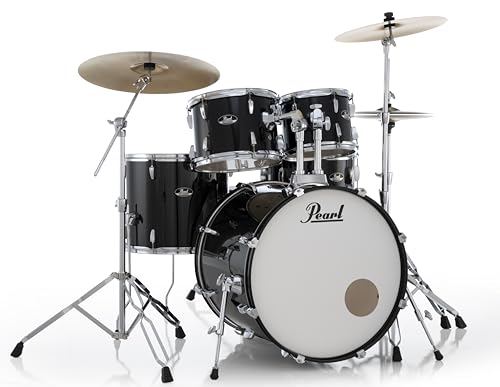
Complete Drum Set -The Pearl Roadshow drum kit comes complete with everything you need to start drumming right out of the box. This set comes with drums, hardware, cymbals, and drum throne. We even throw in sticks and a stick bag to complete the set THis model comes with an extra cymbal stand and upgraded BRD cymbals. 2 pair of maple drum sticks, stickbag and a Pearl Drum poster .

Complete Drum Set -The Pearl Roadshow drum kit comes complete with everything you need to start drumming right out of the box. This set comes with drums, hardware, cymbals, and drum throne. We even throw in sticks and a stick bag so there is no delay

ALL-IN-ONE PRO HARDWARE SET: Includes five essential pieces for a powerful, road-ready setup—(1) 9707ML-DP Direct-Pull Hi-Hat Stand, (2) 9709-BT Boom Cymbal Stands, (1) 9710-BT Straight Cymbal Stand, and (1) 9706 Ultra Adjust Snare Stand. Pedal not included.
Aggressive Rock Styles
Building on the principles of traditional playing positions, aggressive rock styles require a distinctive approach to snare drum placement that enhances power and expressiveness. For this style, the snare should be positioned just above waist level, allowing for an aggressive angle of attack. An important technique involves angling the snare slightly toward the player, making the rim easily accessible for rim shots and powerful backbeats. Using a matched grip enables drummers to generate maximum force, which is essential for the fast, dynamic rhythms characteristic of aggressive rock. In addition, placing the snare drum close to the hi-hat facilitates quick changes between intense snare hits and hi-hat accents. A sharp, well-tuned snare sound is key for cutting through the heavy mix typical in rock music. To protect the instrument during transport to gigs, consider using a durable bass drum cover made from materials like 600D nylon that offers padding and weather resistance.
Recommended Products

3.14" x 14" Maple Snare Drum with 3mm Triple-flanged Hoops - Gold Sparkle

8" x 14" Brass Snare Drum with 1.0mm Shell 3.0mm Triple-flanged Hoops - Black Nickel with Gold Hardware

6.5" x 14" Brass Snare Drum with 1.5mm Shell 2.3mm Triple-flanged Hoops - Black Nickel
Jazz Drumming Techniques
In the world of jazz drumming, snare drum positioning plays an essential role in achieving the nuanced sound characteristic of the genre. Typically, the snare drum is set higher and angled slightly toward the player, which allows drummers to perform intricate stick techniques with greater dynamic control. Many jazz drummers utilize a lighter grip and prefer a traditional grip style, facilitating finesse in sound production. The focus on relaxed wrist motion enables softer brush-like strokes when using wire brushes, integral to jazz feel. Additionally, techniques such as cross-stick or rim-shots help accentuate off-beats, enriching the overall texture. This particular snare drum placement supports quick shifts between diverse playing styles, essential for smooth improvisation and varied dynamics essential in jazz music. Exploring a variety of drum kits can also inspire drummers to customize their setup for unique sound expression and playing comfort.
Recommended Products

Complete Adults Drum Set - The Donner DDS-520 drum kit comes with everything you need to start drumming right out of the box. This set includes drums, hardware, cymbals, a drum throne, and a pair of drumsticks

Complete Drum Set -The Pearl Roadshow drum kit comes complete with everything you need to start drumming right out of the box. This set comes with drums, hardware, cymbals, and drum throne. We even throw in sticks and a stick bag to complete the set

Complete Percussion Experience - Professional 8-piece electronic drum set with ultra-quiet Alesis mesh heads, revolutionary Drum Module with Bluetooth and built-in industry-leading BFD drum sounds
Marching Band Considerations
Positioning the snare drum in a marching band is vital, as it directly impacts both performance and visibility during collective movements. Unlike concert setups, the snare drum should be placed slightly higher to enhance visibility and guarantee ideal playing motion while marching. Drummers should maintain a comfortable grip, with elbows bent at a 90-degree angle, keeping the drum level with their upper body for improved sound projection. The snare drum’s alignment is essential for an unobstructed view of the conductor and fellow musicians, requiring careful consideration of the ensemble’s formation. Additionally, harnesses are typically used to distribute weight evenly across the shoulders, allowing adjustments to the drum’s height, assuring clear sound above brass and woodwinds while retaining stability during dynamic movement. Using an adjustable height mechanism on the drum harness can further enhance comfort and ergonomics over long performances.
Recommended Products

REVOLUTIONIZING SIGNATURE SNARE DRUMS: Discover the Ludwig Carl Palmer Venus Snare Drum, a game-changer in the world of percussion. Despite its accessible price point, this snare drum delivers top-tier performance that rivals even high-end Ludwig models.

Solid Form-fitting Shoulder Frame
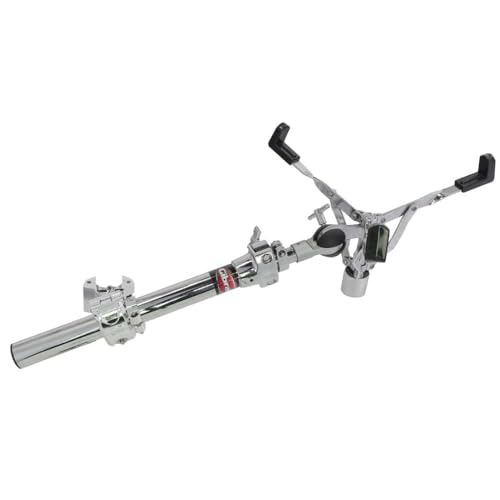
SNARE DRUM SUPPORT WITHOUT FLOOR CONTACT: Mounts directly to your drum rack, keeping the area beneath your snare drum free of hardware for a cleaner setup and more foot space.
Comfort and Reach for Each Style
Finding the right balance between comfort and reach when setting up a snare drum is essential for any drummer, as it can considerably affect their performance across various styles. For marching styles, positioning the drum five fingers below the belly button encourages an upright posture, facilitating ease of movement. Conversely, in concert settings, aligning the drum with the hips grants players a comfortable arm position, promoting wrist health. Jazz drumming benefits from a lower snare position, near waist height, enabling quick access for techniques like cross-sticking. Equally important is centering the snare drum between the feet, ensuring natural hand movements without excessive twisting, while adjusting height allows for a 90-degree elbow angle, thereby enhancing overall playing comfort. Additionally, selecting the correct drum throne with ergonomic designs can further improve posture and support during long playing sessions.
Analyzing Your Technique
With the snare drum properly positioned, attention can shift toward analyzing the drummer’s technique. This involves evaluating hand and stick positioning; the left hand should grip the stick comfortably outside the tension rods, while the right hand remains directly over them. For matched grip, the sticks need to form an angle of approximately 93 to 95 degrees, which promotes a natural feel during playing. In addition, maintaining a distance of two fingers between the rim and the back end of the sticks is vital for effective stroke mechanics. Finally, assess the distance between the feet and the snare; it ought to feel natural, allowing for access to the drum without twisting the legs or body, which is essential for the best snare drum positioning. Ensuring your sticks are stored in a durable drum stick bag can protect your equipment and maintain consistent performance.
Customizing Your Setup
When drummers consider customizing their setup, it is vital to understand how the snare drum’s position can greatly impact their performance and overall comfort. Positioning the snare drum around five fingers below the belly button allows the left hand to rest naturally, maximizing ergonomic posture. In a marching setup, raising the snare elevates projection, making it more visible, while in a concert environment, aligning it level with the bass drum and hi-hat promotes better accessibility. Angling the snare slightly towards the player enhances technique and sound production. Additionally, placing the snare about an arm’s length from the body guarantees ideal reach, helping maintain a relaxed grip, which is significant for avoiding shoulder and arm strain during play. Considering an ergonomic setup along with lumbar support can significantly improve comfort during extended drumming sessions.
Maintaining Consistent Practice
Consistent practice plays an essential role in the development of a drummer’s skills, particularly when it comes to mastering the nuances of snare drum techniques. Establishing a routine, ideally practicing for at least 30 minutes daily, reinforces essential techniques and enhances muscle memory, enabling drummers to execute various styles seamlessly. Utilizing a metronome during these sessions is vital, as it fosters timing and rhythm consistency. It is also beneficial to set specific goals, such as focusing on improving a particular technique or style, promoting concentrated and effective practice. Additionally, recording practice sessions allows drummers to gain valuable feedback, helping them identify areas of improvement in snare drum positioning and dynamics, ultimately improving their overall performance. Incorporating short video tutorials that are 6-12 minutes in length can maintain engagement and help drummers efficiently focus on new concepts.
Frequently Asked Questions
What Is the 80/20 Rule in Drumming?
The 80/20 rule in drumming highlights that true drumming efficiency arises from mastering just a few essential techniques. Ironically, many mistakenly believe hours of practice equal progress, while focusing on key skills can yield greater results.
How to Position a Snare Drum?
The snare drum should be positioned at hip height, angled slightly towards the player, and placed three to four fingers away from the body. This guarantees ideal snare height for comfortable playing and ergonomic reach.
How to Play Accents on Snare Drum?
To play accents on the snare drum, focus on accent techniques like striking with increased force, controlling wrist movement, and varying stroke locations. Practicing within a metronomic framework improves timing and enhances rhythmic musicality.
What Is the Holy Grail of Snare Drums?
The “Holy Grail” of snare drums symbolizes the ultimate sound quest; it’s a vintage Ludwig Supraphonic. Snare selection, featuring a seamless shell and ideal dimensions, defines versatility, resonating deeply with every drummer’s quest for perfection.


