As an Amazon Associate, we earn from qualifying purchases. Some links on this site are affiliate links at no extra cost to you. Our recommendations are based on thorough research and editorial judgment.

How to Use a Metronome Effectively for Drumming

To use a metronome effectively for drumming, one must first grasp its importance in establishing a steady tempo and improving rhythm accuracy. Beginners might struggle, but starting with quarter notes at a comfortable 60-80 BPM can build a strong foundation. Progressively increase speed while practicing various subdivisions, like eighth and sixteenth notes. Accented patterns enhance limb coordination. Regular practice with a metronome fosters timing skills, ensuring drummers can tackle complex rhythms with ease. Discover additional techniques for mastering rhythm.
Key Takeaways
- Start with a comfortable tempo of 60-80 BPM, using quarter notes for a solid rhythmic foundation.
- Gradually increase the metronome speed by 10 BPM as your timing improves.
- Practice counting aloud, like “1 e and a,” to reinforce internalization of complex rhythms.
- Incorporate accented beat patterns to develop limb independence and rhythmic stability.
- Regularly assess your progress and modify practice routines to target specific areas for improvement.
Importance of Practicing With a Metronome
You may be interested

10 Best Drum Hand Techniques to Elevate Your Playing Skills
December 21, 2025

10 Best Wood Tip Drum Sticks Every Musician Should Own
December 21, 2025

10 Essential Rudiments Every Drummer Should Master
December 21, 2025
Practicing with a metronome is crucial for drummers, as it not only cultivates a reliable sense of timing but also enhances overall musical performance. A metronome provides a consistent reference point, helping drummers align their rhythms and maintain a steady tempo, which is essential in band settings. When a drummer’s timing is inconsistent, it can disrupt the entire ensemble, making this tool indispensable for developing good timekeeping. Additionally, percussionists often play the role of timekeepers in a musical group, therefore relying on the metronome to refine their skills. Regular practice with this device highlights any timing issues, enabling targeted improvements in rhythm precision and ultimately leading to enhanced musicality for the drummer. To further improve timing and coordination, many drummers benefit from interactive features such as real-time feedback and visual cues offered by modern drum lesson apps.
Recommended Products
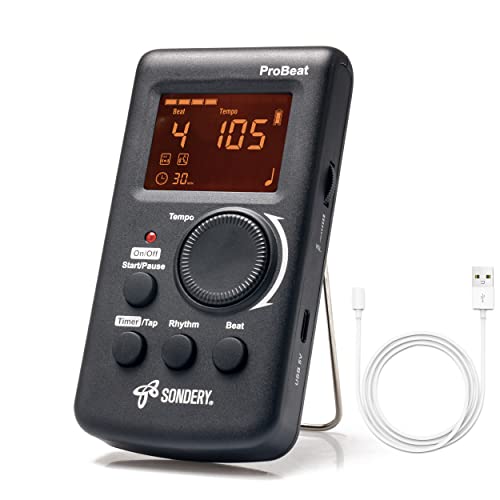
Direct and fast setting of beat, tempo, rhythm by buttons and knobs. Easily reading color screen helps a lot to understand what you want out of your Sondery brand ProBeat digital metronome.

🎸【TPR ENVIRONMENTAL DRUM HEAD MATERIALS】: 10" Novel design drum pad; More interesting practice pad with the pad with audible metronome beating sound;
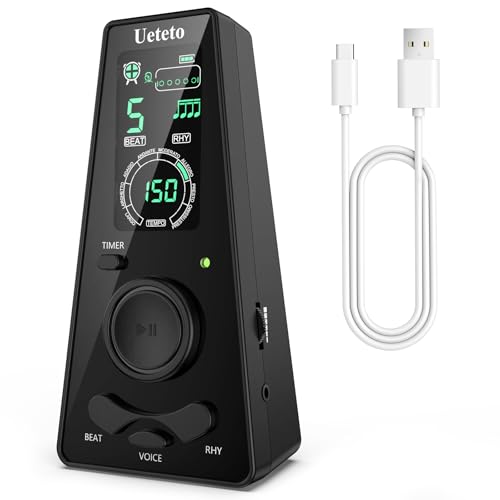
𝐃𝐢𝐠𝐢𝐭𝐚𝐥 𝐌𝐞𝐭𝐫𝐨𝐧𝐨𝐦𝐞 𝐎𝐧𝐥𝐲:This metronome for piano features a clear LCD display, flashing light, 9 rhythm patterns, 10 beats (0,1,2,3,4,5,6,7, 8,9), 40–208 BPM, volume control, and timer options for 15, 30, 45, or 60 minutes. Electronic metronome is ideal for Piano, Guitar, Drums, Ukulele, Harmonica, Saxophone, Bass, Violin, Cello, Banjo, flute, Chromatic, Trumpet, and other instruments. The screen saves power by turning off after 30 seconds and wakes instantly with any button press. (𝐍𝐨𝐭𝐞: 𝐍𝐨 𝐭𝐮𝐧𝐞𝐫 𝐟𝐮𝐧𝐜𝐭𝐢𝐨𝐧)
Challenges of Using a Metronome
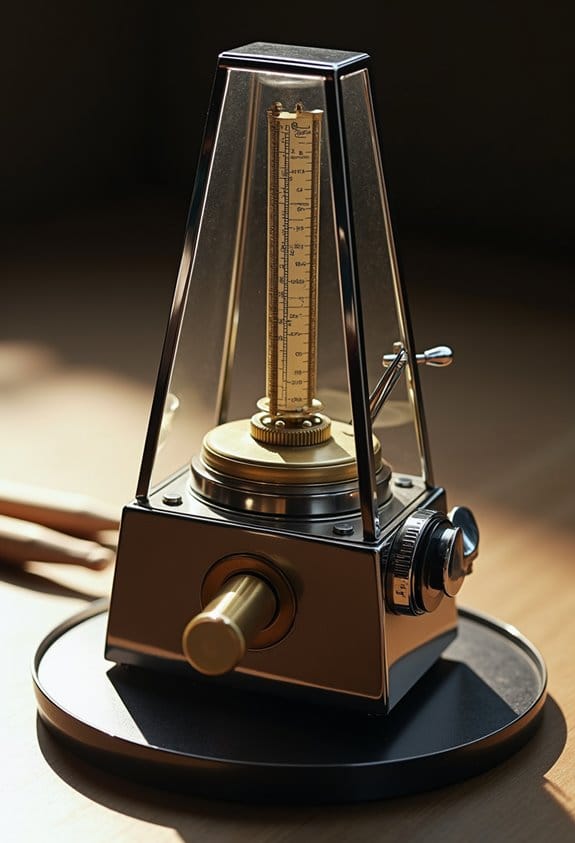
While mastering the use of a metronome can greatly improve a drummer’s timing skills, many students face obstacles that can deter their progress. For instance, beginners often struggle to grasp the metronome’s importance, which can hinder their timing development. Additionally, the initial challenges of playing along with a metronome may lead to frustration, causing some students to disengage from practice altogether. Misconceptions, such as the belief that a metronome speeds up or slows down on its own, can undermine a student’s confidence in their timing abilities; in most cases, timing issues stem from the player, not the device. Hence, establishing a consistent practice routine with gradual metronome tempo adjustments is essential for overcoming these common hurdles and enhancing overall musicianship. Incorporating a practice pad into your routine can help maintain focus and improve timing accuracy while using a metronome.
Recommended Products
![EX [3-IN-1] Portable Digital Electronic Drum Pad, with [Metronome, Speed Detection & Tap Counting] 10″ TPR Practice Pad, Green](https://m.media-amazon.com/images/I/41dqWp0kAGL._SL500_.jpg)
【All-in-One Tempo Trainer】Integrated LCD metronome (30–250 BPM) with a precision motion sensor delivers real‑time tempo tracking and tap counting. As you play, the pad computes and displays your current BPM, acting as a “reverse metronome” so you can see if you’re ahead/behind the beat. This data‑driven approach lets drummers practice with objective feedback, refining timing and groove on every stroke.
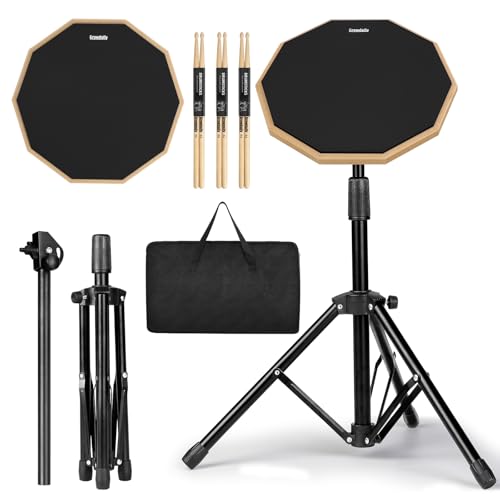
Drum Pad:GrowDaily drum practice pads are the perfect practice pad for any drummer, providing a realistic playing experience with a high resilience rubber and solid poplar base, and high-density shock absorbing cotton for a near snare drum feel.

Drum Pad:GrowDaily drum practice pads are the perfect practice pad for any drummer, providing a realistic playing experience with a high resilience rubber and solid poplar base, and high-density shock absorbing cotton for a near snare drum feel.
Progressive Practice Approach
Timing mastery is a cornerstone of effective drumming, and a progressive practice approach serves as a structured pathway toward achieving this goal. Initially, drummers should practice quarter notes at a comfortable tempo of 60-80 BPM, using one hand to lay a solid foundation. When off track, they can count the quarter notes aloud, reinforcing the rhythmic connection. As confidence builds, drummers should gradually increase the metronome speed by 10 BPM increments. After mastering quarter notes, it’s beneficial to lower the tempo and begin counting eighth notes against the quarter notes, cultivating the ability to distinguish different note values. This method not only strengthens timing skills but also enhances the overall quality of drum beats, fostering rhythmic independence and precision. Using a metronome with features like tempo range adaptability ensures the practice sessions remain versatile and effective across different skill levels.
Recommended Products

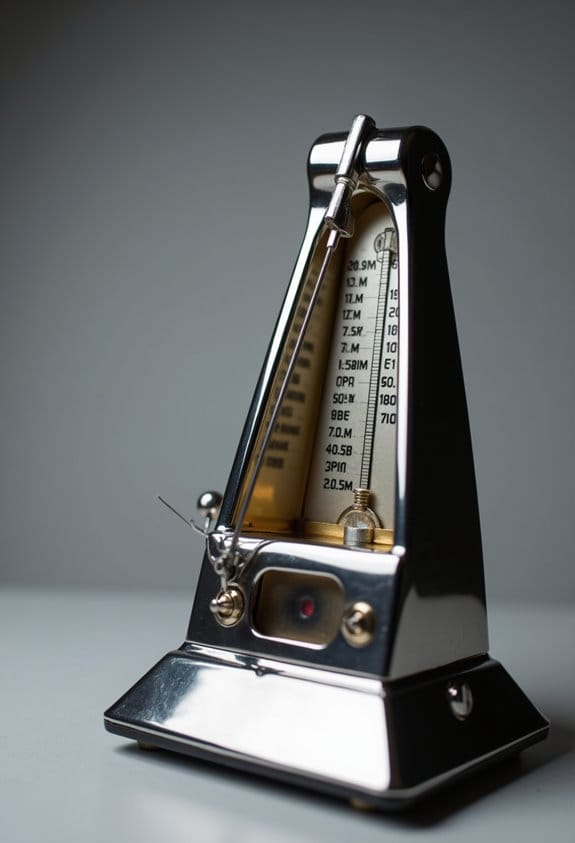
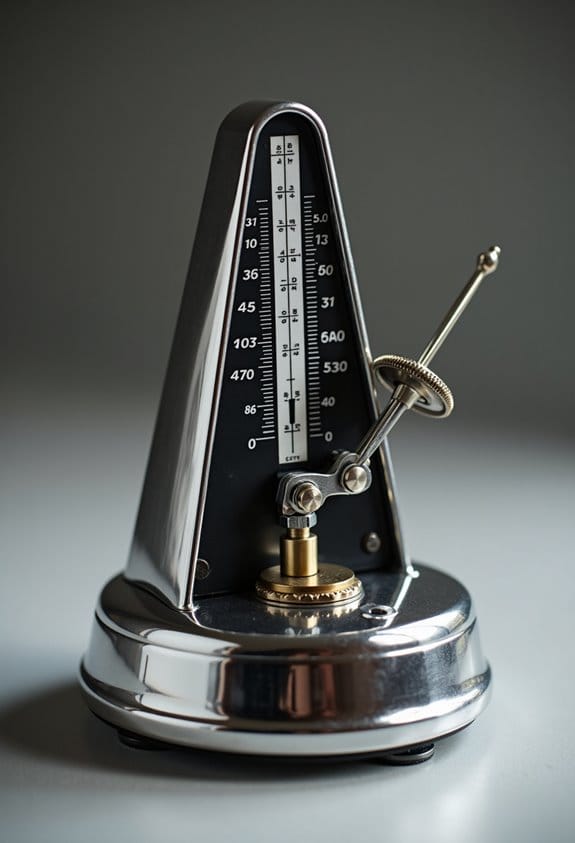
[Easy to use]: You just use the metronome pendulum swing to choose your needed beat and tempo and let the mechanical metronome pendulum go into motion.And provide a loud sound to aid you in keeping track of beats and tempo when practicing with various musical instruments


Advanced Exercises With the Metronome
Building on the solid foundation established through the progressive practice approach, advanced exercises with the metronome elevate drumming skills to a new level. Setting the metronome to a slower tempo, typically between 65 and 85 BPM, facilitates effective counting of 16th notes. By practicing with one hand initially, drummers can focus on rhythm execution by counting aloud as “1 e and a, 2 e and a.” This method helps internalize subdivisions, enhancing timing. Once comfortable, players should shift to alternating hands (RLRL) to build coordination and speed. If timing falters, pausing to count out loud can reinforce rhythm accuracy. As proficiency increases, gradually raising the metronome speed allows for mastering more complex rhythmic patterns, fostering overall drumming excellence. To maximize practice effectiveness, consider using an integrated metronome in your training routine to maintain precise tempo and rhythm consistency.
Recommended Products

Vocal Counting for Practice Easier: Unlike traditional click-only metronomes, this digital metronome features realistic voice counting that clearly counts the beats, making it easier to stay on rhythm while practicing scales, songs, difficult passages, or ensemble pieces. You can also choose from woodblock, electronic, and percussion sounds to match your preferred practice style.

【TPR ENVIRONMENTAL DRUM PRACTICE PAD HEAD MATERIALS】: 10" Novel design drum pad; More interesting practice pad with the pad with audible beating sound;

Expanding Practice With the Metronome
As drummers seek to refine their skills and enhance their overall performance, expanding practice with the metronome becomes an essential strategy. Initially, drummers should incorporate metronome practice into their regular routines, starting slow with basic rock beats to build a solid foundation. Gradually, they can progress to more complex rhythms, including rudiments like paradiddles and triplets, which challenge timing and adaptability across various musical contexts. Making metronome practice a habitual part of daily exercises fosters improved time awareness, vital for live performances. Consistent use encourages the development of a stronger internal clock, leading to greater rhythmic precision. Over time, this integration guarantees that drummers not only maintain accuracy, but also enhance their overall musicality and performance fluidity. Learning about percussion techniques further sharpens control and expression in drumming.
Recommended Products
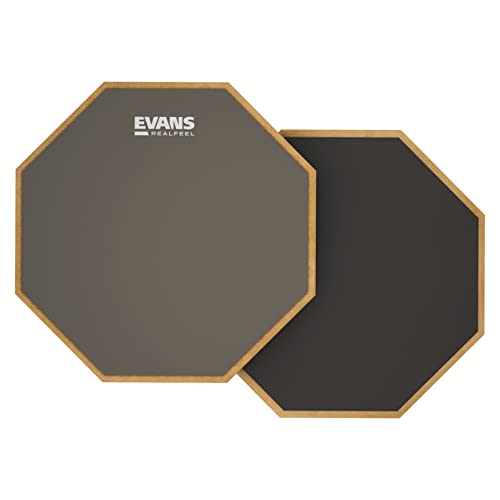
PRACTICE ANYTIME, ANYWHERE - Evans RealFeel Attacktile Drum Practice Pad provides the best practice substitute to acoustic drums. Portable and quiet, it works on any surface including carpet, table, lap or inside a standard snare basket.

Equipped with a real drum head for the most accurate practice before a performance
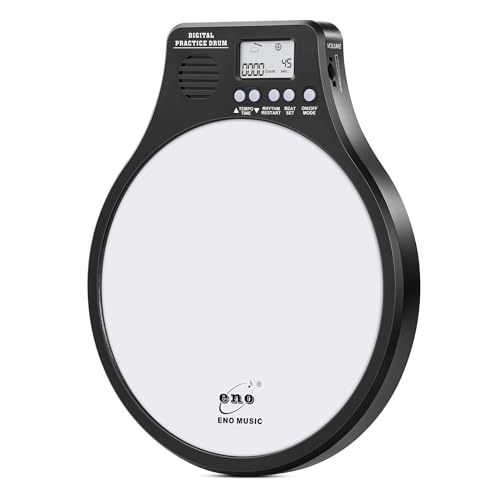
🎸【TPR ENVIRONMENTAL DRUM HEAD MATERIALS】: 10" Novel design drum pad; More interesting practice pad with the pad with audible metronome beating sound;
Change the Subdivision
Changing the subdivision in metronome practice can greatly enhance a drummer’s rhythmic versatility. By practicing at slower tempos, like 60 BPM, drummers experience substantial space between beats, making it easier to explore various subdivisions. Once comfortable, increasing the tempo to 120 BPM provides more reference points, enhancing timing precision. Drummers can align the click with each subdivision in different fills or grooves, like a shuffle with 8th note triplets at 70 BPM, nurturing a solid sense of time. Additionally, tripling the tempo to 210 BPM emphasizes every triplet hit, promoting tighter rhythm locking. Finally, experimenting with click placements on off beats or triplet partials further develops the drummer’s nuanced rhythmic understanding and internalizes diverse note groupings effectively. Using a metronome with multiple rhythm patterns allows drummers to practice a wider variety of subdivisions and time signatures, deepening their rhythmic skills.
Outline the Subdivision
Outlining subdivisions is an essential step for drummers aiming to improve their rhythmic accuracy and versatility. By aligning the click track with each subdivision in a fill or groove, drummers can enhance their timing while playing along with the metronome. For instance, practicing a shuffle using 8th note triplets at 70 BPM helps drummers understand how each subdivision fits within the tempo, providing a lot of space to experiment. Additionally, tripling this tempo to 210 BPM can notably emphasize each triplet hit, offering more reference points for timing. This approach encourages a nuanced understanding of rhythm, allowing drummers to repeat the process with varying styles and develop a solid foundation on their drum set. Overall, mastering subdivisions will really help refine performance. Incorporating stick control exercises into this practice further improves coordination and accuracy in executing subdivisions.
Play to a Static Click Track
After establishing a firm grasp on subdivisions, drummers can greatly benefit from playing to a static click track. Let’s say a drummer chooses a fixed tempo of 75 BPM; this enables them to focus solely on their timing without being distracted by tempo changes. Practicing with this steady pulse, whether on a full kit or simply with a practice pad, reinforces consistent timekeeping and rhythmic accuracy. By concentrating on maintaining rhythm in relation to the metronome, drummers nurture a reliable internal clock—essential for playing in ensembles. Additionally, adapting to this unyielding pace fosters resilience and skill development, especially when moving between various rhythms and subdivisions, resulting in a well-rounded and versatile player ready for any musical challenge. Incorporating a progressive practice routine further enhances disciplined and effective time management during practice sessions.
Displace the Click
Displacing the click can serve as a powerful tool for drummers aiming to deepen their understanding of rhythm and timing. By shifting the metronome’s beat to different positions within each subdivision, drummers engage in rhythmic exploration that enhances their versatility. For instance, placing the click on off beats, like “one and two and,” cultivates a sophisticated sense of timing. This practice encourages musicians to familiarize themselves with the click in isolation, refining their phrasing before integrating it into their playing. Additionally, exploring clicks in various subdivisions, such as the “e” and “a” of 16th notes or triplet partials, greatly improves rhythmic complexity. Ultimately, this exercise fosters flexibility in rhythm interpretation, bolstering a drummer’s internal timing and adaptability. Using a metronome with an accented beat pattern can further enhance limb coordination and rhythmic stability during practice.
Frequently Asked Questions
How to Use a Metronome to Practice Drums?
To practice drums effectively, one can utilize various practice techniques with a metronome, starting with quarter notes, progressing to eighth and sixteenth notes, and incorporating drills to enhance rhythmic timing and consistency over time.
What Is the 80/20 Rule in Drumming?
The 80/20 Rule in drumming emphasizes Practice Priority, indicating that 80% of progress stems from 20% of focused effort, encouraging drummers to prioritize essential techniques and maximize improvement while minimizing less effective practice activities.
Do Professional Drummers Use Click Track?
Yes, professional drummers utilize click tracks during performances and recordings. This practice guarantees consistent timing, syncs with other musicians, and enhances their rhythmic precision, contributing to a polished sound across various music genres.
How to Stay on Beat With Metronome Drums?
In pursuit of rhythmic precision, one can achieve tempo syncing by initially focusing on simple patterns, gradually incorporating complex subdivisions. Regularly challenging oneself against the metronome fosters innate timing and enhances overall drumming proficiency.