As an Amazon Associate, we earn from qualifying purchases. Some links on this site are affiliate links at no extra cost to you. Our recommendations are based on thorough research and editorial judgment.


How to Set Realistic Drumming Goals and Track Progress

To set realistic drumming goals and track progress, drummers should define specific objectives using the S.M.A.R.T. framework. This involves establishing clear, measurable targets that can be broken down into manageable milestones. A consistent practice routine, combining technical drills and enjoyable music, enhances skill retention. Regular evaluations, such as recording sessions or self-assessments, provide insights into growth. Additionally, adjusting goals based on progress guarantees they remain relevant. By following these steps, drummers can effectively monitor their development and achieve lasting improvements. Stay tuned to uncover more effective strategies!
Key Takeaways
- Utilize the S.M.A.R.T. framework to create specific, measurable, attainable, realistic, and time-sensitive drumming goals.
- Break larger goals into smaller milestones to maintain motivation and track progress effectively.
- Schedule regular self-assessments and feedback sessions with peers or teachers to evaluate improvements.
- Keep a practice journal to log daily accomplishments and track progress against set benchmarks.
- Adjust your practice routine and goals regularly to ensure they remain relevant, achievable, and challenging.
Define Your Drumming Goals

You may be interested

Building Muscle Memory Through Repetitive Practice
March 26, 2026

Creating an Effective Drum Practice Routine
March 26, 2026
How to Practice Fill Ideas and Transitions
March 26, 2026
Setting drumming goals serves as a critical foundation for any musician’s development. To effectively define your drumming goals, it is crucial to use the S.M.A.R.T. framework. This means making goals specific, measurable, attainable, realistic, and time-sensitive—such as mastering a particular groove by a certain date. By breaking larger targets into smaller, manageable milestones, drummers can maintain motivation during practice sessions and track their progress more easily. Writing down these goals transforms abstract aspirations into concrete objectives, increasing the likelihood of achievement. In addition, establishing accountability through self-reflection or informal progress checks guarantees that goals remain relevant. Regularly reviewing and adjusting goals based on skill development allows for continual growth in a musician’s journey, cultivating a satisfying sense of accomplishment. Additionally, choosing appropriate drum equipment, such as drum heads with Level 360 Technology, can enhance practice efficiency and sound quality, supporting goal achievement.
Commit to Your Goals Publicly

How can drummers enhance their commitment to achieving their goals? One effective way is to commit to your goals publicly, as this approach greatly boosts accountability. Sharing aspirations with peers or online communities creates a supportive environment where constructive feedback can flourish. This kind of engagement turns the drumming journey into a collective experience, making practice more enjoyable and focused. Additionally, participating in social media challenges allows drummers to visibly track their progress, inspiring both themselves and others. Platforms such as YouTube or Instagram enable drummers to share their successes and setbacks, cultivating a sense of community. Research supports that public commitment can drive extra effort, as the fear of disappointing others often motivates individuals to reach their goals. Just like adjusting your spring tension can optimize your hi-hat response, fine-tuning your goals and accountability methods can enhance your drumming progress.
Create a Consistent Practice Routine

Creating a consistent practice routine is essential for drummers aiming to enhance their skills and achieve their musical goals. By dedicating specific practice time each day, drummers can greatly improve muscle memory and skill retention. It’s beneficial to structure each practice session by ranking goals from the most challenging to the easiest, ensuring that focus remains sharp while minimizing burnout. Utilizing a practice schedule template aids in tracking your progress, allowing for a balanced approach between technique drills and repertoire development. Engaging in a mix of exercises, such as technical drills and playing along with songs, keeps the daily practice routine enjoyable. Regularly adjusting the routine based on progress evaluations can maintain motivation and accommodate evolving drumming skills. Incorporating play-along tracks into practice sessions can further enhance timing and musical feel, making practice both effective and engaging.
Recommended Products
![EX [3-IN-1] Portable Digital Electronic Drum Pad, with [Metronome, Speed Detection & Tap Counting] 10″ TPR Practice Pad, Green](https://m.media-amazon.com/images/I/41dqWp0kAGL._SL500_.jpg)
【All-in-One Tempo Trainer】Integrated LCD metronome (30–250 BPM) with a precision motion sensor delivers real‑time tempo tracking and tap counting. As you play, the pad computes and displays your current BPM, acting as a “reverse metronome” so you can see if you’re ahead/behind the beat. This data‑driven approach lets drummers practice with objective feedback, refining timing and groove on every stroke.

🎸【TPR ENVIRONMENTAL DRUM HEAD MATERIALS】: 10" Novel design drum pad; More interesting practice pad with the pad with audible metronome beating sound;
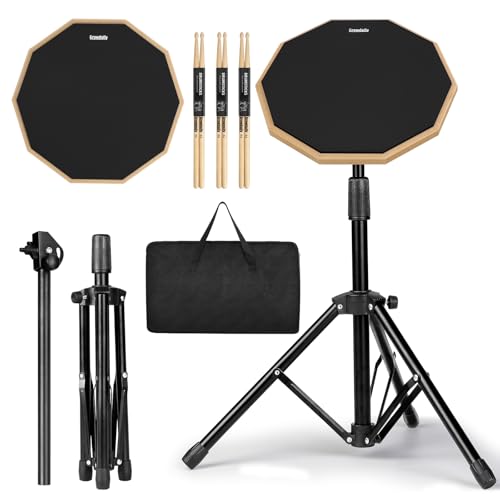
Drum Pad:GrowDaily drum practice pads are the perfect practice pad for any drummer, providing a realistic playing experience with a high resilience rubber and solid poplar base, and high-density shock absorbing cotton for a near snare drum feel.
Utilize Tracking Tools
Tracking tools play an essential role in optimizing a drummer’s practice regimen by providing the means to monitor progress and set clear objectives. Musicians can utilize specialised apps to track practice time, set reminders, and stay focused on their drumming goals. These tools allow drummers to document their practice sessions, detailing techniques used and challenges faced, which contributes to a better understanding of their growth over time. Additionally, features like metronome training can enhance practice effectiveness, enabling the consistent mastery of complex sections. Audio or video recordings further assist in evaluating one’s progress, facilitating critical self-evaluation. Furthermore, progress reports generated by these tools offer visual proof of improvement, fostering motivation and accountability in a drummer’s journey toward success. Selecting software with an intuitive user interface design helps maintain an efficient workflow during practice and recording sessions.
Evaluate Your Progress Regularly
Evaluating progress regularly is an essential aspect of any drummer’s practice routine that cannot be overlooked. Drummers should schedule routine check-ins, ideally monthly or quarterly, to assess their progress and make necessary adjustments. Performing previously worked pieces helps facilitate self-comparison, revealing improvements in technique and timing. By critically analyzing differences between current performances and past recordings, drummers can gain insights into their growth and identify areas needing attention. Additionally, seeking external feedback from teachers, peers, or drumming communities enhances the evaluation process, allowing drummers to incorporate valuable insights to refine their practice approach. Participating in live performances or jam sessions offers real-time feedback, which is vital for adapting practice goals and ensuring continuous improvement over time. Choosing a drum kit with appropriate shell material can also influence progress by enabling a fuller range of sound and better response during practice.
Adjust Goals as Necessary
While pursuing drumming skills, it is essential for drummers to stay adaptable by adjusting their goals as necessary. Regularly reviewing these goals guarantees they remain relevant and challenging. Utilizing the S.M.A.R.T. framework helps confirm that adjusted goals are specific, measurable, attainable, realistic, and time-sensitive. Drummers should diligently track progress, noting milestones achieved and challenges encountered in their practice room. This documentation provides insight into when changes may be required. Additionally, engaging with a teacher or the drumming community for constructive feedback can highlight areas for improvement. If a certain goal no longer excites or aligns with a drummer’s aspirations, it is perfectly acceptable to reshuffle or replace it, guaranteeing continued motivation and growth in their musical journey. For enhanced performance, drummers may also consider experimenting with adjustable beater heads to refine their sound and technique as their goals evolve.
Celebrate Your Achievements
Setting and adjusting drumming goals greatly contributes to a drummer’s progress, but recognizing and celebrating achievements plays a fundamental role in maintaining motivation and enthusiasm. Drummers should make it a habit to celebrate their achievements, irrespective of size; doing so boosts motivation and encourages positive behavior. Recognizing milestones, such as mastering a complicated rhythm or increasing speed, instills a sense of accomplishment, enhancing the joy of practice. Maintaining a practice journal can help track these successes, serving as a tangible record of growth. Furthermore, sharing achievements with peers or on social media fosters accountability and creates a supportive community, which can further inspire dedication. Ultimately, rewarding oneself after reaching goals—whether through personal recognition or performances—keeps the excitement alive. Utilizing specialized tools like an aeroband pocketdrum can also provide measurable feedback to track speed and technique improvements more effectively.
Frequently Asked Questions
What Is the 80/20 Rule in Drumming?
The 80/20 principle explained in drumming emphasizes efficient practice techniques, suggesting that prioritizing skill development through mastering basics first leads to significant improvements while reducing practice fatigue by focusing on the most impactful skills.
How to Track Progress Towards Goals?
Progress tracking methods involve detailed practice journals and performance evaluations. Goal setting techniques prioritize milestones, while motivation strategies include regular check-ins and utilizing technology to enhance practice routines, ensuring continuous improvement and accountability.
How to Progress as a Drummer?
To progress as a drummer, one must focus on drum technique improvement, optimize the practice routine, utilize skill assessment methods, engage in tempo control exercises, and explore various rhythm patterns for thorough growth and development.
What Is Something Every Drummer Needs?
Every drummer needs drumming essentials like structured practice routines, thoughtful gear choices, and strategies for technique improvement. These components guarantee performance readiness, fostering skill development and overall musicianship in their drumming journey.