As an Amazon Associate, we earn from qualifying purchases. Some links on this site are affiliate links at no extra cost to you. Our recommendations are based on thorough research and editorial judgment.

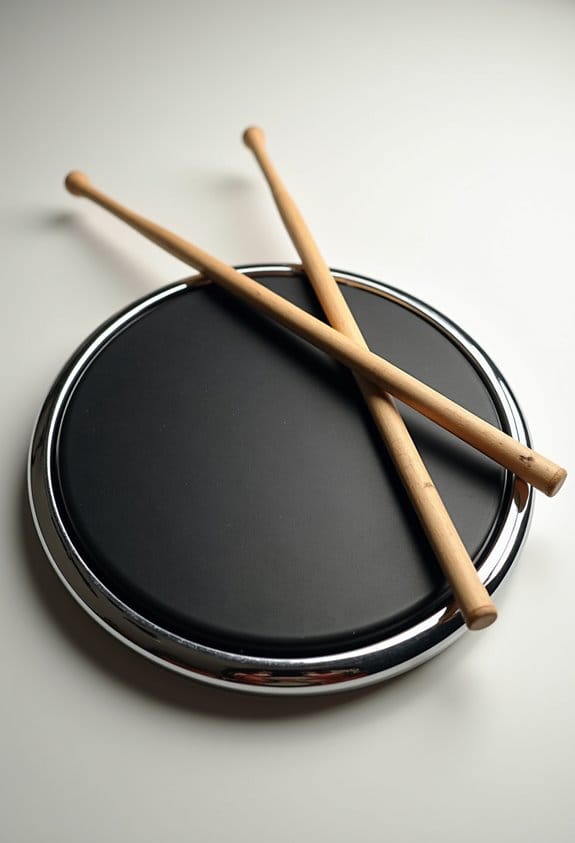
Using Practice Pads to Build Technique Away From the Kit

Practice pads are invaluable for developing drumming technique away from the kit. They simulate a drum’s feel while greatly minimizing noise, allowing focused practice on essential skills like finger control and wrist dexterity. By incorporating a metronome, drummers can enhance their timing and precision. Alternatives, such as pillows or carpets, offer creative surface options that improve technique. Balancing practice between pads and drums helps build endurance and adaptability. There are more insights to discover on maximizing your drumming skills.
Key Takeaways
- Practice pads mimic the feel of drums, allowing drummers to focus on technique without the noise of a full kit.
- Regular use of practice pads sharpens muscle memory and control over rudiments essential for drumming proficiency.
- The rubber surface of pads provides valuable feedback, enhancing timing and dynamics when practicing with a metronome.
- Integrating pad sessions with soft surfaces, like beds or pillows, improves hand strength and adaptability across various styles.
- Short, focused practice sessions on pads prevent strain, promoting healthy technique development and sustainable improvement.
Understanding the Functionality of Practice Pads

You may be interested
Bass Drum Pedal Positioning and Angle Adjustment
March 11, 2026
Practice pads serve an essential role in the development of drumming technique, offering an effective and convenient method for musicians to refine their skills. Designed to simulate the feel of a drum, practice pads allow drummers actually to focus on essential aspects like hand speed and control without the noise produced by traditional drums. This quiet practice environment fosters concentration on specific rudiments, reinforcing muscle memory and allowing fundamental skills to become ingrained in a drummer’s repertoire. The rubbery surface of these pads provides invaluable feedback, aiding in the improvement of timing and dynamics, particularly when paired with a metronome. Additionally, varied designs with different rebounds cater to the unique needs of drummers at all skill levels, ensuring thorough development of drumming techniques. The high resilience rubber commonly used in quality pads ensures realistic rebound and precise beat control during practice.
Recommended Products

[Practice Whenever U Want] - Donner Drum Practice Pad is a great practice pad for any drummer which offers an authentic playing experience. You can easily practice your skills at home or outdoors. Portable and lightweight! it works flexibly on any surface including carpet, table, and standard snare basket. Super long-lasting for kids' use, too!

[Practice Whenever U Want] - Donner Drum Practice Pad is the perfect practice pad for any drummer which offers an authentic playing experience. You can easily practice your skills at home or the outdoors. Portable and lightweight! it works flexibly on any surface including carpet, table, and standard snare basket. Super long-lasting for kids' use, too!
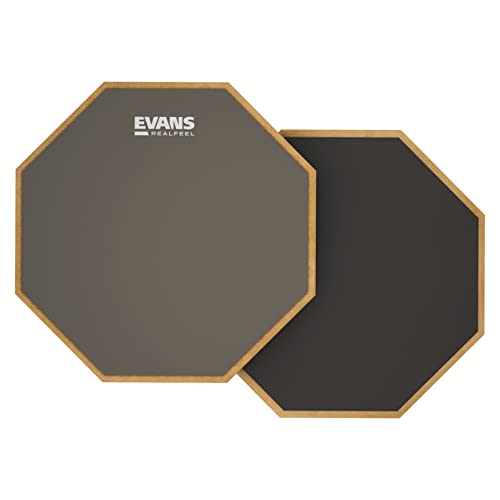
PRACTICE ANYTIME, ANYWHERE - Evans RealFeel Attacktile Drum Practice Pad provides the best practice substitute to acoustic drums. Portable and quiet, it works on any surface including carpet, table, lap or inside a standard snare basket.
Benefits of Incorporating a Practice Pad Into Your Routine
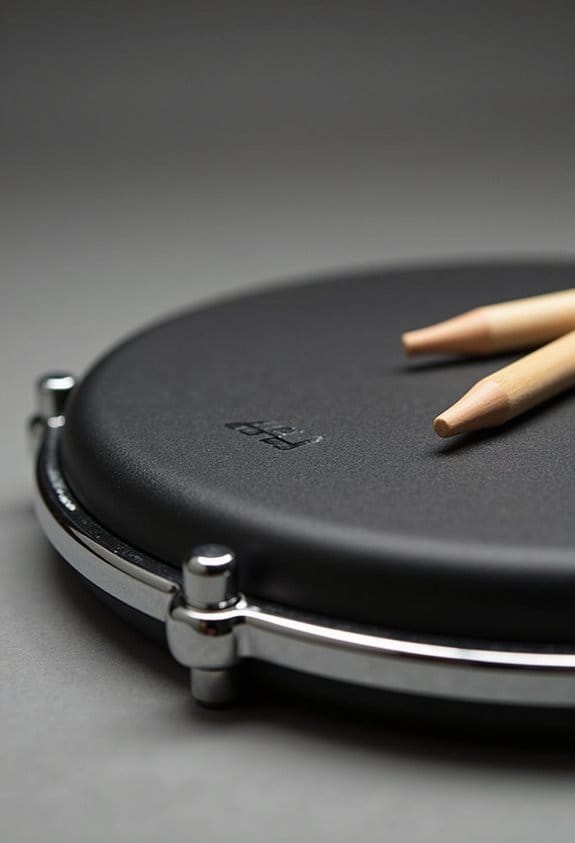
Incorporating a practice pad into a drumming routine offers numerous advantages that can greatly enhance a drummer’s overall skill set. This focused surface aids in developing essential drumming skills like speed, control, and technique, providing an ideal environment away from the full kit. Regular practice on a pad considerably boosts muscle memory, ensuring that rudiments become second nature and facilitating a smoother shift during live performances. One of the primary benefits is the ability to practice silently, which allows drummers to refine their skills in various settings without causing a disturbance. Additionally, integrating practice pad sessions alongside a metronome can greatly improve timing and precision. Ultimately, these elements contribute to a stronger foundation in drumming, supporting ongoing mastery and performance enhancement. Selecting a pad made of high-density silicone can further enhance the realism and effectiveness of practice sessions.
Recommended Products

Anywhere Stick, Zero Residue: Unique sticky back securely attaches to desks, walls, even rocks for practice anywhere, and removes cleanly

PRACTICE ANYTIME, ANYWHERE - GLEAM Drum Practice Pad provides the best practice substitute to acoustic drums, so you can practice rudiments, paradiddles or just drum along to that song on the radio – without disturbing anyone. Portable and quiet, it works on any surface including carpet, table, lap or inside a standard snare basket.

[Practice Drum Pad Set] Include one 12-Inch drum practice pad,two pair 5A drumsticks,one drum practice pad carry bag.
Alternatives to Practice Pads: Creative Surfaces for Drumming
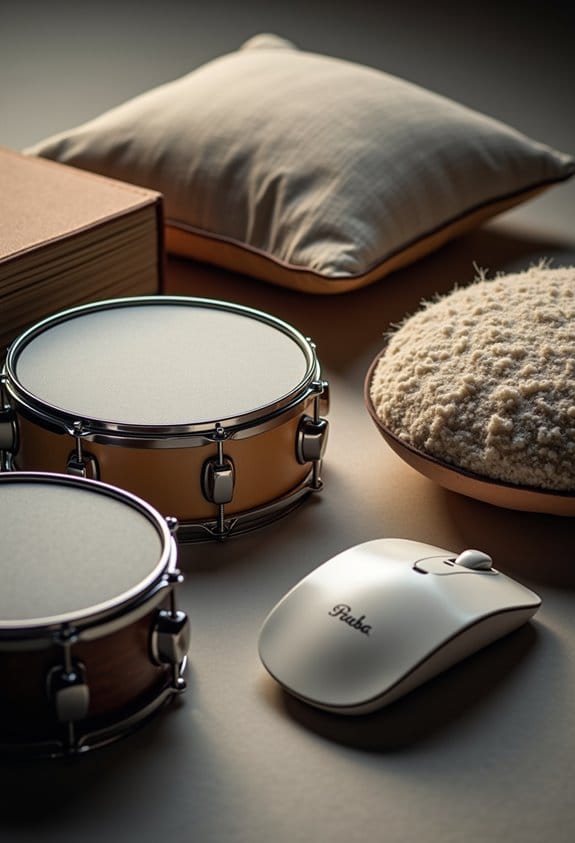
While traditional practice pads are commonly used for honing drumming skills, there are numerous creative alternatives that can serve equally well, especially when specialized equipment is unavailable. One effective method includes practicing on a pillow, which offers a forgiving surface that improves hand strength and technique. Beds and soft carpets also provide unique environments that allow for silent practice, enabling drummers to develop muscle memory and dynamics without disturbing others. These softer materials require more intentional control, thereby promoting adaptability across different playing styles. Additionally, exploring various surfaces can lead to valuable insights into stick control and sound production. Ultimately, using these alternatives allows drummers to maintain consistent practice routines without needing access to a drum kit, pretty much anywhere. Choosing surfaces that mimic the bass drum depth can further enhance practice effectiveness by simulating the feel and response of real drums.
Recommended Products
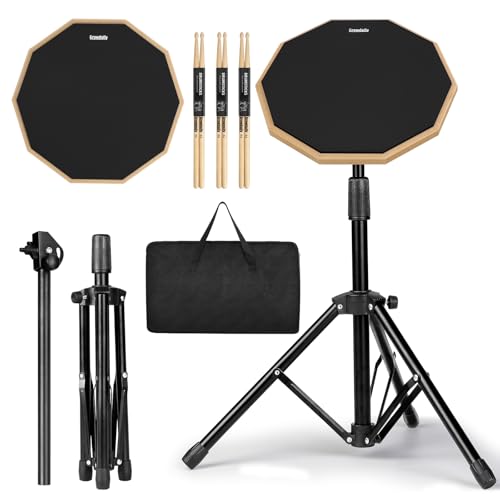
Drum Pad:GrowDaily drum practice pads are the perfect practice pad for any drummer, providing a realistic playing experience with a high resilience rubber and solid poplar base, and high-density shock absorbing cotton for a near snare drum feel.

Equipped with a real drum head for the most accurate practice before a performance

PRACTICE ANYTIME, ANYWHERE - Evans RealFeel Drum Practice Pad provides the best practice substitute to acoustic drums, so you can practice rudiments, paradiddles or just drum along to that song on the radio – without disturbing anyone. Portable and quiet, it works on any surface including carpet, table, lap or inside a standard snare basket.
Balancing Practice: Techniques on Pads and Drums
Many drummers find that balancing practice between pads and drums is essential for developing a well-rounded skill set. Regular practice on pads makes their technique sharper, enhancing speed and control that seamlessly transfers to the drum kit. To make sure foundational skills become second nature, drummers should focus on rudiments during pad sessions. Practicing on varying surfaces offers diverse feedback, helping adapt techniques to fit different playing styles. Additionally, consistent engagement with both pads and drums builds the endurance necessary for longer playing times. This balance not only strengthens their muscles but also helps maintain control and precision throughout performance. By integrating both practices thoughtfully, drummers can optimize their overall performance and artistic expression on stage. Incorporating quality cymbals into practice routines further enhances tone awareness and dynamic control essential for live playing.
Overcoming Left Hand Speed Challenges
Overcoming left hand speed challenges is an essential endeavor for many drummers aiming to develop their overall technique. To enhance left hand speed effectively, focusing on full wrist movement is fundamental; this allows for better dexterity and control. Engaging in left hand exercises, such as double stroke rolls, can specifically target speed improvement and help build necessary muscle memory. Incorporating speed drills on harder surfaces like practice pads further hones finger strength and grip, which are pivotal for left hand development. Additionally, gradually increasing practice duration while maintaining an even tempo prevents strain and promotes wrist flexibility. Finally, sufficient recovery time between intense sessions can greatly boost speed and technique by enabling the muscles to heal and adapt for future practices. Using a high resilience rubber practice pad can simulate the feel of an actual snare drum while significantly reducing noise, making it ideal for quiet and effective practice sessions.
The Practice Surface Debate: Choosing the Right Option
Selecting the appropriate practice surface can greatly influence a drummer’s progress, particularly regarding technique and speed. In the padding materials comparison, hard practice pads offer limited bounce, mimicking the feel of a drum skin while lacking the resistance found in actual drumming. Conversely, practicing on a softer surface like a pillow can enhance hand strength but may hinder rapid responses essential for effective playing. This bounce factor analysis is vital; each surface demands distinct grip adjustments and stick control variations to yield best performance. Ultimately, the right choice of practice surface supports specific objectives, whether focusing on speed or control, thereby greatly affecting the overall quality of a drummer’s technique and their ability to express musical ideas fluidly. Additionally, using coated drum heads during practice can simulate realistic rebound and improve tuning stability, which benefits technique development away from the full drum kit.
Recommended Products

Drum Pad:GrowDaily drum practice pads are the perfect practice pad for any drummer, providing a realistic playing experience with a high resilience rubber and solid poplar base, and high-density shock absorbing cotton for a near snare drum feel.

Efficiently mount the rubber pad on a stand or tabletop no matter where you are

Drum Pad: GrowDaily drum practice pads are the perfect practice pad for any drummer, providing a realistic playing experience with a high resilience rubber and solid poplar base and high-density shock-absorbing cotton for a near snare drum feel
Mastering Forearm Movements for Improved Technique
Mastering forearm movements is crucial for drummers aiming to enhance their overall technique and performance quality. Forearm synchronization plays a critical role in achieving speed, particularly in the right hand, which should be emulated in the left hand for balanced technique. By practicing consistent up-and-down movements on a practice pad, drummers can greatly improve stroke control and speed. Complex rudiments, such as the double stroke roll, target coordination and strength in the forearms, leading to better technique. Additionally, grip adjustment should not be overlooked; proper stick control maximizes the effectiveness of forearm movements. Focusing on symmetry between both hands guarantees improved overall hand technique, contributing to evenness in performance, enhancing both confidence and technical ability. Incorporating controlled wrist motion and finger techniques further refines precision and articulation, essential for expressive drumming with nuanced dynamics such as ghost notes.
Managing Physical Strain and Practice Frequency
While developing drumming technique is essential for both beginners and seasoned players, managing physical strain and practice frequency is equally important to prevent injury and enhance performance. Regular practice on a pad can lead to soreness in the hands and forearms if one does not adhere to practice duration limits. Short sessions, approximately 10 minutes, focused on specific rudiments allow for effective skill building while minimizing the risk of muscle strain. Recovery time is vital, as it helps healing and boosts overall playing ability. By allowing adequate healing periods between practice sessions, drummers can maintain muscle tone without worsening soreness. Gradually increasing speed, while ensuring evenness in technique, fosters sustainable improvement and a healthier approach to training. Using a practice pad stand with noise dampening features can also help maintain focus by reducing distractions during practice.
Recommended Products

✅【Snare Drum Stand】Drum pad stand with double braced tripod can be adjusted to fit any practice pad or drum with diameters from 8" - 15" Drums. The height can be adjusted from 15.8 inches to 22.8 inches for standing or sitting practice.

Adjustable basket fits 10"-14" diameter snares drums. 26 to 40 inches Height adjustable to accommodate students of all ages and adaptable to growing drummers

The snake drum stand is equipped with dual support tripods, providing stability and versatility! This drum stand can be easily resized to accommodate Snare drums or practice mat diameters ranging from 10 inches to 14 inches. In addition, with its adjustable height function, you can seamlessly transition from a sitting position to a standing position, making it an ideal choice for practice and live performances. Whether you are a beginner or an experienced professional, this stand guarantees to take your percussion experience to new heights!
Effective Training Techniques for Consistent Improvement
Developing effective training techniques is essential for drummers looking to make consistent improvements in their playing. Short practice sessions, ideally around 10 minutes, focusing on specific rudiments, can help avoid strain while gradually building technique. Drummers should incorporate rhythmic patterns alongside wrist and finger movement exercises on practice pads to enhance speed and control, especially in the left hand. Utilizing a metronome guarantees consistent timing and helps balance the development of both hands. Additionally, regular assessment of grip techniques and drumstick selection plays a pivotal role in achieving equal development. By maintaining this balanced practice approach, drummers cultivate well-rounded dexterity and muscle memory, facilitating noticeable progress over time. Incorporating some of the seven fundamental rudiments into your practice can significantly enhance your overall drumming technique and rhythmic proficiency.
Maximizing Your Practice Sessions for Better Performance
How can drummers truly maximize their practice sessions to enhance their performance? First and foremost, focusing on specific rudiment technique for at least 10 minutes each day is essential, as this builds muscle memory while preventing fatigue. Incorporating a metronome aids rhythm consistency, allowing for improved timing and control through tempo progression techniques, ensuring speed is developed gradually. Additionally, drummers should experiment with varied surfaces, such as harder pads or pillows, to experience different feedback. This experimentation helps enhance overall technique adaptability. Finally, exploring different stick grips and wrist movements can greatly improve left-hand speed, contributing to balanced drumming. By integrating these methods, drummers can maximize their practice sessions, ultimately leading to better performance at the kit. Using drum isolation shields during practice can also help control sound levels and improve focus on technique by minimizing distractions.
Frequently Asked Questions
How to Practice Drums Away From the Kit?
Ironically, drumming away from the kit may seem futile, yet engaging in focused drum exercises enhances finger technique and rhythmic accuracy. Regular practice allows drummers to refine skills, paving the way for impressive performances later.
What Is the 80/20 Rule in Drumming?
The 80/20 rule in drumming emphasizes that 80% of progress stems from 20% of practice efforts. It focuses on drumming efficiency, technique refinement, and rhythm comprehension, encouraging targeted practice for maximum improvement.
Can You Learn Drums With Just a Practice Pad?
Absolutely, one can learn drums with just a practice pad. The benefits include refined hand speed, enhanced coordination, and effective rhythm exercises, laying a strong foundation that translates well to actual drumming on a kit.
What Is the Point of a Practice Pad?
A practice pad is essential for improving rhythm, enhancing muscle memory, and developing the importance of coordination. It enables drummers to refine their skills silently, ensuring that technique remains sharp without the noise of a full kit.


