As an Amazon Associate, we earn from qualifying purchases. Some links on this site are affiliate links at no extra cost to you. Our recommendations are based on thorough research and editorial judgment.


Mental Practice Techniques for Drummers

Mental practice techniques for drummers involve various effective strategies that improve skills without physical practice. Techniques such as mental rehearsal engage brain pathways similar to actual drumming, enhancing muscle memory. Drummers can practice on everyday surfaces, like tables, to internalize rhythms. Deep study of musical scores and focused listening sessions sharpen timing and phrasing abilities. Incorporating relaxation methods reduces tension, fostering better expression. By exploring these methods in depth, drummers can considerably elevate their performance capabilities.
Key Takeaways
- Engage in mental rehearsal to enhance familiarity with drumming techniques, activating similar neurological pathways as physical practice.
- Visualize drumming patterns and rhythms regularly to reinforce skills and improve performance readiness when returning to the kit.
- Utilize silent finger practice to internalize fingerings and build muscle memory without physical drumming.
- Incorporate focused listening to absorb nuances in music, improving timing, phrasing, and overall musicality.
- Combine mental practice with relaxation techniques like visualization to reduce tension and enhance expressive performance.
The Power of Mental Rehearsal

You may be interested


When exploring the world of drumming, one powerful technique stands out: mental rehearsal. This method allows drummers to engage in mental practice by visualizing playing patterns or grooves, which enhances their familiarity with these techniques without physically needing an instrument. Research shows that mental practice can activate similar neurological pathways as physical practice. Consequently, this reinforces skills while improving muscle memory. Drummers can vividly visualize their techniques, such as stick grip and complex rhythms, boosting their performance readiness when they return to the kit. Engaging in focused mental practice sessions, even in environments away from instruments, can contribute greatly to musical growth and performance confidence, with studies indicating up to a 15% improvement in skill execution for those who use these techniques consistently. Combining mental rehearsal with structured practice routines can maximize learning efficiency and skill retention.
Utilizing Everyday Surfaces for Practice

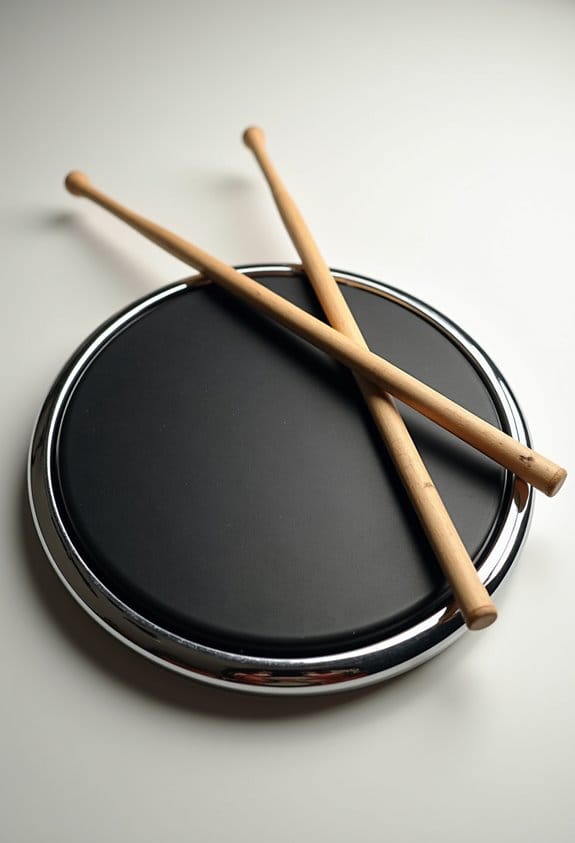
Many drummers face the challenge of finding time and space to practice, especially when a drum kit isn’t readily available. Fortunately, practical alternatives exist. By using everyday surfaces like tables or desks, drummers can engage in effective practice sessions that focus on finger patterns and coordination. Employing objects, such as pencils to mimic drumsticks, allows musicians to fine-tune their grip and develop the control needed to play the drums with all four limbs. Additionally, experimenting with household items like cardboard boxes and pillows offers unique sound exploration and tactile feedback, enriching the learning experience. This creative approach internalizes rhythms and patterns, making the change back to a full kit smoother and more instinctual, thereby maximizing practice time. Using drumsticks made from different wood types can also influence the feel and response during practice, helping drummers adapt their technique under various conditions.
Exploring the Score: Deep Study Techniques

A thorough exploration of a musical score offers drummers an invaluable opportunity to deepen their understanding of both their part and the overall composition. By studying the entire score in the practice room, they uncover the connections and patterns that enhance their musicality. Marking challenging passages helps focus their score study, enabling quicker identification during practice. Breaking down complex rhythms into subdivisions not only improves accuracy but also enhances the ability to internalize the music. Additionally, engaging in silent finger practice aids in memorizing fingerings and building muscle memory without an instrument. Regular analysis and reflection on the score foster a deeper comprehension, leading to more nuanced interpretations during performance and ultimately enriching the drummer’s journey in learning to play. Incorporating standardized drum notation practices during study helps improve accuracy and communication of drum parts.
Engaging in Focused Listening
Building upon the foundational knowledge gained through score exploration, engaging in focused listening serves as a powerful tool for drummers aiming to elevate their musical skills. By honing in on nuances such as dynamics, rhythm, and texture within recordings, drummers can greatly enhance their ability to internalize music. This practice not only improves timing and phrasing but also allows for a deeper analysis of how instruments interact across various styles. Actively listening to live performances or high-quality recordings while taking notes on techniques from accomplished drummers can be exceptionally beneficial. Regular sessions of focused listening help develop ear training, enabling drummers to identify complex rhythmic patterns, ultimately leading to more expressive performances on their drum kits. Incorporating call-and-response techniques during practice can further enhance engagement and musical unity.
Visualization Techniques for Drummers
Visualization techniques play an essential role in enhancing a drummer’s performance, as they offer an effective way to mentally rehearse various patterns, grooves, and techniques without needing to physically touch the instrument. For instance, the Balloon Technique, Cement Technique, and Marionette Technique not only improve visualization practice but also facilitate full-body relaxation, which is vital for ideal performance. Spending 10-15 minutes daily visualizing drumming can greatly help drummers internalize rhythms and alleviate performance anxiety. By imagining the sensations of striking drums and hearing the resulting sounds, drummers strengthen their neural pathways, resulting in better physical execution. Engaging in these visualization techniques throughout the day further reinforces practice, allowing informal practice time to seamlessly fit into their routines. Additionally, protecting your drum heads with durable materials can help maintain consistent sound quality while you transition from mental practice to physical performance.
Incorporating Relaxation Methods
How can drummers effectively remove physical tension and enhance their musical expression? Incorporating relaxation methods into practice can greatly help drummers achieve this goal. Techniques such as yoga, massage, and meditation enable drummers to quickly enter a relaxed state, easing tension in the back and limbs. By dedicating 10-15 minutes several times a week to these activities, drummers can improve their agility and overall performance quality. Additionally, visualization techniques like the Balloon, Cement, and Marionette methods enhance full-body relaxation, which is essential for high-quality drumming. Practicing these relaxation methods not only fosters a serene mental space during drum practice, but also cultivates a feeling of ease that translates directly into improved musical expression during performances. For the best experience, consider combining these methods with appropriate soundproofing materials to create an optimal practice environment.
Strategies for Effective Mental Practice Throughout the Day
Many drummers overlook the powerful impact of mental practice throughout their day, yet this technique can be a game changer for enhancing their skills. Engaging in mental rehearsal, such as visualizing playing specific patterns during commutes, can bolster muscle memory and solidify the techniques learned during physical practice. Drummers can also practice fingerings on substitute objects like pens or tables, which helps maintain coordination and internalize rhythms when away from their instruments. Additionally, setting aside focused time for detailed mental imagery exercises enables drummers to familiarize themselves with complex scores. By regularly reflecting on both mental and physical practice experiences, drummers can gain valuable insights, leading to deeper musicianship and overall performance improvement. Understanding the importance of proper application techniques can also enhance the durability and quality of a drummer’s instrument finish, contributing indirectly to performance confidence.
Frequently Asked Questions
What Is the 80/20 Rule in Drumming?
The 80/20 rule in drumming reveals that mastering metronome timing, rhythmic dynamics, and groove development markedly impacts proficiency. By honing a few pivotal techniques, drummers can flourish, transforming practice from scattered efforts into focused growth.
Do Drummers’ Brains Work Differently?
Yes, drummers’ brains exhibit distinct brain function that enhances cognitive skills and rhythmic perception. Research indicates increased connectivity in timing areas, reflecting their unique ability to process complex rhythms and manage multiple motor tasks concurrently.
What to Practice When Practicing Drums?
Amidst rhythmic tides, one must focus on groove exercises, intricately weaving rhythm patterns while mastering sticking techniques. This delicate interplay enhances fluidity, laying a foundation for precision and artistry in every drumming performance.
What Kind of Personalities Do Drummers Have?
Drummers often exhibit extroverted personalities characterized by creative expression and rhythmic precision. While their energetic engagement can mitigate performance anxiety, they also demonstrate adaptability and strong interpersonal skills in collaborative musical environments.