As an Amazon Associate, we earn from qualifying purchases. Some links on this site are affiliate links at no extra cost to you. Our recommendations are based on thorough research and editorial judgment.

Bass Drum Pedal Positioning and Angle Adjustment

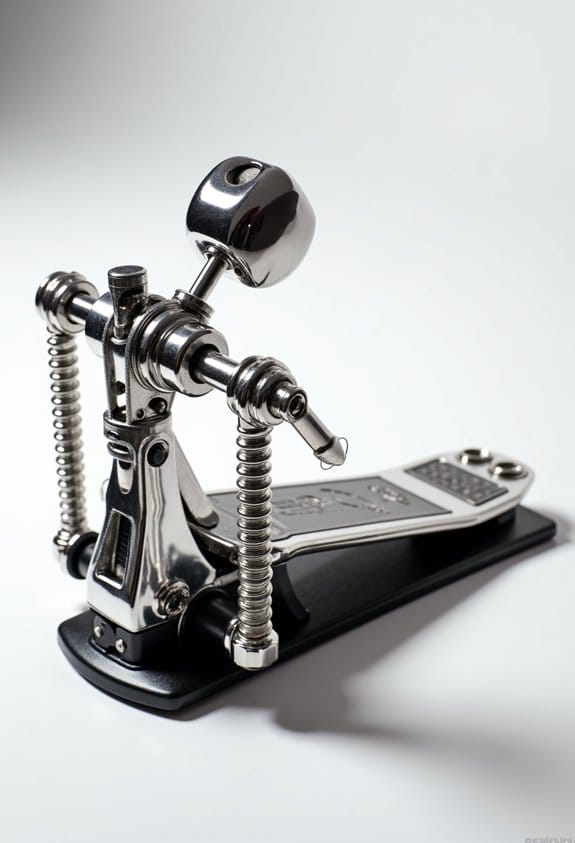
Proper positioning and angle adjustment of a bass drum pedal are essential for enhancing performance and sound quality. The footboard should be stable, with its height and angle tailored to accommodate different playing styles. Beater angle ideally ranges from 45 to 60 degrees, affecting both speed and tone. A lower footboard angle can increase power, while a higher angle aids in finesse. Understanding these settings allows drummers to maximize their pedal’s potential and versatility for various musical genres, revealing deeper insights as one explores further.
Key Takeaways
- Adjust the footboard height and angle to enhance your playing style, balancing power and speed in your performance.
- Position the beater to strike the drumhead’s center for optimal sound quality and tonal clarity.
- Experiment with beater angle, ideally between 45 to 60 degrees, to achieve the desired sound dynamics for various genres.
- Regularly fine-tune spring resistance and drive system type to improve responsiveness and accommodate different playing techniques.
- Use adjustable beater heads to customize the striking angle, further enhancing sound versatility across different musical contexts.
Understanding Bass Drum Pedal Components
You may be interested


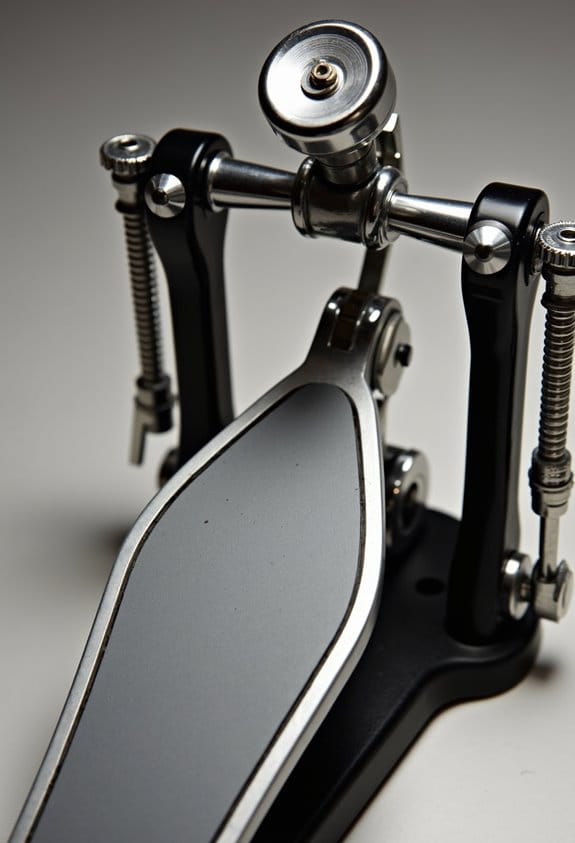
The bass drum pedal, often overlooked yet vital, consists of several key components that work in harmony to produce rhythm and enhance a drummer’s performance. The footboard serves as a stable base, often featuring rubber or Velcro for grip on drum rugs. A hoop clamp secures the pedal to the bass drum hoop, preventing slippage during play. Central to its function is the drive shaft, which connects the footboard motion to the circle cam, facilitating the beater’s movement. The shape of the cam affects responsiveness, while adjustments to the beater angle and height are essential for peak sound. Positioning the beater to strike the drumhead’s center guarantees the best tone, highlighting the pedal’s intricate design and functionality. Many pedals also feature an adjustable beater angle that allows drummers to customize rebound and strike for personalized play.
The Importance of Beater Selection
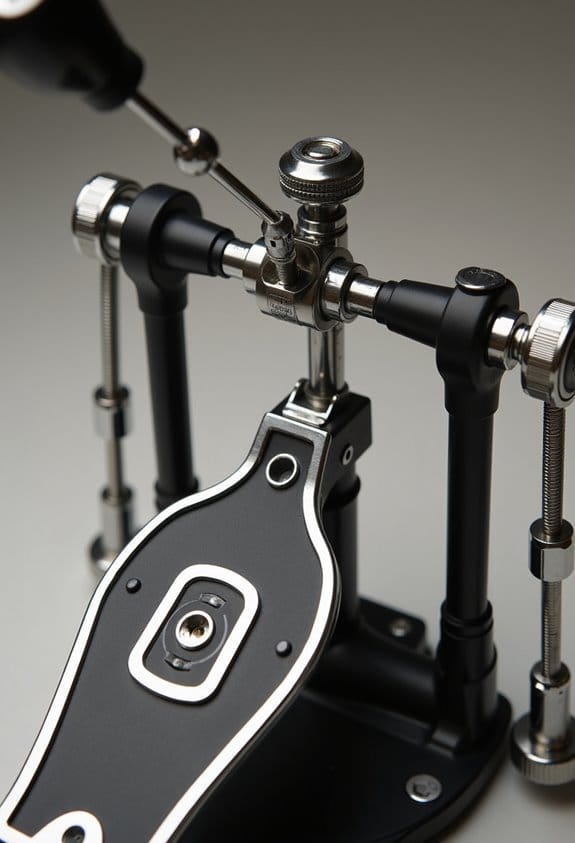
While many drummers may not realize it, beater selection plays a crucial role in shaping the overall sound of the bass drum. Various materials, like felt and plastic, produce distinct drum sounds; felt offers a warmer tone, while plastic beaters create a sharper attack. The size and shape of the beater head are equally important—larger heads generate more volume, whereas flatter heads improve articulation and attack clarity. Drummers must also make height adjustments to guarantee that the beater strikes the drumhead at its center, optimizing the tone of the bass drum. Additionally, diverse beater designs allow for versatility in sound, enabling drummers to adapt to various playing surfaces and refining their overall sonic experience. Choosing a beater with adjustable beater heads can further enhance tonal clarity by allowing precise customization of striking angles.
Recommended Products

Adjustable, Sprocket-Less Cam with Gear Shift-Style Lever

Double Bass Pedal - Unleash Your Full Footwork Potential: Unlock next-level drumming with double bass drum pedal. The responsive bass drum pad delivers authentic rebound and dynamic tracking, perfect for developing fast doubles, heel-toe techniques, and complex metal patterns. Experience acoustic-like response with adjustable sensitivity - every kick cuts through with punchy attack while maintaining perfect trigger accuracy. The tension-tunable mesh head ensures quick rebounds for blazing speeds, helping you build endurance and precision. Whether you're laying down thunderous grooves or technical rhythms, this setup transforms your footwork into studio-quality sound.

Direct-drive Double Bass Drum Pedal with Dyna Beater
Fine-Tuning Footboard Settings
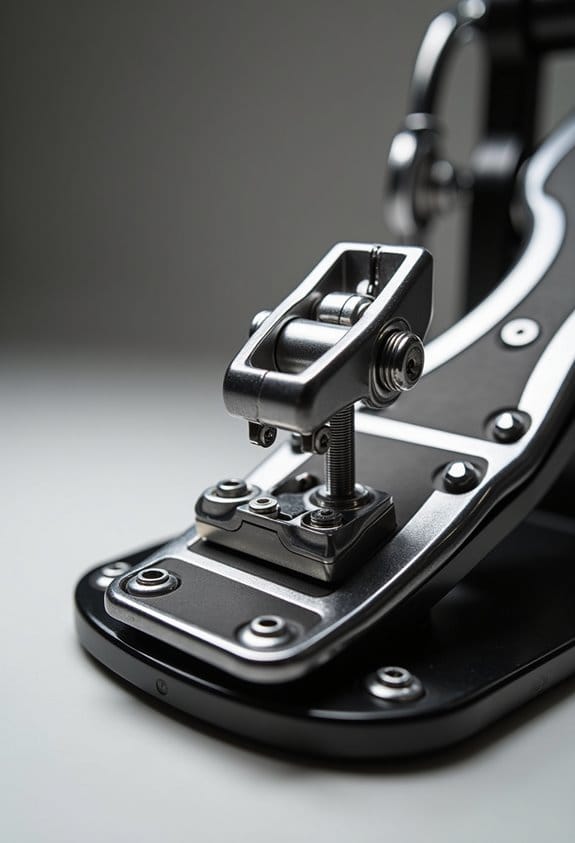
Fine-tuning footboard settings is an essential aspect of optimizing bass drum performance, as precise adjustments can greatly enhance a drummer’s control and speed. Adjusting the height and angle of the footboard allows drummers to create a customized playing experience that suits their unique style. Typically, a lower footboard angle boosts power while a higher angle promotes speed and finesse. In addition, the placement of the hinge, whether in front or behind the heel, affects the footboard’s feel; shorter boards offer direct action, whereas longer ones grant smoother motion. By experimenting with these parameters, drummers can effectively fine-tune their footboard settings, releasing improved speed and control essential for mastering various drumming techniques. Using pedals with adjustable spring tension further enhances personalized comfort and response during play.
Adjusting Drive Systems for Performance
Adjustments to drive systems can greatly influence a drummer’s performance, making them a critical area for enhancement. Bass drum pedals typically utilize chain, belt, or direct drive systems, each affecting responsiveness and efficiency to match different playing styles. By tweaking the beater angle through various screw holes or rocker hubs, drummers can maximize their drive system’s efficiency. For instance, positioning the beater closer can boost speed but might reduce volume, while a wider angle enhances power for louder genres. Springs are commonly employed for beater return resistance, yet innovative spring-less designs are emerging. Therefore, regular adjustments to the drive and beater angle are essential to elevate pedal performance and cater to the demands of various musical genres, ensuring ideal playability and sound. Many modern direct drive pedals also feature adjustable footboards for optimal comfort and performance customization.
Optimizing Beater Angle for Sound Quality
Optimizing the beater angle is essential for drummers seeking to enhance the sound quality of their bass drum. Ideally, the beater angle should be positioned between 45 to 60 degrees. A flatter 45-degree angle facilitates quicker strikes and amplifies volume, making it favorable for rock and metal music. In contrast, a steeper 60-degree angle produces a warmer, rounder sound, often preferred by acoustic players. This adjustment considerably influences the tonal quality of the bass drum. Modern bass drum pedals offer the flexibility of beater angle adjustments through various screws or rocker hubs, enabling customized setups tailored to individual style and preference. Experimenting with different beater angles can lead to noticeable improvements in sound quality and responsiveness during both practice and live performances. Many pedals feature adjustable beater angle mechanisms to allow personalized playability and comfort.
Recommended Products
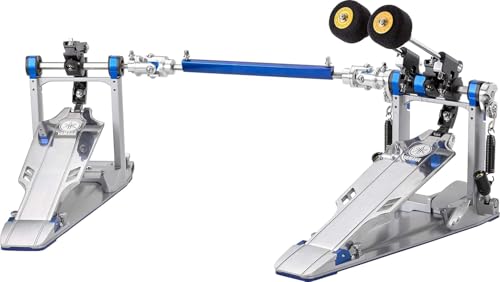
Premium, professional-grade double pedal designed for elite drummers seeking maximum speed, control, and durability

Redline bass drum pedal performance with stunning Limited Edition Black Finish and 25th Anniversary logo.

A professional grade pedal you expect from Yamaha
Setting Up Double Pedals for Versatility
Setting up double pedals can greatly enhance a drummer’s versatility, allowing them to execute a wider range of rhythms and techniques with ease. To begin, both footboards should be positioned at the same angle, ensuring consistent feel and response. It is essential to adjust beater angles between 45 and 60 degrees, for ideal volume and speed, particularly in rock music. Additionally, customizing the spring tension is vital; a tighter spring yields a quick return while a looser spring creates a relaxed feel. Proper placement of footboards aids smoother shifts. Finally, secure hoop clamps to the bass drum, possibly using rubber protectors to avoid damage. With these adjustments, drummers can maximize the capabilities of their double pedals for diverse playing styles. Using multiple triggers on the bass drum can further enhance sound layering and allow mixing of acoustic and electronic sounds.
Frequently Asked Questions
How Do I Know the Best Position for My Foot?
To determine the best foot position, one must prioritize foot comfort, guarantee pedal responsiveness, and maintain proper body alignment. Heel position varies according to personal preference, making experimentation essential for finding the ideal setup.
Can Pedal Angle Influence My Playing Endurance?
Yes, angle adjustments can greatly influence playing endurance. Proper foot placement enhances pedal dynamics and promotes efficient playing techniques, ultimately leading to increased stamina during extended sessions and improving overall performance effectiveness for drummers.
What Common Mistakes to Avoid When Positioning My Pedal?
Common mistakes include neglecting pedal height adjustment, improper toe placement technique, beater distance error, and failing to contemplate ankle flexibility issues, as well as overlooking the impact of the floor surface on pedal performance.
Does My Shoe Type Affect Pedal Performance?
Yes, shoe type dramatically influences pedal performance. A shoe with superior grip guarantees ideal pedal sensitivity, while proper foot comfort, arch support, and lightweight design enhance the overall experience, allowing for nearly mystical drumming prowess.
How Can I Maintain My Bass Drum Pedal for Longevity?
To maintain a bass drum pedal’s longevity, regular cleaning techniques are essential, alongside a consistent lubrication schedule. Additionally, periodic spring adjustments, proper tension settings, and thorough hardware inspections will guarantee peak performance and durability over time.


