As an Amazon Associate, we earn from qualifying purchases. Some links on this site are affiliate links at no extra cost to you. Our recommendations are based on thorough research and editorial judgment.


Understanding Cymbal Stand Weight Ratings and Stability

Cymbal stand weight ratings are essential for ensuring stability and ideal performance. Typically ranging from 12 to 15 lbs, these ratings indicate the load capacity necessary for various playing styles. Heavy-duty stands, featuring 18mm or larger tubing and double-braced legs, provide enhanced support for multiple cymbals and vigorous play. Proper weight distribution and regular maintenance, including tightening clamps and lubricating threads, contribute to a reliable setup. Understanding these factors can greatly impact cymbal performance and longevity, leading to better overall results.
Key Takeaways
- Cymbal stands typically have weight ratings ranging from 12 to 15 lbs, indicating their load capacity for optimal stability and performance.
- Heavy-duty stands are essential for vigorous play, supporting multiple heavy cymbals while maintaining balance and reducing the risk of falls.
- Double-braced legs enhance stability and resist bending, especially when using boom designs or multiple cymbals.
- Tubing diameter of 18mm or larger is recommended to prevent bending and increase structural integrity for heavier cymbals.
- Regular maintenance, including tightening fittings and proper weight distribution, is crucial for ensuring long-term stability and performance of cymbal stands.
The Importance of Weight Ratings in Cymbal Stands

You may be interested


When musicians select cymbal stands, understanding weight ratings becomes essential, as these specifications directly influence performance and safety. Weight ratings, typically ranging from 12 to 15 lbs, indicate how much load a stand can support. Heavy-duty cymbal stands with higher ratings are recommended for musicians who play vigorously or use multiple cymbals. Choosing stands with tubing diameters of 18mm or larger enhances stability and resistance to bending. Additionally, double bracing adds durability, ensuring that the stand remains upright during intense performances. By properly evaluating weight ratings, musicians can prevent issues like keyholing and wear on cymbals. This careful consideration leads to a more secure setup, promoting prolonged use and safeguarding valuable equipment in various playing environments. Features like memory locks also help maintain the stand’s position by preventing loosening caused by vibration during play.
Analyzing Stability Factors in Cymbal Stands
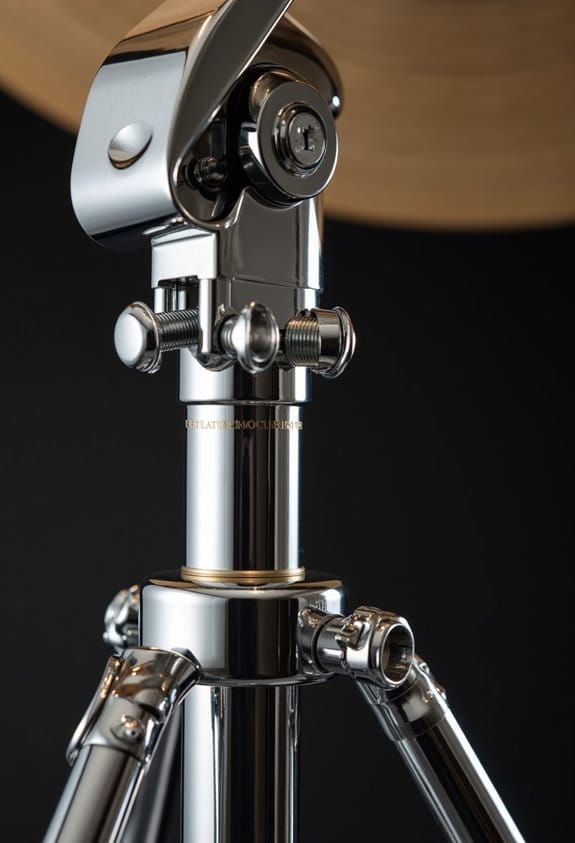
Stability is an important aspect of cymbal stand design, impacting both performance and safety for drummers. A cymbal stand’s weight capacity is essential; ideally, it should support at least 12–15 lbs for peak function with heavier cymbals. Double-braced legs are favored due to their enhanced stability compared to single-braced models, greatly reducing tipping risks. Furthermore, the stand’s base design, characterized by a wider leg radius, plays an important role in balancing boom arms when extended. Maintaining a low center of gravity is also important, as it maximizes stability and minimizes potential falls. Properly securing all components to the stand further contributes to its overall robustness, enabling drummers to perform with confidence, knowing their equipment is trustworthy during dynamic play. Additionally, the use of durable materials like high-quality steel and alloy enhances both strength and rust resistance, contributing to long-term stability and durability.
Types of Cymbal Stands and Their Weight Capacities
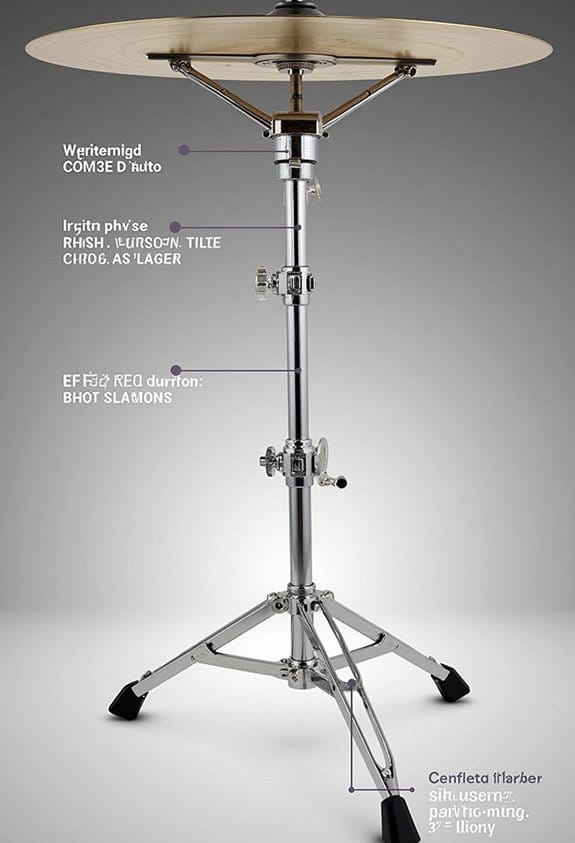
Cymbal stands come in several types, each designed to meet specific needs and preferences for drummers while supporting varying weight capacities. Heavy duty cymbal stands, ideal for heavy cymbals, typically possess a weight capacity of at least 12-15 lbs, making them suitable for intense performances. Straight cymbal stands offer superior stability due to their center of gravity being directly over the legs, essential for balance. Boom stands, while providing adjustability in cymbal placement, require careful consideration of stability since their outward design can shift the center of gravity. Double braced legs, commonly found in both types, reinforce stability, especially when multiple cymbals are used. Choosing the right cymbal stand type directly impacts performance and guarantees reliable support for every playing style. Many models also incorporate memory locks to maintain preferred height settings and enhance stability during play.
Effects of Cymbal Weight on Stand Performance
Often, the weight of a cymbal greatly influences the performance of the stand supporting it. Cymbal stands are typically rated to support a weight capacity of 12-15 lbs; exceeding this can result in instability. Heavy cymbals require stronger, double-braced stands, which offer enhanced stability compared to their single-braced counterparts. When heavier cymbals are used, the diameter of the stand’s tubing should ideally be 18mm or larger to prevent bending. Overloading a cymbal stand can lead to tipping or damage, posing risks during performances. Therefore, regularly checking the stability of the cymbals, especially when heavy weights are involved, is essential for ensuring safety and ideal stand performance. Understanding these factors can markedly improve a drummer’s setup and overall experience. It is also important to consider brand reputation and trustworthiness, as trusted brands often deliver more reliable and stable hardware.
Choosing the Right Stand for Your Cymbal Setup
Selecting the appropriate stand for a cymbal setup involves several important considerations that can considerably impact both performance and safety. One key factor is weight capacity; a heavy-duty cymbal stand should support at least 12–15 lbs, ensuring it can handle various cymbal weights. Additionally, thicker tubing—preferably a diameter of 18mm or more—improves stability, reducing bending when loaded. Opting for double-braced stands enhances stability further, particularly when supporting heavier cymbals or multiple attachments, thereby decreasing the risk of tipping. Adjustability is also vital; selecting a stand that accommodates ergonomic needs allows for comfortable playing heights and angles. Finally, consider the ease of transport, as overall weight and portability are essential for musicians frequently moving their setups. Equally important is matching the stand’s durability and design to the cymbal size options and weight to maintain optimal performance and prevent damage.
Maintenance Tips for Ensuring Stand Stability
Maintaining the stability of a cymbal stand is essential for ensuring both performance quality and safety during use. Regular checks are vital; players should tighten all clamps, wing nuts, and leg fittings to prevent accidental collapse. Clean the cymbal stand periodically to remove dirt and debris, as neglect can wear on moving parts and impair stability. Annual lubrication of threads with light machine oil promotes smooth adjustments and prevents rust. Proper weight distribution is also key; heavy cymbals should be placed lower to maintain a low center of gravity, thereby reducing tipping risk. Additionally, using double-braced stands enhances support and stability for heavier or multiple cymbals, ensuring reliable performance throughout use. Incorporating premium felts and wing nuts can further prevent cymbal movement and enhance overall stand stability.
Common Issues and Solutions for Cymbal Stands
Cymbal stands, despite their robust design, frequently encounter a variety of issues that can impact their performance and reliability on stage. Common stability issues often arise from improper weight distribution, particularly with heavy-duty boom stands, which may tip if extended too far without adequate counterbalance. Additionally, keyholing in cymbals can occur due to overtightening or using improper washers, creating elongated holes that negatively affect stand stability over time. To mitigate these risks, drummers can add shot bags or barbell weights to the base of the stand, enhancing stability and reducing tipping incidents during performances. Moreover, regular maintenance, including checking and tightening locks, is essential for maintaining peak stability and preventing accidents while using cymbal stands. Using durable metal clamps can further enhance the stability of cymbal stands and support secure mounting of hardware.
Frequently Asked Questions
What Do the Weights of Cymbals Mean?
Cymbal weights influence sound quality and performance. Larger sizes, heavier materials enhance volume, while proper weight distribution on stands guarantees stability. Musicians must choose thoughtfully to achieve desired tones without compromising equipment integrity or safety.
Are 16 Inch Crashes Too Small?
A 16-inch crash cymbal isn’t too small; rather, its size allows for a sharp crash sound suited to diverse genre preferences. Portability issues are minimal, making it popular among various drummer styles in mixed setups.
Are Heavier Ride Cymbals Louder?
Heavier ride cymbals generally produce louder sounds due to their thickness and cymbal material impact. Sound projection factors and the evolution of cymbal design further enhance their resonance, making them preferable in louder music genre comparisons.
How Much Does a DW 5000 Cymbal Stand Weight?
The DW 5000 cymbal stand weighs 7.5 lbs and features durable materials, double-braced legs, and adjustable heights. This balance of stability and portability makes it a compelling choice in cymbal stand comparisons for gigging drummers.


