As an Amazon Associate, we earn from qualifying purchases. Some links on this site are affiliate links at no extra cost to you. Our recommendations are based on thorough research and editorial judgment.


Developing Consistent Stick Control and Rebound

Developing consistent stick control and rebound is vital for drummers aiming to enhance their precision and speed. This skill allows for executing complex patterns with ease. To achieve this, selecting the right drumsticks and mastering grip techniques is essential. Utilizing wrist and finger movements improves control, while specific exercises like single strokes and paradiddles build endurance. Practicing with a metronome can help maintain timing. Understanding these fundamentals paves the way for further exploration into advanced drumming techniques.
Key Takeaways
- Maintain a relaxed grip by positioning the stick between the thumb and index finger to enhance stick rebound and control.
- Experiment with different stick sizes and materials, such as hickory, to find the best fit for your playing style.
- Incorporate wrist and finger movements effectively to maximize power, control, and speed during drumming techniques.
- Regularly practice foundational exercises like single strokes and paradiddles with a metronome to ensure timing and precision.
- Track progress by setting measurable goals, recording practice sessions, and maintaining a practice journal for skill development awareness.
Understanding the Importance of Stick Control

You may be interested


When drumming, the significance of stick control cannot be overstated, as it serves as a foundational skill that influences every aspect of a drummer’s performance. Stick control enables the execution of various techniques, allowing for precision and speed when playing complex patterns like rolls and rudiments. A proper grip is essential, facilitating a loose hold between the thumb and index finger while the other fingers guide the stick. Mastery of stick rebound is also essential; with a relaxed grip, the stick naturally bounces back upon contact with the drum, maximizing energy efficiency. Regularly practicing fundamentals such as single strokes, double strokes, and paradiddles helps develop this important control, while techniques like the Moeller Technique enhance performance through effective wrist and arm movements. Just as drummers protect their gear with durable and padded protection, consistently practicing stick control ensures the longevity of the drumsticks and maintains optimal performance.
Choosing the Right Drumsticks for You
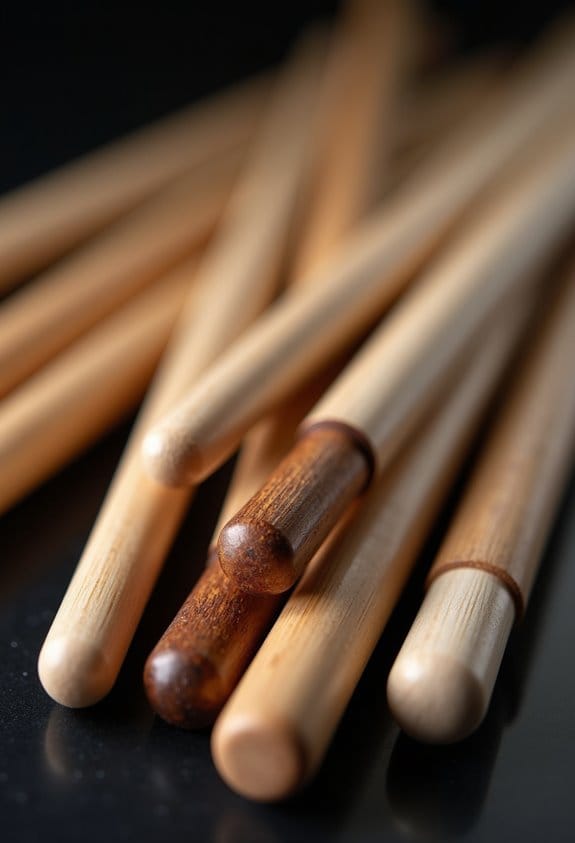
Choosing the right drumsticks plays an important role in a drummer’s overall performance, as it directly impacts their ability to maintain comfortable stick control and execute techniques with precision. Factors like size, weight, material, and tip shape are essential for finding the perfect pair. For beginners, a medium-sized stick, such as 5A, strikes a balance between weight and flexibility, making it versatile for various musical styles. As a drummer’s skill set develops, experimenting with different stick types helps to identify the ideal match for personal playing styles and hand sizes. Additionally, the choice between wood and nylon affects sound production and durability, enhancing performance quality. Ultimately, finding suitable drumsticks can greatly reduce the risk of fatigue during extended practice sessions. It is also important to consider stick length and diameter because they influence both control and sound, catering to specific genres and playing techniques.
Recommended Products

VERSATILE SETUP: Includes a 14"x5" snare drum, (2) 10"x4" toms, a 12"x4" tom, and an 18"x7.5" bass drum, all equipped with 3-zone capability (head, rimshot, rim) for nuanced expression and playability.

A VISUAL AND SONIC DELIGHT: K Custom Dark cymbals are known for their warm, rich sound that cuts through and sings out.

MOST POPULAR & VERSATILE CYMBALS: A Zildjian line is known for its bright, focused overtones and ability to produce as much volume as the music demands.
Mastering Proper Grip Techniques

Mastering grip techniques is a fundamental aspect of drumming that can greatly enhance a player’s performance. Proper grip control involves holding the stick in the groove between the thumb and index finger, allowing the butt to extend slightly beyond the hand. This position guarantees ideal comfort and enables the player to feel the stick’s natural bounce. The fulcrum for the grip should rest between the thumb and the first knuckle of the middle finger, which is vital for maximizing stick rebound. Drummers may engage in stick control exercises to experiment with different grip styles, such as matched or traditional grip, finding what best suits their playing style. Maintaining a relaxed hand position is significant to prevent tension and fatigue, preserving overall performance quality. Using hickory drum sticks enhances stick rebound and durability, making them a preferred choice for mastering grip control.
The Role of Wrist and Finger Movements
Understanding the movements of the wrists and fingers is essential for achieving ideal stick control in drumming. Wrist movements considerably contribute to generating power and control during stick strokes, allowing for fluid execution of rhythmic patterns. Additionally, effective finger techniques enable quicker shifts between strokes, guiding the stick for precision in faster passages. When the wrists are properly positioned, and the fingers remain relaxed, the efficiency of rebound is maximized, letting the stick bounce back naturally after strikes. Furthermore, the collaboration between wrist and finger movements is vital for achieving dynamic contrast, permitting seamless alternation between controlled and rebound strokes. Ultimately, focused exercises that develop strong finger dexterity will enhance overall stick control, boosting speed and endurance in a drummer’s performance. Regular incorporation of metronome practice helps develop consistency in timing and dynamics essential for improving stick control.
Key Exercises for Developing Stick Control
To develop stick control effectively, a drummer must engage in a variety of targeted exercises that emphasize both technique and rhythm. Beginning with single strokes (RLRL) while using a metronome allows for the enhancement of precision and timing; starting at a slow tempo and gradually increasing speed fosters improvement. Incorporating double strokes (RRLL) builds control and endurance, focusing on the natural rebound of the second stroke. Practicing paradiddles requires accenting the first stroke, promoting coordination and dynamic control. Accent patterns can further elevate dynamic range by intentionally playing certain strokes louder, enhancing overall stick control. Finally, integrating Moeller technique exercises, which combine wrist, arm, and finger movements, helps create powerful strokes with minimized effort, solidifying essential skills. Additionally, consistent practice with drumstick control clips can enhance grip and reduce fatigue, allowing for better mastery of these exercises.
Recommended Products

Optimized Drum Mic Kit Design: This dynamic microphone features a tailored frequency response specifically engineered for kick drums and bass instruments. It delivers superb attack and punch, capturing the full low-end thump, while maintaining studio-quality sound clarity even at extremely high sound pressure levels. Ideal for heavy-hitting drummers and bass-heavy genres.

[Simulated Snare Sound] This drum pad is equipped with a detachable snare simulator containing 800 steel balls which simulates the sound of a real snare drum and makes it more immersive.

Instant Stress Relief In The Car :Traffic and long waits feel less boring—tap the mini cymbal for a quick, satisfying beat. This car cymbal turns parked moments into an easy rhythm break for focus and mood.
The Benefits of Stick Rebound
While engaging in exercises to improve stick control, drummers quickly recognize the significant benefits that come from mastering stick rebound. This technique allows for greater efficiency in drumming, as less effort is required to raise the stick after striking a surface, much like the energy returned by a bouncing ball. Maintaining a loose grip is essential; it facilitates natural bounce, reducing hand tension and promoting a smoother playing style. In addition, effective stick rebound enhances dynamic control, enabling drummers to vary volume and articulation effortlessly. This understanding also improves rhythmic accuracy and makes shifting between single and double strokes more fluid. Exercises such as “Eight on a hand” cultivate coordination and control, vital for mastering complex rudiments and overall drumming skill. Using play-along tracks with adjustable tempo further supports refining stick rebound by allowing drummers to practice at comfortable speeds before gradually increasing difficulty.
Effective Practices for Controlled Strokes
Practicing controlled strokes is essential for any drummer looking to refine their technique and enhance their overall performance. Mastery begins with a proper grip technique, allowing the stick to rebound naturally while keeping fingers relaxed, which promotes fluid movement. Exercises like “Eight on a hand” focus on quality rebound control, reinforcing the link between finger movement and the effectiveness of each stroke. Additionally, incorporating dynamic contrast through controlled strokes enhances coordination, leading to greater expressiveness in drumming while reducing tension. To cultivate muscle memory and precision, consistent practice of 10-15 minutes daily is vital. With dedication, aspiring drummers can significantly improve their stick control and develop effective controlled strokes, ultimately enriching their rhythmic expression in music. Selecting the right grip based on material composition and ergonomics can further enhance control and reduce fatigue during practice.
Incorporating Moeller Technique in Your Play
Building upon the practice of controlled strokes, incorporating the Moeller Technique into drumming routines can greatly enhance a drummer’s overall ability. This technique consists of a three-part motion: the Up Stroke generates power, the Down Stroke delivers accents, and the Tap Stroke maintains a steady flow, which promotes energy efficiency. By leveraging the stick’s natural rebound, drummers can achieve powerful strokes with minimal effort, ultimately improving stick control. Furthermore, regular practice of the Moeller Technique helps develop essential hand and wrist coordination, enabling the execution of complex rhythms. Mastering this technique not only enhances speed and endurance but also allows versatility across various musical styles, from jazz to marching band, making it a valuable addition to any drummer’s practice regimen. Using lightweight maple drumsticks can complement the Moeller Technique by reducing wrist fatigue and allowing smoother execution of its motions.
Recommended Products

COMPLETE V-DRUMS ACOUSTIC DESIGN KIT: The V-Drums Acoustic Design kit features a five-piece set with full-size wood shells and double-braced chrome stands, paired with the flagship TD-50X sound module boasting next-generation Prismatic Sound Modeling and PureAcoustic Ambience technologies, and over 900 onboard sounds including many new kick, snare, hi-hat, tom, and cymbal selections.
Solidbody Electric Baritone Guitar with Mahogany Body

14"x12" Championship Maple FFX Snare Drum
Building Speed and Fluidity
Mastering speed and fluidity in drumming requires a focused approach to stick control and technique. Consistent stick control enhances a drummer’s ability to respond to rebounds naturally, which greatly reduces the effort needed for dynamic strokes. Practicing with a metronome at varying tempos is essential to build speed while ensuring rhythmic accuracy, allowing for a smooth performance. Drummers should engage in exercises like paradiddles and double strokes, as these develop coordination and quick shifts between stick strokes. Additionally, incorporating syncopated 16th roll phrases improves flow and helps musicians interact better with each other. Finally, regularly practicing on different surfaces builds strength and responsiveness, vital elements to achieving a seamless, fluid drumming style. Furthermore, using a drum key to adjust tension helps maintain optimal stick rebound and control during practice sessions.
Recommended Products

Double Bass Pedal - Unleash Your Full Footwork Potential: Unlock next-level drumming with double bass drum pedal. The responsive bass drum pad delivers authentic rebound and dynamic tracking, perfect for developing fast doubles, heel-toe techniques, and complex metal patterns. Experience acoustic-like response with adjustable sensitivity - every kick cuts through with punchy attack while maintaining perfect trigger accuracy. The tension-tunable mesh head ensures quick rebounds for blazing speeds, helping you build endurance and precision. Whether you're laying down thunderous grooves or technical rhythms, this setup transforms your footwork into studio-quality sound.

High-Performance Sound Engine - Developed and refined over decades of crafting musical instruments, the DTX-PRO includes 70 premium kits that faithfully recreate the sounds and effects found on authentic acoustic drum sets, professional-grade synthesizers and audio equipment.

Conveniently compact and ideal for drumming at home, the TD-07DMK V-Drums kit delivers the superior expression and playability of high-end V-Drums in a budget-friendly package.
Integrating Rudimental Patterns Into Practice
Integrating rudimental patterns into practice is an essential step for drummers seeking to enhance their skills and technique. Incorporating exercises like the single paradiddle, along with doubles and flams, can greatly improve coordination and control. By engaging in consistent practice of these advanced patterns, drummers can master rhythmic complexities, bolstering their timing and dynamic range during performances. Exercises that pair paradiddles with accents or syncopated rhythms promote versatility and adaptability across various musical styles. Additionally, gradual mastery of these patterns enables smoother shifts between sticking combinations, fostering overall fluency. Regular practice, especially when paired with a metronome, reinforces precision and consistency in stick control, ensuring effective rebound execution, vital for developing a robust drumming foundation. To further enhance control and speed, drummers should consider using heel toe technique pedals to develop footwork that complements stick control.
Common Pitfalls to Avoid in Stick Control
Though many drummers aspire to improve their stick control, several common pitfalls can hinder their progress, making awareness of these issues essential. A tight grip on the stick creates unwanted tension, limiting rebound and adversely affecting speed and fluidity. Over-controlling movements deprives the drumming of its natural bounce, increasing fatigue during practice. Additionally, ignoring proper fulcrum placement restricts the stick’s movement, consequently diminishing dynamic control. Practicing at high speeds without mastering slower tempos reinforces poor technique, leading to inconsistencies. Finally, neglecting consistent warm-up exercises such as controlled double strokes and paradiddles can stifle the development of reliable stick control and rebound techniques. Avoiding these pitfalls will lead to significant improvements in a drummer’s proficiency and performance.
Recommended Products

Various Colors: you will receive 20 pairs of drum sticks in 5 different colors, including black, red, blue, yellow and green, 4 pairs for each color; The sufficient quantity and diverse colors can meet your needs, and you can also share them with your good friends

【Designed for Practice & Training】 These Stainless Steel Drumsticks are Specially Designed as a Practice and Strength Training Tool, Not for Regular Drumming on Acoustic Drums. Ideal for Building Wrist Strength, Control, and Endurance During Practice Sessions.

*** ✔ FUN, VIBRANT COLORS (added black grip added to strike zone to protect wood, when this breaks down simply remove with scissors and use as normal) CardioStix Premium come in FIVE different, fun colors! Express yourself and personality with the color of your drum sticks . Walk into that class with either Teal, Pink, Purple, Black, or Green Cardio Drum Sticks!
Tracking Progress and Setting Goals
How can drummers effectively track their progress and set achievable goals to enhance their stick control and rebound? By establishing measurable short-term goals, such as increasing daily practice time or mastering specific rudiments, drummers can monitor their improvement more effectively. Recording practice sessions offers an objective perspective, making it easier to identify areas needing enhancement and celebrate achievements. Utilizing a metronome guarantees steady tempos while reinforcing rhythmic accuracy, which is essential for recognizing progress. In addition, maintaining a practice journal to document completed exercises and challenges faced not only boosts awareness of skill development over time but also aids in setting long-term goals. Ultimately, regularly reassessing technique keeps motivation high, driving consistent practice and substantial advancement in stick control.
Frequently Asked Questions
Can Stick Control Improve Coordination?
Stick control can greatly improve hand-eye coordination and rhythmic precision. As individuals practice various sticking patterns, they enhance their ability to coordinate movements, resulting in smoother execution of complex rhythms and more accurate musical phrasing.
How to Practice Stick Control?
To practice stick control, one should focus on stick drills and control exercises like single and double strokes. Emphasizing relaxed grip, consistent tempo, and varied surfaces aids in enhancing precision and developing adaptability over time.
Is Stick Control Good for Beginners?
Stick control shines like a guiding star for beginners. Mastering fundamental stick handling techniques opens up a world of rhythmic possibilities, enhancing coordination and confidence while laying a strong foundation for their drumming journey.
What Is Rebound in Drumming?
Rebound in drumming refers to the mechanics of a drumstick bouncing off the drumhead after impact. Mastering rebound techniques enhances control, enabling drummers to execute fluid movements and dynamic contrasts in their playing.


