As an Amazon Associate, we earn from qualifying purchases. Some links on this site are affiliate links at no extra cost to you. Our recommendations are based on thorough research and editorial judgment.

The History of Acoustic Drums: From Ancient Times to Modern Kits

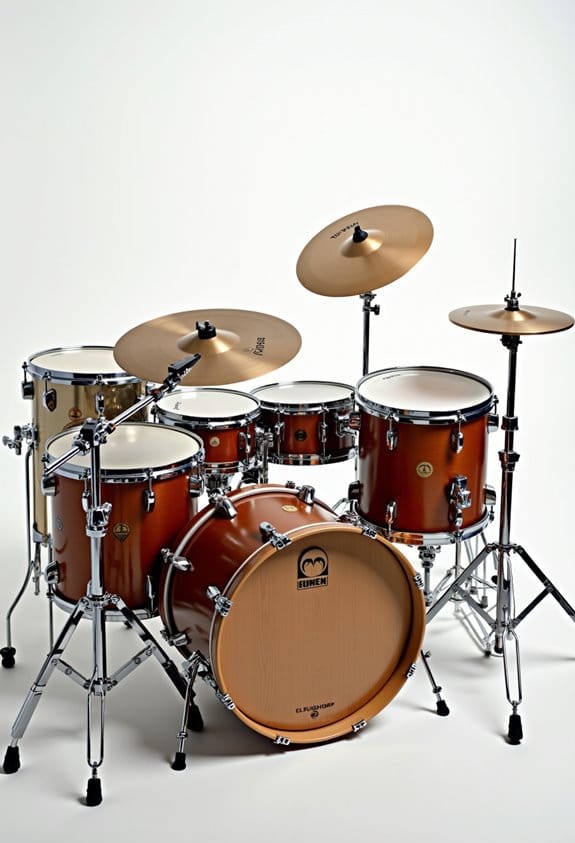
The history of acoustic drums traces back to ancient times, around 5500 BC in China, where early drums were essential for rituals and military coordination. As civilizations evolved, drums became significant in Greece and Rome for social and cultural expressions. Throughout the Middle Ages and Renaissance, the tabor and snare drum emerged, enhancing dance and military practices. The Industrial Revolution led to modern drum kits, incorporating innovative materials and designs. Discover how these changes influenced modern sound and diverse musical genres.
Key Takeaways
- Drumming dates back to around 5500 BC in China, evolving from simple hollow logs and animal skins to complex percussion instruments.
- Ancient civilizations like Greece and Rome utilized drums for rituals and military coordination, emphasizing their social and cultural significance.
- The Middle Ages introduced frame drums and the snare drum, enhancing rhythmic expression in both secular and sacred contexts.
- The Industrial Revolution modernized drum kits with durable materials and innovations like the bass drum pedal, expanding drumming capabilities.
- The 20th century saw the drum kit’s growth through jazz influence and technological advancements, cementing its versatile roles across musical genres.
About the Author: Stefan Joubert
You may be interested


Stefan Joubert stands out as an advocate for adult music education, embodying a belief that learning to play the drums is an attainable goal for anyone willing to invest time and effort. Joubert emphasizes the significance of drumming, showcasing how the evolution of drums—from simple communication tools to essential components of modern music—reflects diverse music styles. He discusses the dynamic role of drummers in shaping musical expression, highlighting the importance of intricate drum fills that enhance compositions. Through his dedication, Joubert connects ancient rhythms and cultural heritage to contemporary practices, demonstrating how the modern drum kit has transformed while honoring its historical roots. His insights inspire both new and seasoned musicians to explore the rich tradition of drumming in today’s music landscape. Choosing the right drum head, such as those featuring Level 360 Technology, can greatly enhance tuning stability and sound quality for drummers of all levels.
The Ancient Beginnings
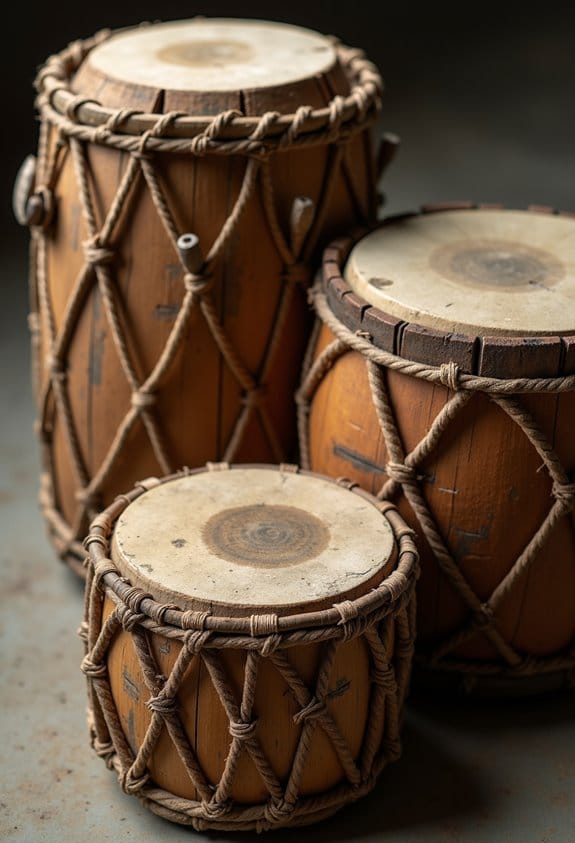
The journey of drums begins in ancient times, specifically around 5500 BC, when the earliest evidence of these instruments was found in China, marking a significant milestone in the history of music. During prehistoric times, early drums were often made from hollowed-out logs topped with animal skins, exemplifying the craftsmanship of ancient cultures. These percussion instruments served essential musical functions, playing a key role in various rituals that enabled communication within tribes. Drums were integral to the cultural practices of emerging civilizations, including significant uses in religious ceremonies, celebrations, and military coordination. The diversity of drum types across regions laid a foundation that would eventually evolve into the modern percussion instruments we recognize today, reflecting the rich heritage of music through the ages.
The Ancient Civilizations

How did drums become such an important component of social and cultural life in ancient civilizations? In both Ancient Greece and Rome, drumming served as a crucial instrument that enriched musical and religious experiences during ceremonies and theatrical performances. Greek instruments like the krotala and sistrum were integral to rituals, creating rhythmic soundscapes that united communities. Meanwhile, the Roman armies relied on skilled drummers, known as tubicines or buccinatores, to synchronize troop movements and guarantee effective communication in battle. The act of drumming facilitated social interactions, as collective expression became significant for community bonding among various tribes and civilizations. Additionally, the enchanting rhythms evoked powerful emotions, enhancing the overall impact of theatrical performances, making drumming a cornerstone of ancient cultural life. Today, drummers often rely on powered drum amplifiers to bring the beat to life during modern performances.
The Middle Ages and Renaissance
Throughout the Middle Ages and the Renaissance, drums frequently played a central role in social and cultural life, echoing the sounds of celebration, communication, and military organization. The tabor emerged as a prominent instrument, commonly used in dances and outdoor festivities, delivering lively rhythms that enlivened gatherings. The frame drum, influential in Islamic culture, enriched both secular and sacred musical practices. As the Renaissance progressed, advancements led to the development of the snare drum from the tabor, which became essential for military commands, ensuring discipline among soldiers. With enhanced rhythmic capabilities, drums invigorated cultural expressions, particularly in theatrical performances and courtly music, reflecting society’s increasing appreciation for rhythm as a fundamental element of artistic expression. To preserve these instruments during transport and outdoor events, early forms of protective coverings akin to modern drum covers were likely utilized to guard against environmental damage.
The Influence of Industrialization on Modern Drum Kits
Significant changes emerged in the design and functionality of modern drum kits during the Industrial Revolution, as advancements in materials and manufacturing techniques transformed the landscape of percussion instruments. The introduction of new materials, like metal and plastic, greatly enhanced the durability of acoustic drums. A pivotal innovation, the bass drum pedal invented in 1909, allowed drummers to play multiple drums simultaneously, fostering greater musical creativity. As jazz music rose to prominence in the early 20th century, drummers sought compact, versatile setups, leading to the creation of all-in-one modern drum kits for solo performers. Economic shifts also made it necessary to reduce the number of percussionists, solidifying the drum kit’s role as a foundational instrument in contemporary music genres. Later technological advancements introduced acoustic drum triggers, which further expanded the expressive capabilities and sound options available to drummers.
The Evolution of the Drum Kit
As the industrial advancements in the 19th century laid the groundwork for modern percussion instruments, the drum kit began to take shape, reflecting the evolving needs of musicians. Originating in the late 1800s, this versatile drum set amalgamated various drums and cymbals to create a compact setup for solo performers. The introduction of the patented bass drum pedal in 1909 revolutionized drumming, enabling drummers to engage multiple kit components simultaneously. By the 1920s, the addition of hi-hat cymbals expanded rhythmic possibilities, enhancing the interplay between precision and accentuation. As jazz and rock music gained momentum throughout the 20th century, influential drummers like Gene Krupa showcased the drum kit’s dynamic capabilities, leading to diverse, customized setups that reflect individual styles and preferences. In recent decades, the development of electronic drum kits has further expanded the possibilities for drummers by providing versatile sounds, quiet play options, and advanced practice features.
Playing Techniques and Dynamics
Effective drumming is not merely about keeping time; it is an art form that combines precision, expression, and creativity to elevate the overall sound of music. Drumming styles vary widely, yet they all rely on dynamic control—an essential element that allows drummers to accentuate specific beats within rhythmic patterns, crafting a rich tapestry of sound. Techniques like rimshots and ghost notes introduce subtle textures, enhancing the musical instrument’s expressiveness. In addition, improvisation during drum solos showcases a drummer’s unique talent and offers thrilling highlight moments in live performances. Drawing from a rich history, these elements come together to form a profound narrative of rhythmic expression, where each strike contributes to the ongoing evolution of drumming and its impact on contemporary music. Mastering ghost note techniques is particularly valuable for drummers seeking to add nuanced dynamics and texture to their playing.
Standard Components of Drum Kit
Drum kits serve as the backbone of many musical genres, providing essential rhythmic support and texture to a wide array of compositions. A typical drum kit includes several key components: the snare drum delivers sharp accents due to the tight metal wires beneath its drumhead, while the bass drum—commonly referred to as the kick drum—anchors the rhythm through foot-operated pedals. Arranged above the bass drum, tom-toms consist of rack toms for higher pitches and a floor tom that produces deeper sounds, enhancing the melodic texture. Hi-hat cymbals, which are controlled by a foot pedal, add intricate rhythmic patterns, complementing both the snare and bass drums. Various cymbals, including crash and ride, complete the kit, enriching the drummer’s sound palette considerably. Using high-quality cymbal sleeves helps protect cymbals, enhancing both their durability and sound clarity.
Growth of Drum Kit in the 20th Century
The growth of the drum kit in the 20th century can be attributed to a combination of cultural changes, technological advancements, and shifting musical styles. Following World War I, the introduction of marching-band-style bass drums captured the public’s imagination, embedding them in popular music. The 1920s saw jazz drumming expand the drum kit’s role, incorporating elements like the hi-hat and ride cymbals. Economic constraints required versatile percussion setups in musicals, further solidifying the drum kit’s place in popular music. By the mid-20th century, advancements in recording technology transformed drumming roles, offering new opportunities. Drummers like Ringo Starr gained fame as soloists, redefined the drummer’s image, and showcased the kit’s versatility across jazz and rock genres. Modern drummers have access to innovative tools such as the Aeroband PocketDrum 2 Max, which enhance practice efficiency and versatility.
Cultural Impact of Drums
In diverse cultures throughout history, the profound impact of drums cannot be overstated. Drums have acted as fundamental communication tools, allowing tribes to express collective emotions and coordinate activities through intricate rhythms. Various civilizations have woven drums into their cultural rituals and traditions, linking modern practices to ancestral roots. In African and Caribbean societies, for example, drums play a central role in storytelling, sharing history, and fostering social interaction, thereby deepening community bonds. Additionally, the use of drums transcends geographical boundaries, symbolizing cultural identities and musical expressions across a spectrum of genres, from traditional to contemporary forms. As integral components in marching bands and orchestras, drums provide essential structure and rhythm, reinforcing their enduring cultural significance in both formal and informal settings. The evolution of drum construction, including innovations such as the maple shell and high-tensile fiber drumheads, has enhanced the sound projection and durability of modern drums in performance contexts.
Future of Drums in Music
How might drums evolve in the rapidly changing landscape of music? The future of drums is poised to embrace a blend of traditional drumming and innovative technology. Hybrid drum kits that integrate electronic elements will empower musicians to explore new sonic territories, especially within genres like jazz bands and electronic music. These advancements promise enhanced sound quality and creative flexibility, allowing for dynamic performances. Additionally, the rise of digital audio workstations facilitates drumming without relying solely on traditional setups, inviting more players into the fold. As global influences and collaborative efforts shape the creative process, the evolution of drums will reflect diverse musical expressions, ensuring their continued importance in various styles while remaining adaptable to emerging trends. The integration of MIDI compatibility in hybrid drums will further streamline creative possibilities and live expression.
Frequently Asked Questions
What Materials Were Used in Ancient Drums?
In ancient cultures, drums were crafted from natural materials like wood types and animal skins. Their ceremonial usage highlighted sound production, showcasing exquisite craftsmanship techniques that echoed the heartbeat of communities across time, resonating with vibrancy and purpose.
How Did Drumming Techniques Evolve Over Time?
Drumming techniques evolved through historical drumming styles, with rhythmic complexity advancement influenced by cultural drumming variations. Changes in percussion instrumentation and drumming education evolution led to influential drumming techniques, culminating in modern drumming innovations that redefine rhythmic expression.
Who Are Famous Drummers Throughout History?
Throughout history, renowned drummers like Buddy Rich, John Bonham, Neil Peart, Ringo Starr, Ginger Baker, Mitch Mitchell, and Dave Grohl have profoundly influenced musical styles, showcasing exceptional skill and creativity in their performances.
What Role Do Drums Play in Different Cultures?
Drums serve essential roles in various cultures, facilitating ritual celebrations, military traditions, and religious ceremonies. They enhance dance accompaniment, foster community bonding, contribute to cultural storytelling, and provide therapeutic benefits to individuals and groups alike.
How Can I Learn to Play Acoustic Drums?
To learn acoustic drums, one should explore drumstick techniques, engage in beginner exercises, study rhythm patterns, utilize lesson resources, follow practice tips, access online tutorials, and seek performance opportunities to enhance skills effectively.


