As an Amazon Associate, we earn from qualifying purchases. Some links on this site are affiliate links at no extra cost to you. Our recommendations are based on thorough research and editorial judgment.


Space Requirements for Acoustic Vs Electronic Drum Kits

Acoustic drum kits typically require about 2m x 2.5m of space, making them less suitable for smaller living areas due to their bulky and heavy nature. In contrast, electronic drum kits have a compact footprint of approximately 1.5m x 1.5m, making them ideal for tight spaces. Additionally, electronic kits allow for quiet practice using headphones, while acoustic drums often necessitate soundproofing solutions. Understanding these differences helps musicians choose the right kit for their environment, leading to informed decisions about their setup.
Key Takeaways
- Acoustic drums require approximately 2m x 2.5m of floor space, making them less suitable for small areas.
- Electronic drums typically occupy around 1.5m x 1.5m, fitting well in limited living spaces.
- The bulky nature of acoustic kits complicates transportation and setup in shared environments.
- Electronic kits are lightweight and portable, allowing for easy storage and movement.
- Noise levels of acoustic drums may necessitate soundproofing, whereas electronic kits offer silent practice options.
Size and Setup Considerations for Acoustic Drums

You may be interested
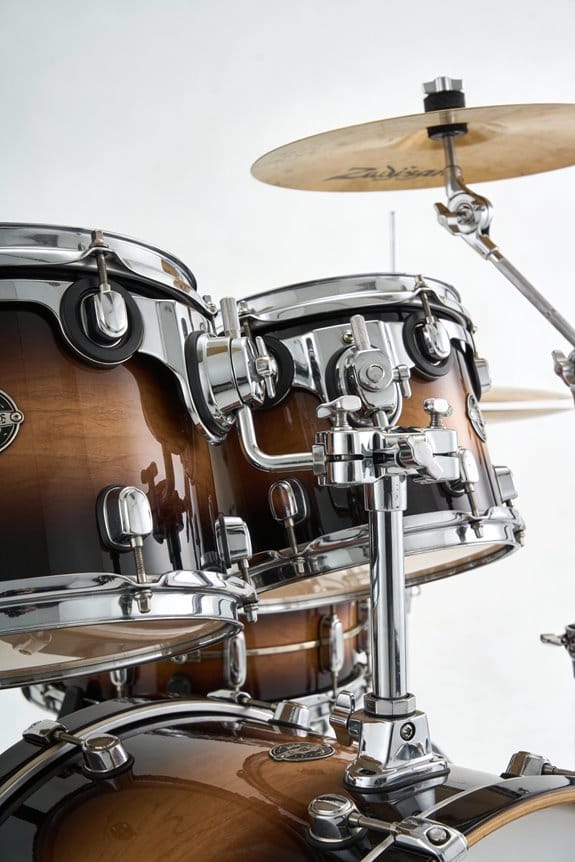


When considering the size and setup of acoustic drum kits, it is essential to acknowledge that these instruments require a considerable amount of floor space, often measuring around 2 meters by 2.5 meters. Acoustic drums require a complex arrangement of components, including a bass drum, snare, toms, hi-hat, and cymbals, contributing to their larger footprint. This setup and playing area demands careful consideration of space requirements, particularly in smaller living environments. Additionally, transportation poses challenges due to the heavy, bulky nature of acoustic drums. Regular maintenance and tuning are necessary, adding to the complexity of their setup, while soundproofing solutions may be needed to minimize noise impact, thereby requiring even more space. To help manage noise levels, many drummers use drum isolation shields which improve sound isolation and reduce unwanted cymbal bleed.
Recommended Products

Acoustic drum shield to reflect and isolate drums for a reduced perceived volume and cleaner recordings. Uses include House of Worship, studios, live performance stages and anywhere you need to isolation sound. The acrylic drum shield isolates the drums so the sound engineer can get a clearner recording or sound mix while also reducing the volume of the drums on stage.

Acoustic drum shield to reflect and isolate drums for a reduced perceived volume and cleaner recordings. Uses include House of Worship, studios, live performance stages and anywhere you need to isolation sound. The acrylic drum shield isolates the drums so the sound engineer can get a clearner recording or sound mix while also reducing the volume of the drums on stage.

Acoustic drum shield to reflect and isolate drums for a reduced perceived volume and cleaner recordings. Uses include House of Worship, studios, live performance stages and anywhere you need to isolation sound. The acrylic drum shield isolates the drums so the sound engineer can get a clearner recording or sound mix while also reducing the volume of the drums on stage.
Size and Setup Considerations for Electronic Drums

Electronic drum kits offer a compelling alternative for musicians in need of a compact and flexible setup. With a typical footprint of around 1.5m x 1.5m, these space-saving designs fit comfortably in smaller living spaces, unlike acoustic kits that require approximately 2m x 2.5m. Entry-level electronic drum kits often feature smaller pads and cymbals, making them ideal for beginners or those with limited room. Additionally, many electronic sets are lightweight and portable, easily folding for convenient storage. This adaptability is particularly advantageous in environments needing soundproofing, such as apartments. Some high-end models offer hybrid configurations, combining acoustic elements while still maintaining a compact overall setup size, providing musicians with versatile playing options. Many kits also include foldable frames for easy transport and storage, enhancing their appeal for players with space constraints.
Recommended Products

【Premium 7-Piece Drum Set】The upgraded DED-70 electronic drum set includes 4x 6.5" dual-layer quiet mesh drum heads and 3x 9" oversized silicone cymbals for authentic rebound and responsiveness, mimicking acoustic drums while keeping noise levels apartment-friendly. Also comes with enduring metal racks, drum sound module, drum throne, drumsticks, headphones.

All-in-One Electronic Drum Kit for Beginners - Designed for aspiring drummers, the Turbo Max is a compact, Bluetooth-enabled, 7-piece quiet e-drum kit; Optimized for unmatched learning and practice experience, it is ready right out of the box - simply adjust and play
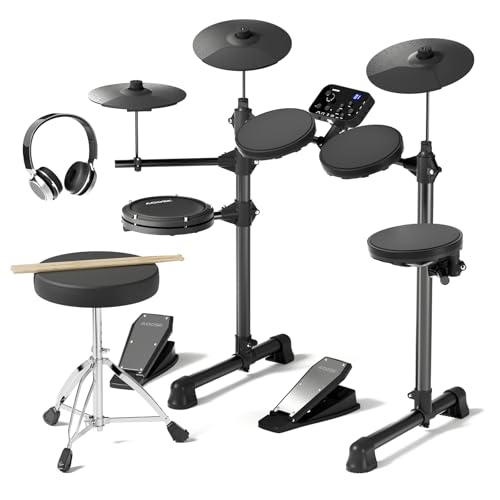
[Complete Electric Drum Set for All Ages]:The AODSK Electric Drum Set comes with everything you need to start drumming right away:4x 6.5" drum pads and 3x 10" cymbals for a full strike zone.A sturdy metal frame that’s portable and foldable for easy storage.Includes a drum module, drum throne, drumsticks, headphones, and all necessary cables.Perfect for electric drum set beginner
Space Efficiency: Acoustic vs. Electronic Drum Kits
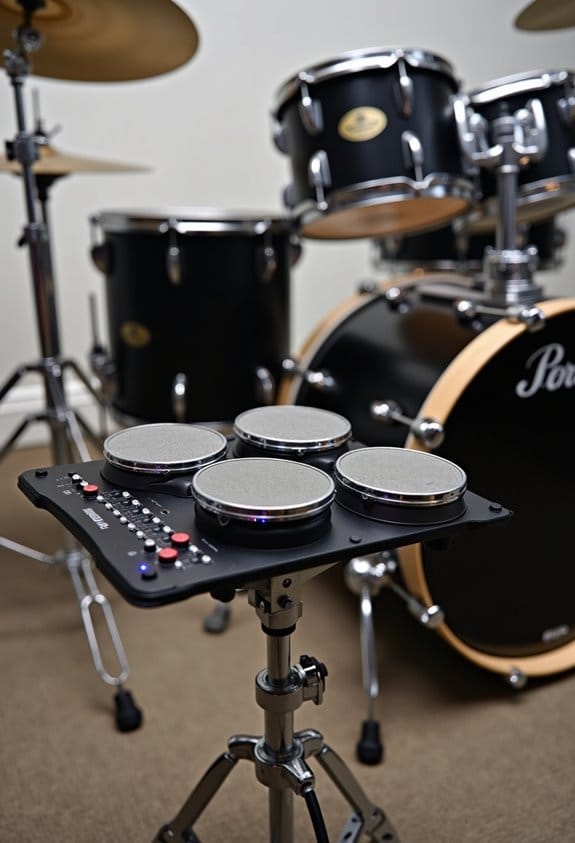
The ongoing debate between acoustic and electronic drum kits often centers around their space efficiency, which plays a crucial role for musicians in various living situations. Acoustic drum kits typically require a larger setup area of about 2m x 2.5m, making them less suitable for tight spaces. Their bulkiness and need for soundproofing complicate setups in apartments or shared living spaces. Conversely, electronic drum kits feature a compact design, occupying only around 1.5m x 1.5m, allowing easy placement in smaller practice spaces. Their lighter weight makes transportation and storage straightforward, as they can be folded away. Additionally, electronic kits offer volume control, generating less sound to avoid disturbing neighbors, unlike their acoustic counterparts, which can produce noise levels of 90 to 130 dB. Many electronic kits also come with built-in metronomes and recording features that enhance practice efficiency without needing extra space for additional equipment.
Recommended Products

Designed for Beginners - Premium 8-piece electronic drum set with ultra-quiet Alesis mesh heads, revolutionary Drum Module with Bluetooth and built-in industry-leading BFD drum sounds

【The total Electric Drum Set】The Donner DED-80 drum set features a double-layered mesh high-density structure for a realistic drumming experience. It comes with 4x 6.5" mesh drum pads, 3x 10" cymbals with a full strike zone, a tough metal frame, drum module, drum throne, drumsticks, headphones, and all cables needed. The Donner electric drum kit can help you practice to become an excellent drummer

VERSATILE DIGITAL DRUM KIT: The portable drum set is developed to resemble, sound and play like an actual drum set at a fraction of the size. Play the drums to pre-recorded drum kits and songs or record your own
Impact of Space on Practice and Performance
Space, whether limited or ample, has a significant impact on both practice and performance for drummers, influencing their choice of equipment and overall experience. Acoustic drum kits, with their larger space requirements of approximately 2m x 2.5m, often become impractical in small living environments, where noise can disrupt others. On the other hand, electronic kits, compact at about 1.5m x 1.5m, offer enhanced flexibility and better storage options. Their ability to allow for silent practice through headphones makes them a popular choice in noise-sensitive settings. Additionally, the portability of electronic kits simplifies transportation, making practice sessions more convenient, while acoustic drums may require soundproofing solutions in shared living spaces, limiting their usability and performance versatility. Many electronic kits also feature foldable frames that further increase their convenience for storage and transport.
Recommended Products

𝐄𝐱𝐩𝐫𝐞𝐬𝐬𝐢𝐯𝐞 𝐏𝐞𝐫𝐟𝐨𝐫𝐦𝐚𝐧𝐜𝐞𝐬 - The LEKATO electric drum kit features a double-layered mesh snare drum pad as a quiet drum head for a natural playing experience. 3 Tom and 3 cymbals are made of silicone for incredible rebound.

[Bass Kick Hammer Pedal Design] Unlike common double-foot pedals, this electronic drum set comes with a bass pedal with a kick drum hammer. Even beginners can experience the realistic playing feel of acoustic drums and practice proper drumming techniques, while still practicing quietly at home.

Ultra-Compact, Powered Monitor - Get a moderate-volume, space-saving amp that mounts directly to any Nitro kit drum rack for a convenient way to hear your electric drum set without headphones
Tips for Choosing the Right Drum Kit Based on Space Constraints
When selecting a drum kit, it is essential to assess the available space, as different types of kits have unique requirements that can greatly affect both practice and performance. An acoustic drum kit typically requires a larger setup space of around 2m x 2.5m due to the need for sound projection, making it less ideal for cramped areas. Conversely, an electronic drum kit boasts a compact footprint of approximately 1.5m x 1.5m, allowing for easier transport and storage. Beginners may find entry-level electronic kits especially suitable, featuring smaller pads that maximize portability. Additionally, the noise volume of acoustic drums, which can reach 130 dB, might necessitate soundproofing, while electronic kits can be played quietly with headphones, enhancing versatility for different environments. Selecting the right drum heads, such as coated drum heads, can also impact the quality of sound and performance regardless of the kit type.
Recommended Products

All-in-one 9pc electronic drum set: 4 mesh pads, 3 cymbals (HH, Crash, Ride), sound module, kick & hi-hat pedals, throne, headphones, sticks, cables. No extras needed. Ideal...
Frequently Asked Questions
How Much Space Does an Electric Drum Kit Need?
An electronic drum kit typically requires around 1.5m x 1.5m of practice space. Its portability factor, minimized seating arrangement, and connectivity options enhance user experience while necessitating sound isolation and floor protection for ideal sound quality and storage solutions.
How Much Space Does an Acoustic Drum Kit Take Up?
Acoustic drum kits demand diverse dimensions. Generally, a setup area of approximately 2m x 2.5m is necessary, alongside ample surrounding space for sound absorption, performance area, furniture arrangement, and storage solutions to optimize room acoustics.
Are Electronic Drums Too Loud for an Apartment?
Electronic drums are typically not too loud for apartment living, as their sound levels can be adjusted. They address neighbor considerations and noise complaints, allowing for effective drum practice with minimal sound isolation and personalized equipment placement.
What Is the Disadvantage of Electronic Drums?
Electronic drums can compromise sound quality, limiting practice versatility. With complex setups and maintenance needs, they present connectivity challenges. Additionally, price range variations create portability issues, potentially hindering user experience and suitability for beginners seeking authenticity.


