As an Amazon Associate, we earn from qualifying purchases. Some links on this site are affiliate links at no extra cost to you. Our recommendations are based on thorough research and editorial judgment.

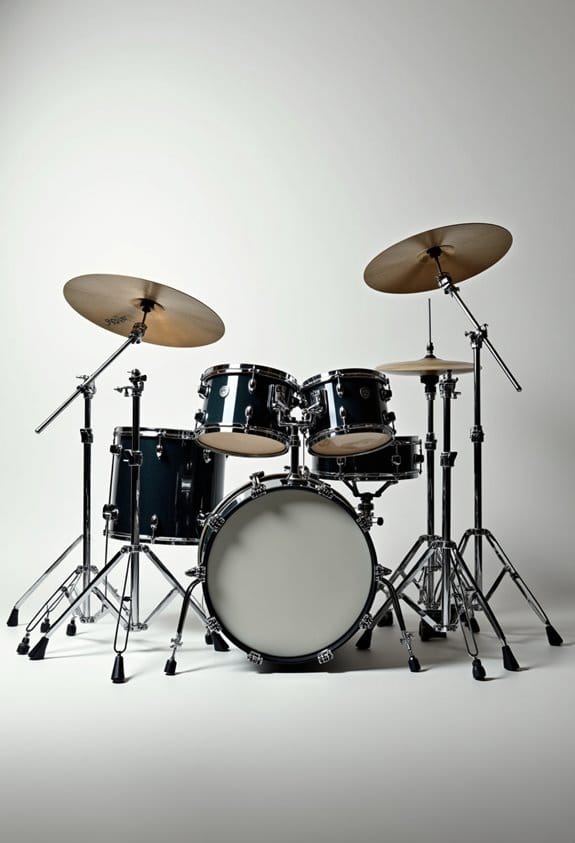
1 Best Rock Drum Configuration

For the best rock drum configuration, you’ll want a solid mix of equipment tailored to your style. Start with 5A wooden drumsticks for versatility and a warm tone. Pair them with retractable wire brushes for softer dynamics when needed. Consider your drum kit size and material, as these can greatly influence sound. Don’t forget to store everything in a durable bag for easy transport. Explore the varying impacts of each choice to truly elevate your sound.
Key Takeaways
- Use wooden drumsticks for warm tones and a comfortable grip that complements rock music dynamics.
- Configure drum kit for aggressive snare sensitivity and powerful kick for driving beats typical in punk rock.
- Incorporate a mix of 5A drumsticks for versatility and nylon-tipped sticks for brighter cymbal sounds.
- Use multi-rod bamboo brushes for softer rock styles requiring nuanced touch and subtle dynamics.
- Adjust drum kit size and composition to enhance overall sound, especially for live performances.
| Drum Sticks Set with Bag (7 Pairs Brushes) |  | Best Versatile Set | Number of Pairs: 7 pairs | Material Composition: Aluminum alloy, bamboo, steel | Performance Type: Suitable for various music genres | VIEW LATEST PRICE | Read Our Analysis |
You may be interested


More Details on Our Top Picks
Drum Sticks Set with Bag (7 Pairs Brushes)
If you’re a budding drummer or part of a youth rock band, the Drum Sticks Set with Bag is the perfect choice for your musical journey. This set includes 7 pairs of drumsticks, plus a brush kit featuring retractable wire brushes, 5A drumsticks, and multi-rod bamboo brushes. With an aluminum alloy body, these sticks are both durable and lightweight, ensuring you can perform comfortably during long practices. The brushes, made from high-quality steel, deliver a smooth sound ideal for jazz or softer tunes. Plus, you get a handy bag for storage, making it easy to transport your sticks wherever the music takes you!
- Number of Pairs:7 pairs
- Material Composition:Aluminum alloy, bamboo, steel
- Performance Type:Suitable for various music genres
- Usability:For all skill levels, including beginners
- Storage Solution:Includes a storage bag
- Intended Audience:Music lovers and drum learners
- Additional Feature:Retractable wire brushes
- Additional Feature:Multi-rod bamboo construction
- Additional Feature:Non-slip polished surface
Factors to Consider When Choosing a Rock Drum Configuration

When you’re picking a rock drum configuration, there are several essential factors to keep in mind. You’ll want to take into account the type of drum sticks you use, as different materials can affect your sound and playing style. Additionally, think about how versatile brushes can be for various genres, and how your personal sound preferences and the specific requirements of rock music can shape your choices.
Drum Stick Selection
Choosing the right drum sticks is essential for achieving the distinctive sound and feel you want in rock music, and various factors play into this important decision. First, consider size and weight; many drummers prefer 5A sticks for their balanced feel and versatility across different styles. Next, examine the tip shape—options like round, oval, or acorn can dramatically alter your sound. If you’re into softer, jazz-infused rock, look into retractable wire brushes or multi-rod sticks for a gentler touch. Don’t forget grip and comfort; opt for sticks with non-slip polished surfaces to maintain a secure hold during long sessions. Remember, the right sticks can greatly enhance your performance and refine your overall sound.
Stick Material Impact
The material used in drum sticks plays an essential role in shaping your overall sound and performance, impacting everything from your tonal quality to your comfort while playing. Wooden sticks, often favored for their warm tone and comfortable grip, excel in rock and jazz genres. On the other hand, nylon-tipped sticks produce brighter sounds and offer increased durability on cymbals, perfect for energetic gigs. If you’re looking for ultimate durability, aluminum alloy sticks deliver a consistent feel, though they can create a harsher sound, making them less ideal for softer music. Consider your playing environment, as different materials react differently to acoustics and temperature, ultimately affecting the weight, balance, and control you have during performances.
Brush Versatility Benefits
Many drummers don’t realize just how versatile brushes can be in shaping their sound and performance, especially in rock configurations. These tools, particularly retractable wire options, provide a softer sound that highlights subtle dynamics, making them great for nuanced moments. When you use multi-rod bamboo brushes, you’ll notice a bright attack that enhances articulation while offering a lighter feel, perfect for expressive drumming. Additionally, switching between brushes and sticks opens a world of tonal possibilities, helping you adapt to different musical contexts seamlessly. Brushes are quieter too, making them ideal for smaller venues or acoustic setups, where maintaining a rich sound without overwhelming volume is essential. Embracing brush techniques can truly expand your drumming skill set across various genres.
Sound Preferences Consideration
Selecting the right sound for your rock drum configuration is more than just picking a set of drums and sticks; it involves understanding how various factors influence your overall performance. First, consider the desired sound characteristics like volume, tone, and attack, which greatly affect how your music will resonate. The choice of drumsticks, whether wood or nylon, can change the sound’s quality, while switching from sticks to brushes introduces softer, nuanced tones. Additionally, the number and types of drums, especially bass drums and snares, contribute to a balanced sound. Finally, don’t forget drum tuning and head selection, as different drumheads alter resonance and projection, helping you achieve that perfect rock sound texture tailored to your style.
Genre-Specific Requirements
When you immerse yourself in the world of rock drumming, it’s essential to realize that each subgenre carries its own specific requirements influencing drum configuration. For instance, punk may demand snare drum sensitivity and kick drum power, leading to aggressive beats, while softer rock styles benefit from specialized brushes for a nuanced touch. The type of sticks, like 5A wooden or nylon, can greatly impact your sound and dynamics, affecting both volume and articulation. Additionally, the size and composition of your drum kit, including the number of toms and cymbals, play a vital role in achieving the right sound. Finally, integrating electronic drum elements can expand your sonic palette, blending traditional drumming with modern influences for a unique experience.
Skill Level Adaptability
Choosing the right rock drum configuration involves considering the player’s skill level, as it greatly impacts their learning experience and musical expression. For beginners, lighter and lower-volume equipment helps build confidence and technique. You might start with a simple setup, allowing you to focus on mastering basic rhythms. Intermediate players, on the other hand, can benefit from a more versatile configuration, enabling them to explore dynamics and styles, including brushes for softer play. Advanced drummers often require an extensive setup, accommodating diverse genres and intricate techniques. This adaptability in your drum configuration enhances your learning by allowing experimentation with different sticks and brushes that match your evolving skills, providing motivation and tools necessary to elevate your playing experience.
Storage and Transport Needs
While you might be enthusiastic to plunge into playing the drums, it’s essential to contemplate your storage and transport needs before settling on a rock drum configuration. Consider using bags or cases that protect your instruments during transport; this can save you from expensive repairs. Opting for compact and lightweight options makes moving between practice spaces and venues much easier. Look for configurations with features that organize your drumsticks and accessories, minimizing setup and takedown time. Drum kits with built-in storage compartments or quick assembly can enhance your portability. Finally, assess the size and weight of the components to verify they fit comfortably within your vehicle or public transport, making your musical journey hassle-free.
Frequently Asked Questions
What Is the Best Drum Size for Rock Music?
The best drum size for rock music often features a 22-inch bass drum, providing that powerful thump rockers crave. A 16-inch floor tom adds depth and resonance, while a 12-inch rack tom gives you the ability to execute quick fills. These sizes create a balanced sound, encouraging dynamic playing. Ultimately, though, it’s all about your personal style, so don’t hesitate to experiment with different sizes to find what feels right for you.
Do I Need Electronic Drums for Rock?
You don’t necessarily need electronic drums for rock, but they can enhance your sound. Electronic kits offer versatility, allowing you to explore various drum sounds and effects, which can be great for blending genres. Traditional acoustic drums provide authenticity and a powerful presence that’s hard to beat live. Consider your style, budget, and where you’ll play; both options have pros and cons that can match your musical vision perfectly. Choose what feels right for you!
How Often Should I Replace My Drumheads?
You should replace your drumheads every six months to a year, depending on how often you play. If you’re drumming regularly, you might notice wear sooner. Look for signs like dents, discoloration, or loss of tone. Different styles and materials can also affect their lifespan; coated heads might last longer in certain genres. Always remember, fresh drumheads can improve sound quality and responsiveness, making your drumming experience much more enjoyable and dynamic.
What Are the Essential Percussion Instruments for Rock Drumming?
When you think of a powerful rock band, the percussion heartbeat stands out. Essential percussion instruments for rock drumming include the kick drum, snare drum, and hi-hats, all forming the core of your setup. Add toms for depth, crash and ride cymbals for accents, and a tambourine or cowbell for extra flair. Each element contributes to a dynamic sound, enhancing your music’s rhythm and energy while keeping the audience engaged and moving.
How Can I Improve My Rock Drumming Speed?
To improve your rock drumming speed, focus on consistent practice with techniques like a metronome to build your timing. Start slow, gradually increasing the tempo as you feel comfortable. Incorporate rudiments, such as double-strokes and flams, into your warm-ups. Try playing along with fast tracks to push your limits while maintaining control. Finally, pay attention to your grip and posture; proper technique can enhance speed, helping you play with greater efficiency and clarity.


